Most organizations treat certification as the destination. Months go into gathering documents, rehearsing for auditors and closing the gaps found during the initial review. When the certificate arrives, there is a sense of relief, and attention drifts back to deadlines, customers and revenue targets. The effort that was once urgent becomes optional. This shift in mindset is the root of most post-certification failures. A standard such as ISO 9001 does not prove that a company is excellent.
It confirms that, on the days the auditor visited, the system met the requirements. What happens in the months between surveillance audits is entirely the organisation’s responsibility. If leaders believe the hard work ended with the certificate, the system starts to decay at once. The decay usually stays invisible until a customer complaint, a failed surveillance audit or a costly rework cycle exposes it. Certification bodies see this pattern repeatedly. Companies that pass comfortably in year one often receive major nonconformities in year two. The standard has not changed. The behaviour has.
How a Quality Management System Turns into Paperwork?
The quality management system is supposed to be a dynamic structure that influences planning, execution, checking and improvement of processes. At the time of certification drive, most organizations develop the system as an exercise in writing. Procedures are written not in accordance with the process itself but in order to meet certain requirements. They take procedures from the consultants, and the manual consists of hundreds of pages never used by operators.
After the end of the audit, it becomes clear that there is a considerable difference between documentation and reality. Employees use certain shortcuts that were developed in practice, whereas the procedure stays unmodified on the company’s server. Eventually, the procedure described in the document becomes so different from the one really implemented that the whole system becomes discredited in the eyes of employees.
The solution lies in the design of the system itself. An organization’s quality management system that reflects the reality of what is being done and is written by the people doing the work remains current because it is practical. Procedures must be concise, specific, and readily available. The document must be changed whenever the process changes, and the person responsible for the change must be able to modify it without a time-consuming approval process. The maintenance of the documents can not be seen as a cumbersome task separate from the actual work.
Why Your QMS Loses Ownership After the Audit?
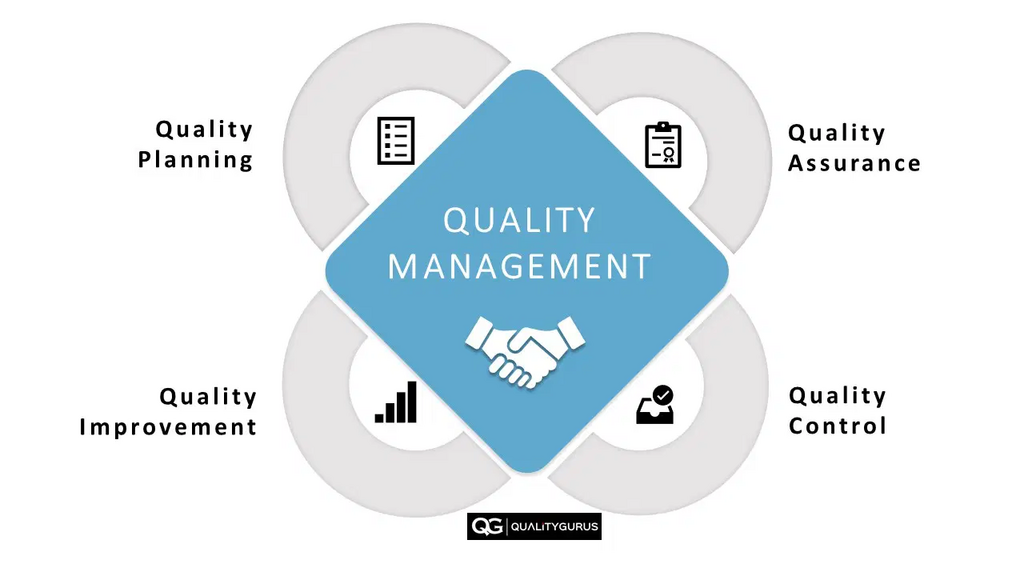
During certification, there is usually a project champion who steers the initiative, looks for documentation and helps to coordinate the audit. However, this approach to QMS brings along an unexpected vulnerability. The QMS belongs to one person or one department after all, not the organization in general.
In case that person leaves, is transferred elsewhere or just overwhelmed by another job, no one takes over the responsibility. The managers of the departments consider quality management to be something that is done by the quality department. Manufacturing, marketing, purchasing, HR and other departments view the QMS portion they should handle as an obstacle. The corrective measures remain open because no one is responsible for resolving them and objectives are set once and forever.
Sustainability is a responsibility that must be spread out through the organization. Each process must have an owner who understands the process and is responsible for its performance and can make improvements to it. The leadership team must clearly be on board with this, because employees will follow what their managers focus on. If the leadership team asks for quality metrics at each meeting, then the QMS lives. However, if they talk about it only before the audit, then employees see no need for it otherwise.
Why Does Training End at Onboarding?
Training reaches its peak before certification. Companies organize awareness workshops, provide briefings about expected auditor questions and refresh everyone about the quality policy. Once the certificate is received, these workshops quietly vanish from the schedule.
New employees come aboard without the proper understanding of how the system works, and old employees fail to recall information that was provided months ago. The quality policy becomes just another poster instead of a common policy. Competence of individuals goes outdated, and there is no one who realizes that a person is executing a procedure for which he or she was not trained.
Continuous training is essential and should be process-related. Refreshers conducted on an ongoing basis after specific events or changes make people remember the information. Role-specific training plays a crucial role since an operator, an accountant and a sales representative use the system in their own way. When people realize the importance of control, they will follow it voluntarily.
Why Do Internal Audits and Management Reviews Become a Show?
Internal audits and management reviews are the self-correcting mechanisms of any quality system, designed to find weaknesses before an external auditor or customer does. After certification they often turn ceremonial. Audits are scheduled at the last minute, carried out by people lacking independence or training, and limited to checking that records exist rather than whether processes work. Findings stay minor because nobody wants to embarrass a colleague.
Management reviews suffer the same fate. Instead of a serious discussion about performance trends, customer feedback, risks and resources, the meeting becomes a formality with minutes written to match clause requirements. Actions have no deadlines, and the same issues return at the next review.
To restore their value, audits should focus on outcomes rather than documents. An auditor who follows a real order from enquiry to delivery learns far more than one who reads a stack of forms. Auditors should be trained and rewarded for finding problems. Reviews should rely on real data and end with clear decisions that someone is responsible for carrying out.
Why Does Nobody Act on the Data?
There is no shortage of data at all for any certified company: defects, deliveries, complaints, suppliers’ performance. The problem is that just collecting the data is considered as the main aim- numbers are put in tables, summarized in monthly reports and left aside. It takes too long to spot any trends.
Corrective actions prove this drawback better than anything else, when something goes wrong, a lot of teams take care of just one thing. Eliminate the issue and record their work without further questions of why it was and if it might happen somewhere else. The same problem comes back in a few months, but under another name.
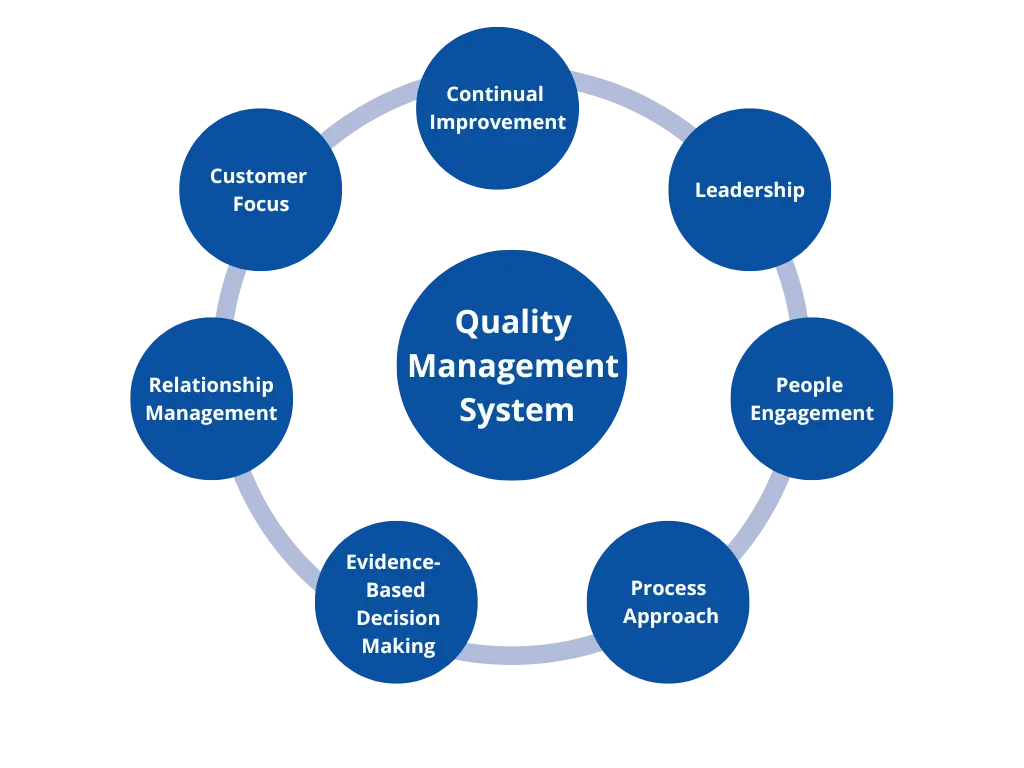
A healthy system uses data to help people make decisions. Measures must be limited in quantity, really important and connected with the goals of the company. There should be someone who checks them regularly. In case of any deviations there should be a special process of finding the reasons for this like “five whys” or fishbone analysis.
How Can Continuous Improvement Take Place Beyond Audit Periods?
Companies that keep their certification will regard quality as a natural aspect of business operations, rather than as a project with a deadline. They integrate quality objectives into annual plans and performance reviews and review them together with business results. They listen to their staff, clients and suppliers and take their suggestions seriously enough to implement visible changes based on those.
Changes in the environment are important factors as well – new products, equipment, markets and legislation can render the current practices obsolete. Periodic reviews of the system in light of changes prevent the gradual process that surprises companies. A risk-oriented approach helps by making people think about risks beforehand.
Finally, an external audit is an asset as well, since auditors have experience of many different businesses and organizations that listen to them receive valuable information for a modest price.
Conclusion
The failure of a quality management system usually does not occur because of the high standards or any defects in the process of certification itself. The failure occurs due to the fact that the organizations do not perform what was required to be certified: document the facts, share ownership, train people, audit and react upon the data. Certification is just a milestone, but those companies which continue to view the quality as an everyday business preserve the certificate and are much more valuable than it.


