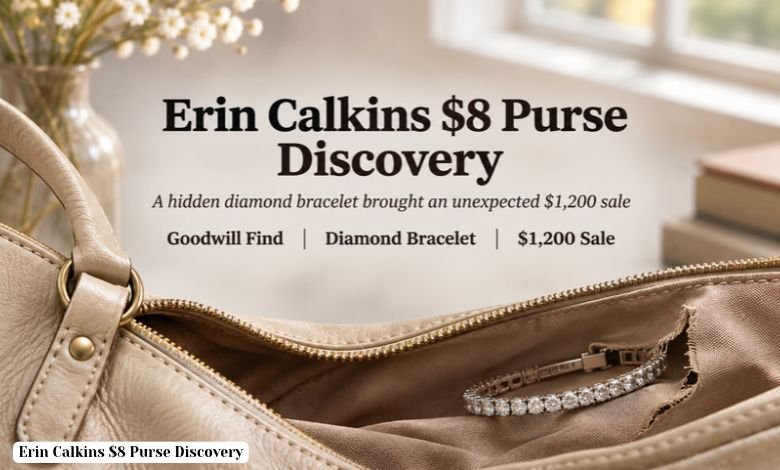
Erin Calkins went shopping for a shirt and came home with a purse she had not planned to buy. It cost $8 at Goodwill, and she liked the way it looked. For weeks, it was just another bag. Then she lost track of her keys, reached through a tear in the purse’s lining, and found a bracelet hidden inside. An estate jeweler later confirmed it was a diamond tennis bracelet and offered her $1,200 for it. She accepted. The Erin Calkins $8 Purse Discovery became especially meaningful because she was looking for a car after recently totaling her own.
She Was Shopping for Something Else
Calkins, who lives in the Atlanta area, visited Goodwill with her husband to look for a white button-down shirt he could wear to a wedding. While they searched, a purse caught her eye. It was a style she liked, even though she had not gone to the store hoping to buy another bag.
Her husband pointed out that she already had purses at home. Calkins bought this one anyway. At $8, it felt like a small purchase, and she expected to get a bag she could use. She did not know there was jewelry inside it. Nothing about the price or the shopping trip suggested that the purse held a surprise.
That detail makes the story familiar at first. Many people have picked up an unplanned item at a secondhand store because it looked good and cost little. Usually, the story ends there. Calkins used her new purse for weeks before anything unusual happened.
The Surprise Waited Inside the Lining
The bracelet did not fall out when Calkins opened the purse. She found it only after she could not locate her keys while heading back to her car. As she searched the bag, she noticed a tear in its inner lining. She put her hand through the opening, looking for the keys, and pulled out a bracelet instead.
The jewelry had been out of sight inside the purse. Without the missing keys, Calkins might not have reached into that part of the bag at all. A piece of damage that could easily have seemed annoying led her to an object she had carried around without knowing it was there.
It is unknown how the bracelet got inside the lining. It may have slipped through an opening, but the available account does not establish when that happened or who owned it before the purse was sold. Calkins discovered it by chance while dealing with a simple problem: she needed to find her keys.
A Jeweler Confirmed It Was Genuine
Calkins could see that the bracelet looked special, but she did not assume it was valuable. Jewelry can be difficult to judge by appearance alone. She took the piece to an estate jeweler, who confirmed that it was a real diamond tennis bracelet. The jeweler offered to buy it for $1,200 on the spot, and Calkins accepted.
The bracelet has been described as 14-karat white gold. Its full history, including who first bought or wore it, has not been made public. The clearest financial fact is the sale: an estate jeweler examined the bracelet and paid Calkins $1,200 for it.
That amount is striking beside the purse’s $8 price. Still, Calkins had bought the bag because she liked it, not because she thought it contained something she could sell. The jewelry was an unexpected find inside an ordinary purchase.
Why the Money Arrived at the Right Time
The sale mattered to Calkins for a practical reason. She had recently totaled her car and was shopping for a replacement. Finding a bracelet would have been surprising under any circumstances, but receiving $1,200 while facing the cost of another vehicle made the discovery particularly welcome.
The reported account does not say that the money covered the full price of a car. It does show why Calkins was pleased to accept the jeweler’s offer. She had a real expense ahead of her, and the bracelet provided money she had never expected to have.
That timing is one reason the story stayed with readers. The purse was an impulse purchase. The bracelet appeared weeks later, during a search for keys. And the sale happened when Calkins could use the money. Each part was ordinary on its own; together, they made an unusual story.
Could the Bracelet Have Sold for More?
After Calkins shared her experience online, some people wondered whether she should have asked other buyers for offers. It is a fair question, but there is no confirmed higher offer in the reported account. The $1,200 was an offer she could accept immediately, and she chose to take it.
A buyer’s offer also has a clear meaning: it is the amount that buyer is willing to pay. It does not tell us every price the bracelet could have brought elsewhere. Without more information about the piece or other offers, it would be misleading to claim that Calkins missed out on a specific amount.
Her decision made sense for her situation. She knew the bracelet was genuine, had someone ready to buy it, and needed money while looking for a replacement car. Readers might have made different choices, but only Calkins could decide what worked best for her at that moment.
The Mystery Behind the Purse
One question has no confirmed answer: Who did the bracelet belong to? The public account does not identify its original owner. It also does not explain whether the person who donated the purse knew jewelry was inside, or how long the bracelet had been hidden there.
It is tempting to invent a story about someone hiding a treasured piece and forgetting it. There is no evidence to show that happened. The bracelet could have reached the lining in more than one way. What is known is that it stayed hidden through the sale of the purse and the first few weeks Calkins used it.
That unknown history adds interest without needing an imagined explanation. A used bag passed from one person’s life into another’s, carrying something its new owner did not expect. Calkins’s search for her keys finally brought it to light.
What Secondhand Shoppers Can Take From the Story
Calkins’s experience does not mean every thrift-store purse has treasure inside. It does offer a useful reminder to look closely at used items. A handbag’s pockets, seams, zippers, and lining can tell you a lot about its condition. Checking them can help you spot damage before buying and find anything left behind afterward.
If you discover jewelry in a secondhand item, take time to learn what it is before deciding what to do with it. Calkins went to a jeweler rather than relying on how the bracelet looked. That step gave her the information she needed to make a decision about the offer.
For most shoppers, the reward of secondhand shopping is finding something useful at a good price. Calkins got the purse she liked for $8. The bracelet was a surprise that turned an everyday find into a story she would remember.
Conclusion
The Erin Calkins $8 Purse Discovery started with a bag she bought because she liked its style. Weeks later, missing keys led her to a bracelet hidden behind the lining. A jeweler confirmed it was genuine, and she sold it for $1,200 at a time when she needed money for another car. The bracelet’s earlier story remains unknown, but Calkins’s part of it is clear: a small, unplanned purchase brought a surprise she could put to use.
Frequently Asked Questions
1. What is the Erin Calkins $8 Purse Discovery?
It is the story of an Atlanta-area woman who bought an $8 purse at Goodwill and later found a diamond tennis bracelet hidden inside its lining.
2. How did Erin Calkins find the bracelet?
She was searching the purse for her missing keys when she noticed a tear in the inner lining. She reached through the opening and found the bracelet.
3. Did she find it on the day she bought the purse?
No. Calkins found the bracelet a few weeks after buying the bag.
4. How much did she receive for the bracelet?
An estate jeweler offered her $1,200 after examining it. Calkins accepted the offer.
5. Why was the discovery especially helpful?
Calkins had recently totaled her car and was looking for a replacement. The sale brought her unexpected money during that search.