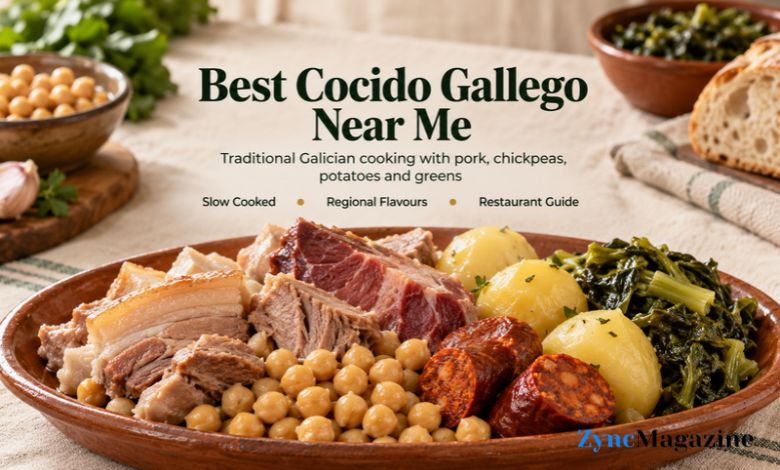
Searching for the best cocido gallego near me means looking for a particular kind of meal: slow-cooked meat, tender chickpeas, potatoes and greens brought together with care. This traditional dish from Galicia in north-west Spain is filling, full of flavour and suited to an unhurried lunch. Its appeal comes from familiar ingredients cooked well, with each part adding something to the plate.
Finding it locally takes a little research. A Spanish restaurant may specialise in tapas, seafood or rice dishes without serving cocido at all. Knowing what to look for on a menu, which questions to ask and how to judge the finished meal can help you choose somewhere worth visiting.
What Is Cocido Gallego?
Cocido gallego is a traditional boiled meal built around pork, vegetables and pulses. Recipes differ, but a generous version can include cured pork shoulder, ribs, bacon, chorizo, chickpeas, potatoes and leafy greens. Some preparations also contain beef, chicken or beans. Galicia’s official tourism recipe shows how varied the dish can be, using several cuts of meat rather than relying on one main piece.
Although often called a stew in English, it does not have to arrive as a bowl of meat covered in thick sauce. The ingredients may be lifted from their cooking liquid and arranged on serving dishes. Think of it as a complete meal whose separate parts have gained flavour through slow cooking.
The Ingredients That Give It Character
Two useful words to recognise are lacón and grelos. Lacón is cured pork from the foreleg, while grelos are turnip greens. Alongside chorizo and other pork cuts, these ingredients help explain the dish’s character. Potatoes and chickpeas provide a softer contrast to the meat, while the greens bring another flavour and texture to the meal. Traditional versions can also use cabbage.
A restaurant should be able to describe its own version clearly. Ask which meats it includes and which greens are available. A shorter ingredient list does not automatically mean a poor meal, just as a huge platter does not guarantee quality. What matters is whether the ingredients are prepared carefully and work well together.
How to Find the Best Cocido Gallego Near Me
Start with a specific search rather than browsing every Spanish restaurant nearby. Try “Galician restaurant”, “cocido gallego” or “cocido galego” followed by your town or city. Adding your location is more useful than relying entirely on “near me”, especially when search results include travel articles or restaurants far outside your area.
Next, check the restaurant’s own menu. Look for the dish by name and note whether the menu is current. A photograph uploaded by a customer several years ago is a useful lead, but it does not confirm present availability. If the website is unclear, contact the restaurant before making plans.
Why Lalín Matters to Cocido Lovers
If you are exploring the dish in Galicia, Lalín, in the province of Pontevedra, deserves attention. The town has a close connection with cocido and hosts a festival dedicated to it. Tourism of Galicia describes a celebration that brings together food tastings, local products and busy restaurants, showing how much the meal means to the area.
That connection makes Lalín a useful place to research, but it does not remove the need to compare individual restaurants. Check current menus, booking arrangements and recent comments about the cocido itself. A town’s food reputation can guide your search; the kitchen and service will shape your actual meal.
What to Ask Before Booking
A short conversation can prevent disappointment. Ask whether cocido is available on your chosen day, whether it must be ordered in advance and whether there is a minimum number of diners. Also confirm whether the price is per person or per platter. These details matter when a meal contains several components or is designed for sharing.
You can keep the question simple: “Do you serve cocido gallego, what does it include, and do we need to reserve it?” If someone in your group avoids particular meats, ask about the cooking liquid as well. Removing a piece from the serving dish may not address how the vegetables or pulses were prepared.
How to Recognise a Well-Cooked Serving
Look for tender meat, chickpeas with a soft centre and potatoes that have cooked through. The vegetables should be pleasant to eat rather than an afterthought. Chorizo should contribute flavour without making every mouthful taste identical. These are practical quality checks, rather than rules about exactly how every restaurant must prepare the dish.
Balance matters as much as size. A serving can be generous yet disappointing if the meat is dry or the seasoning overwhelms everything else. Try the different ingredients together before deciding whether you like the restaurant’s version. A little potato, greens and pork on the same fork can give a fuller impression than tasting only the sausage.
What to Expect at the Table
Presentation varies. Spain’s official tourism recipe describes serving the cooked ingredients on separate platters, including dishes for meats and vegetables. Ares council also describes a version in which noodle soup made from the cooking broth can come before the main serving. There is therefore no single presentation you should expect everywhere.
Ask what is included before adding starters. You may prefer to begin with the meal itself and decide later whether you want anything else. If several people are sharing, take modest first portions so everyone can try the different cuts and vegetables. Leave enough time to enjoy the food without rushing through a large plate.
When to Look for Cocido Gallego
Autumn and winter are sensible seasons to begin your search. Spain’s official tourism portal lists cocido gallego as an autumn–winter dish, while Galicia’s tourism information highlights its place in winter food culture. That seasonal connection is helpful when checking menus, although it does not establish the serving schedule of any individual restaurant.
Look through seasonal specials as well as the main menu. If you find an old announcement, ask whether the restaurant plans to offer the dish again. Avoid planning a journey around an undated post or assuming that a festival menu remains available throughout the year.
How to Use Reviews Without Being Misled
Read reviews that mention cocido specifically. Praise for a restaurant’s atmosphere, desserts or tapas may tell you little about this meal. Useful comments describe the cooking, portion size, ingredients and service. Recent photographs can also help you understand whether you are ordering an individual plate or a larger shared spread.
Compare several accounts rather than relying on one enthusiastic review. Look for repeated observations and check their dates. Treat claims such as “the most authentic ever” as personal opinions. Clear descriptions of what someone ate are more useful than a high rating with no explanation.
Conclusion
Finding the best cocido gallego near me starts with understanding the dish and checking what a restaurant actually serves. Search for Galician cooking, read current menus and confirm the ingredients, portions and booking requirements. At the table, pay attention to tenderness, flavour and the balance between meat and vegetables. A thoughtful choice gives you a better chance of enjoying this traditional meal at its best.
Frequently Asked Questions
1. What does cocido gallego usually contain?
Common ingredients include pork, chorizo, chickpeas, potatoes and greens. Larger versions may add beef, chicken, beans or several cured pork cuts. Recipes vary, so ask the restaurant for its ingredient list.
2. Do I need to order cocido gallego in advance?
Check with the restaurant. Advance ordering, serving days and minimum group sizes are details each business sets for itself. Confirm them when booking rather than assuming you can order on arrival.
3. Are grelos the same as cabbage?
No. Grelos are turnip greens. Cabbage is a separate ingredient, although both appear in traditional cocido preparations. Ask which greens the kitchen uses if you want to understand its particular version.
4. Is traditional cocido gallego suitable for vegetarians?
Traditional recipes contain meat. Vegetables and chickpeas may also be prepared with meat broth, so ordering only those parts does not establish that they are vegetarian. Ask whether a separately prepared option exists.
5. How can I compare prices fairly?
Check what each price covers. Compare the number of diners, included courses, meat selection and portion arrangement. Confirm whether drinks, bread or desserts cost extra before deciding which meal offers better value.