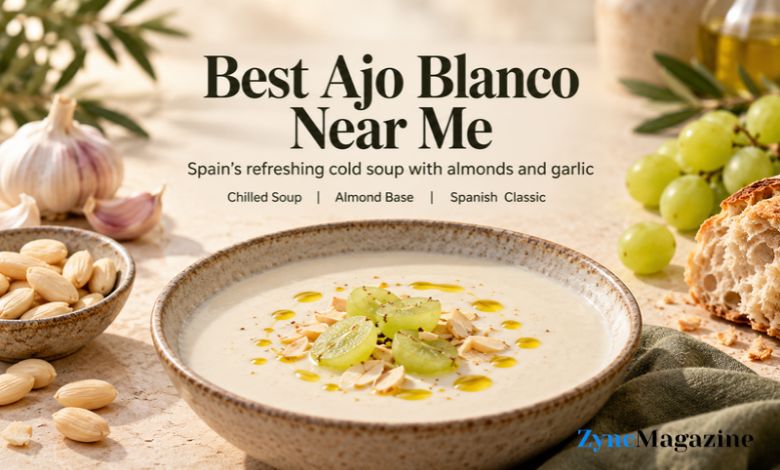
A chilled bowl of soup might not be your usual restaurant order, but ajo blanco makes a good case for trying something different. Pale, smooth and full of almond flavour, this Spanish favourite brings together simple ingredients in a surprisingly refreshing way. A little garlic gives it character, while vinegar adds a bright finish.
If you have been searching for the best ajo blanco near me, finding the right place takes more than choosing the nearest Spanish restaurant. You need to know how the dish appears on menus, what a good version should taste like and whether it is available before you visit.
Whether you are planning a relaxed lunch or exploring Spanish food beyond familiar tapas, here is how to approach the search and enjoy your first bowl.
What Is Ajo Blanco?
Ajo blanco, also written as ajoblanco, is a traditional cold soup associated with Andalusia in southern Spain. Its basic ingredients include raw almonds, bread, garlic, olive oil, water, vinegar and salt. Spain’s official tourism website lists it as a starter suited to spring and summer.
Despite its creamy appearance, the traditional mixture does not need cream. Blending the almonds, bread and oil creates its smooth body. The result is a savoury soup with a gentle richness rather than the heavy feel you might expect from a cream-based dish.
It can look quite simple when it arrives at the table. That simplicity is part of its appeal: each ingredient has a clear role, and careful seasoning makes a noticeable difference.
What Does Ajo Blanco Taste Like?
Expect a nutty base, a clear garlic flavour and a touch of acidity. The almonds should bring richness without making the soup taste like a sweet almond drink. Garlic adds warmth and bite, while vinegar keeps the overall flavour lively.
A good bowl should feel balanced to your taste. If you prefer mild garlic, ask about its strength before ordering. The same applies to vinegar: some diners enjoy a sharper finish, while others prefer a softer version.
The garnish also changes the experience. Grapes are a traditional accompaniment in Málaga, and melon or apple can also be used. Their sweetness creates a contrast with the savoury soup.
How to Find the Best Ajo Blanco Near Me
Start by searching for the dish itself alongside your town, city or neighbourhood. Try both spellings, “ajo blanco” and “ajoblanco”, because restaurant menus may use either one. “Spanish cold almond soup” is another useful search phrase.
Look through the restaurant’s own menu once you find a possible match. A search result might show an old review, an event menu or a photograph from a previous season. These can offer clues, but they do not confirm what the kitchen serves today.
Check the starters, lunch specials and tasting menus rather than looking only under soups. If you find a promising place, contact it before travelling. A quick question about availability can save you an unnecessary journey.
Which Restaurants Should You Check?
Begin with restaurants that describe their cooking as Spanish or Andalusian. Read their menus closely for regional dishes and cold starters. This gives you a more useful starting point than searching every restaurant that serves Mediterranean food.
Tapas bars are also worth checking, especially if their menus change regularly. However, serving Spanish favourites such as croquettes or tortilla does not automatically mean they prepare ajo blanco.
A modern restaurant may offer its own version with an unusual garnish or different presentation. That can be interesting, but ask how it is made if you want to try the traditional almond, bread and garlic combination first.
What Makes a Great Bowl of Ajo Blanco?
For a first tasting, focus on texture, balance and freshness. The soup should feel pleasant on the tongue, with enough body to carry the almond flavour. A rough or overly thick texture may be less enjoyable if you are expecting a smooth, refreshing starter.
Notice how the flavours work together after the first spoonful. Can you taste the almonds clearly? Does the garlic add interest without overwhelming everything else? Does the acidity leave you ready for another mouthful?
Presentation matters less than those details. A carefully arranged garnish can look lovely, but the soup underneath should still be satisfying. Choose the version you enjoy eating, rather than judging entirely by photographs.
How to Read Reviews Before Ordering
Reviews are most useful when they mention ajo blanco specifically. A restaurant’s overall rating may tell you about service or atmosphere, but it cannot tell you much about a dish nobody has described.
Look for comments about flavour, portion size and whether the soup was available during the reviewer’s visit. Recent menu photographs can also help you understand how it is served and whether it comes as an individual starter or part of a larger meal.
Read more than one opinion. One person’s “too garlicky” could be another person’s favourite feature. Use reviews to set expectations, then make your choice around your own preferences.
Questions to Ask Before You Visit
The most useful question is straightforward: “Are you serving ajo blanco today?” Follow that by asking whether it is on the regular menu or offered only as a special. Confirming the exact dish also avoids confusion with other garlic soups.
Ask about the serving size if you are planning a full meal. A small tasting portion and a bowl-sized starter offer different experiences, so it helps to know what you are ordering.
Check the ingredients if you have dietary requirements. Almonds and bread are part of the traditional recipe, while individual kitchens may change the base or add garnishes. Describe your requirements clearly and ask the restaurant to confirm what it can provide.
What to Eat With Ajo Blanco
Treat ajo blanco as a gentle opening to a meal. You could follow it with grilled vegetables, fish or another main course you enjoy. If you are ordering several small plates, consider including different textures so the meal feels varied.
Fresh bread can be a simple accompaniment, although the soup already contains bread in its base. A small salad or a crisp vegetable dish might suit you better if you want something lighter alongside it.
For your first few spoonfuls, try the soup on its own before mixing in every garnish. Then taste it with the grapes or other toppings to see how the flavour changes.
What If You Cannot Find It Nearby?
An unsuccessful search does not prove that no restaurant in your area serves ajo blanco. Smaller businesses may have limited online menus, and specials can change before websites are updated. A direct enquiry is useful when you find a suitable Spanish kitchen.
If there is no confirmed local option, making it at home gives you another way to try the dish. The basic method involves blending almonds, garlic, bread and water, then adding olive oil, vinegar and seasoning. Some recipes also strain the mixture and chill it before serving.
Choose a clear recipe with measured quantities for your first attempt. Once you understand the basic flavour, you can adjust the garlic, acidity and thickness to suit your taste.
Conclusion
Finding the best ajo blanco near me starts with a focused search and a little menu checking. Try both spellings, look for Spanish or Andalusian cooking and confirm availability before setting off.
When your bowl arrives, pay attention to the almond flavour, garlic balance and smooth texture. Whether you discover it at a local restaurant or prepare it yourself, ajo blanco offers a refreshing way to explore Spanish food.
Frequently Asked Questions
1. What is ajo blanco made from?
Traditional ajo blanco contains almonds, bread, garlic, olive oil, water, vinegar and salt. Grapes are a familiar garnish, although the finishing touches can vary between kitchens.
2. Is ajo blanco served hot or cold?
Ajo blanco is served cold. Its chilled temperature is part of the experience, making it an appealing starter when you want something refreshing.
3. Is ajo blanco the same as gazpacho?
Ajo blanco is sometimes called white gazpacho, but it differs from the familiar red, tomato-based version. Almonds and bread give ajo blanco its pale colour and distinctive flavour.
4. Is ajo blanco suitable for vegans?
The traditional base uses plant ingredients. However, check the bread, additions and garnishes with the restaurant, as its particular version may differ.
5. How can I check whether a nearby restaurant serves it?
Search the restaurant’s current menu for “ajo blanco” or “ajoblanco”, then call or message to confirm. Ask whether it is available that day and whether it comes as a starter or tasting portion.