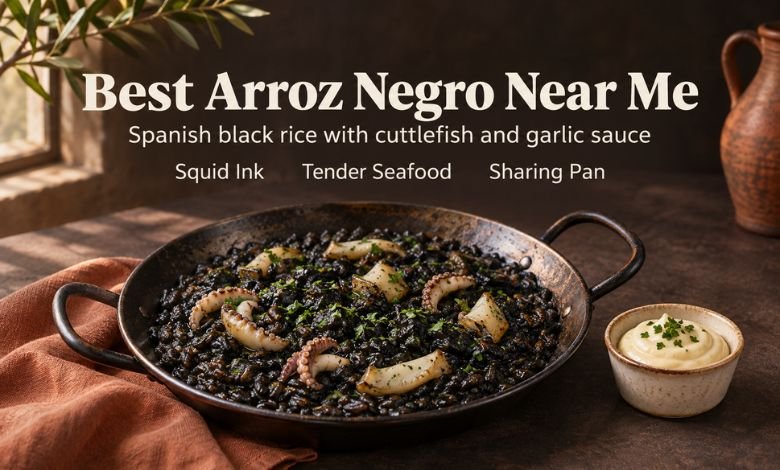
The first forkful of arroz negro explains why people order a whole pan of it. The rice tastes of the seafood stock it has cooked in, and a piece of tender cuttlefish gives the bite a little chew. Add a dab of garlic sauce and it tastes different again. The dark colour might be what catches your eye, but the rice is what keeps you reaching for another spoonful.
Searching for the best arroz negro near me can take a bit more digging than looking for paella. One restaurant might list it under its Spanish name, while another calls it black paella. A third might serve it only when there are two people to share. A closer look at the menu can tell you whether you’ve found the dish you want and whether it suits the way you plan to eat.
What Does Arroz Negro Taste Like?
Arroz negro gets its dark colour from squid or cuttlefish ink. The ink adds a savoury, slightly briny note, but the stock shapes much of the flavour. In a version cooked with tomato, garlic and seafood stock, the rice picks up a little sweetness alongside that taste of the sea. Take a bite without any seafood or sauce and you’ll get a sense of how much flavour the grains have absorbed.
The seafood changes from kitchen to kitchen. Some versions have small pieces of cuttlefish tucked between the grains, so you get a little in almost every bite. Others add prawns or serve larger pieces of squid. If the menu describes the dish simply as Spanish black rice, ask what comes in the pan. That short question can help you choose between a cuttlefish-led version and a fuller seafood mix.
How to Find Arroz Negro on a Local Menu
Start with the name of your town or neighbourhood and try three search terms separately: arroz negro, arròs negre and squid ink paella. The first is the Spanish name, the second is Catalan, and the third is a description you may see on English-language menus. If you’re already looking at a Spanish restaurant’s menu, scan the rice section. It may be headed arroces, with the black rice listed alongside seafood paella and other pan-cooked dishes.
Once you find a promising menu, read a few recent reviews that mention the rice by name. Someone who describes the squid as tender or says the pan fed three people gives you something concrete to work with. A diner’s photo can answer different questions. You might see whether the rice comes in a pan or on a plate, how much seafood is visible and whether the garlic sauce is served separately.
Check that the dish is available before making a special trip. An old menu photo can outlast the menu itself, and a special may appear only on certain days. When you call, ask if the kitchen is serving arroz negro during your planned visit and whether you need to order it in advance. If you’re choosing a restaurant mainly for this dish, that’s more useful than comparing overall star ratings.
What to Look for When the Pan Arrives
In a paella-style arroz negro, the grains should be tender and still hold their shape. Try a spoonful from the centre, where you can judge the rice on its own. Then take one from near the edge. If there’s a thin toasted layer underneath, scrape up a little and eat it with the softer rice. The contrast is part of the pleasure, especially when the toasted grains are crisp without tasting burnt.
Pay attention to the seafood, too. A bite of cuttlefish can have a gentle chew while still being easy to eat. If the dish comes with alioli, a garlic sauce, start with a small dab on the edge of your plate. Its sharpness can bring out the sweeter notes in the rice, and keeping it to one side lets everyone at the table decide how much they want.
How Much Should You Order?
The first thing to check is whether the menu price is per person or per pan. A price beside the dish can look like the cost of one order, even when the restaurant requires two diners and charges each of them. Ask how many the pan serves and whether a smaller portion is available. That matters especially if you’re eating alone or if your group wants to try several other dishes.
If you’re sharing, decide whether the rice will be the main event or one dish among several. A pan and a simple tomato salad can make a satisfying meal for two, depending on the portion. For a larger table, tell the server what else you plan to order before deciding how much rice you need. If the kitchen says the pan will take a while, a small plate of olives gives everyone something to nibble on while they wait.
Conclusion
A good search for the best arroz negro near me starts with the different names for the dish and ends with a few practical checks. Find out what seafood is in the pan, confirm it’s available when you want to go and check whether you’re paying for a portion or sharing a larger order.
At the table, take your first bite from the middle and your second from the edge. If the grains hold their shape, the stock comes through and the cuttlefish is tender, you’ve found a pan worth coming back for.
Frequently Asked Questions
1. Is arroz negro made with naturally black rice?
The dark colour in Spanish arroz negro comes from squid or cuttlefish ink added during cooking. If a menu only says “black rice”, look for a mention of ink or seafood stock to see if it’s the Spanish dish you’re after.
2. Is arroz negro the same as seafood paella?
The dishes can share a similar shallow-pan style, and both can contain seafood. Arroz negro has a distinct colour and flavour from the ink. On a menu that lists both, check the ingredients to see how the kitchen prepares each one.
3. Is squid ink rice spicy?
Squid ink adds a savoury flavour. Any chilli heat comes from the kitchen’s seasoning, while a serving of alioli can add a sharp garlic bite. If you prefer a milder plate, ask for the sauce on the side.
4. Can I order arroz negro for one?
It depends on the restaurant. Some kitchens list an individual portion, while others serve the dish in a pan for at least two. If the menu gives only a sharing size, ask whether there’s a single portion available at lunch.
5. Does arroz negro travel well as a takeaway?
It can work for a short trip home, though steam in a closed container can soften any crisp grains. If you enjoy that toasted texture, eat it at the restaurant when you can. For takeaway, ask for the alioli in a separate pot.