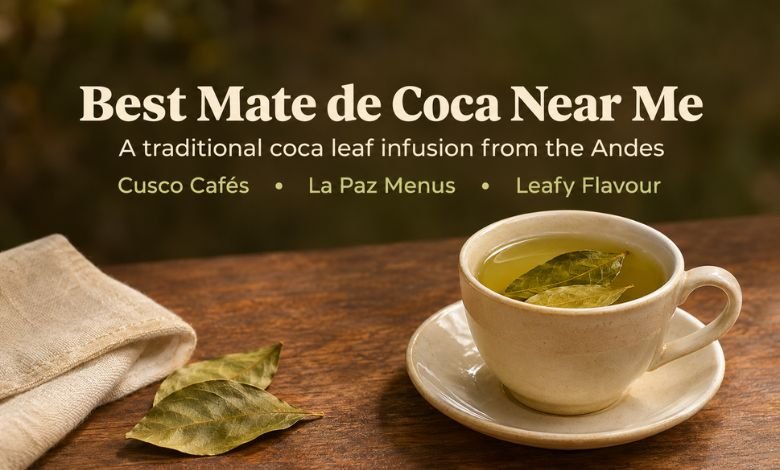
On a cool morning in Cusco, the most interesting drink on the breakfast menu might be tucked away under infusiones. That’s where you may find mate de coca, a warm, lightly bitter tea made from coca leaves. It’s a familiar drink in parts of Peru and Bolivia, and a hotel breakfast or a quiet café can be as good a setting for your first cup as a sit-down restaurant.
If you’ve searched for “best mate de coca near me”, start with the city and neighborhood you’re actually in. Then look for the full name on a current menu. This is one drink where knowing a little Spanish can save you more time than scrolling through ratings.
What Is Mate de Coca?
Mate de coca is an Andean infusion made by steeping coca leaves in hot water. The basic drink is simple, though how it arrives can vary. One place might bring a cup with loose leaves floating on the surface. Another might serve it with a tea bag and leave you to decide when to remove it.
For many visitors, the first encounter comes at a hotel in Peru, where someone may offer a cup on arrival or serve it at breakfast. You may also see it among the hot drinks at restaurants in Bolivia. That everyday setting is part of its appeal. You can come across it while waiting for a room, finishing lunch, or taking a break from walking around the city.
Where to Look in Cusco and La Paz
In Cusco, start with your hotel breakfast menu, or check cafés and restaurants near where you’re staying. Look through the drinks section even if the menu opens with espresso and cappuccino. Herbal infusions sometimes appear near the bottom of the page or alongside desserts. If you already have lunch plans, ask about the tea when you arrive so you know whether to leave time for a cup afterward.
In La Paz, try looking under tés y mates, which means teas and infusions. Look for mate de coca along with the neighborhood you’re visiting. That gives you a more practical starting point than a citywide list, especially if you just want somewhere to sit for twenty minutes before moving on.
A restaurant’s star rating tells you what diners thought of the place overall. A recent menu photo can answer the more immediate question of whether it lists the tea. If the photo is old or the drinks section is missing, ask “¿Tienen mate de coca hoy?” It means “Do you have coca tea today?”
What Does Mate de Coca Taste Like?
A plain cup has a light, leafy flavor with a mild bitter finish. If you’ve had a gently brewed green tea, that’s a reasonable reference for the first sip. The color is often yellow-green, and the flavor can seem quite soft if you’re used to a strong breakfast tea. You may notice the bitterness more clearly as the drink cools.
Try the first sip plain to get a feel for the leaf. You can add a little sugar afterward if that suits your taste. If the server offers a plain cup or a mixed infusion, ask what’s in the blend. A cup with another herb can be enjoyable in its own right, while the plain version gives you a clearer sense of the coca leaf’s flavor.
How to Order the Right Infusion
The word mate on its own leaves room for interpretation. On a Spanish-language menu, the words that follow it tell you which leaves or herbs are in the cup. Mate de manzanilla is chamomile, while mate de menta is mint. You may also see mate de muña, an infusion made with an aromatic Andean herb. For coca leaf tea, ask for mate de coca by its full name.
Yerba mate is another drink you may see when searching online. It comes from a different plant and has its own traditions in countries such as Argentina, Paraguay, and Uruguay. If you’re searching in English, coca leaf tea is the clearest term. On a local menu in Peru or Bolivia, the Spanish name will usually be easier to spot.
What Makes a Good Place for Your First Cup?
Think about when you want to drink it. At breakfast, you can take your time with the cup while you decide what to do that morning. A café makes sense if you want a short stop between visits. At a restaurant, ordering it after lunch gives you a chance to linger at the table and taste it slowly.
For a first try, it helps to find a place where you can ask whether the cup is plain or blended and whether it comes with loose leaves or a bag. Both styles can make a great cup. If you’re after a specific style, ask before ordering. Outside the Andes, availability varies by location, so a current menu that names the tea is the clearest starting point.
Conclusion
A good search for the best mate de coca near me begins with the full name of the drink and the neighborhood you’re in. In Cusco or La Paz, check your breakfast menu, a nearby café or the hot drinks section of a restaurant you already plan to visit. For your first cup, take a sip before adding sugar. That mild, leafy bitterness is the part of the drink you’ll want to taste for yourself.
Frequently Asked Questions
1. What should I type to find mate de coca nearby?
Search for mate de coca or coca leaf tea, then add your city or neighborhood. In Cusco or La Paz, try the Spanish name first, as that’s how the drink commonly appears on menus.
2. Is mate de coca always served hot?
It’s usually served hot. Depending on the venue, you may receive a cup with loose leaves already in the water or a tea bag you can remove when the flavor suits you.
3. How do I ask for mate de coca without sugar?
Say “Un mate de coca sin azúcar, por favor.” That means “A coca tea without sugar, please.” If you’d prefer sugar on the side, you can ask for azúcar aparte.
4. Can I find mate de coca on a breakfast menu?
You may find it at hotels or cafés in parts of Peru and Bolivia. Look under hot drinks or infusiones. If breakfast includes a hot drink and the options are listed together, ask which infusions are available.
5. What if a menu lists only “infusiones”?
Ask “¿Qué infusiones tienen?” to find out which infusions are available. If you already know you want coca tea, “¿Tienen mate de coca?” is the quickest way to ask.