Chief Technical Examiner: The Expert Who Checks Whether Public Projects Deliver What They Promise

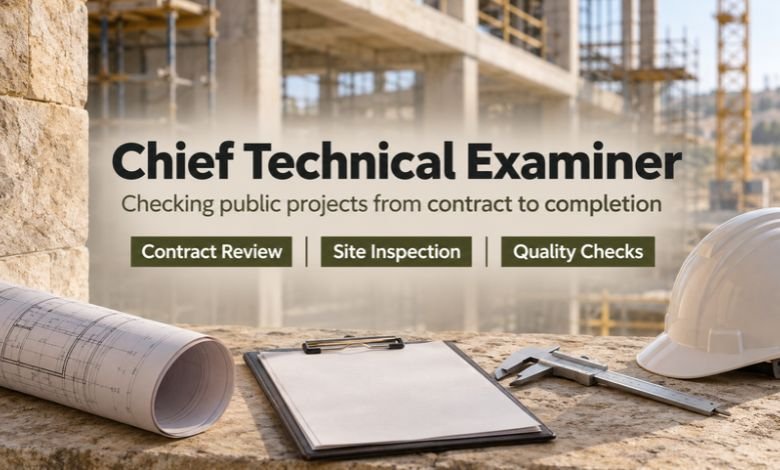
A road can look smooth on opening day. A new building can look impressive in photographs. Yet neither appearance tells us whether the right materials were used, the work followed the approved design, or the amount paid was fair. These questions matter because public projects use money meant to serve everyone. A chief technical examiner helps answer them by looking closely at contracts, records, and the work itself.
The role is especially important in large organizations that manage construction, equipment purchases, and service contracts. One mistake in a specification or measurement can lead to a costly result. A careful technical examination can find that problem while there is still time to correct it. It can also show how an organization can improve its next project.
What Is a Chief Technical Examiner?
A chief technical examiner, or CTE, is a senior technical official who oversees the examination of projects and contracts. The job requires more than knowing how a building, machine, or system should work. A CTE must also understand how a project was planned, how a contractor was chosen, what the contract promised, and how payments were approved.
In India, the title is closely associated with the Chief Technical Examiners’ Organisation, the technical wing of the Central Vigilance Commission. Its examiners review selected contracts handled by public organizations within the Commission’s jurisdiction. Their work covers construction as well as purchases and services. The purpose is to identify quality problems, unnecessary costs, weak procedures, and other issues that deserve attention.
Why Is the Role Important?
Government projects often pass through many hands. Planners prepare estimates, officials approve budgets, teams invite bids, contractors carry out the work, and engineers certify bills. Each step leaves behind documents and decisions. If those steps are not checked carefully, an error can go unnoticed until the project is finished.
Consider a public school building. The contract may call for a certain type of flooring, a specified number of electrical fittings, and safety features shown in the drawings. A technical examiner can compare those requirements with purchase records, measurements, and what is actually present. If something does not match, the organization can investigate the reason and decide what action is needed. That kind of check helps protect both project quality and public money.
What Does a Chief Technical Examiner Do?
A CTE guides the examination of selected contracts and reviews the findings prepared by technical staff. The team may study estimates, approvals, drawings, tender conditions, bids, agreements, bills, and quality test results. Together, these records tell the story of a project from its first proposal to the work delivered.
The examiner’s questions are practical. Were the requirements clear to every bidder? Did the organization follow its own terms when selecting a contractor? Were changes to the work properly approved? Does a payment match the quantity and quality recorded? The CTE’s role is to make sure such questions receive careful, evidence-based answers. A concern should be checked against the relevant documents and facts before it becomes a formal finding.
How Does a Project Inspection Work?
An inspection usually begins with records. The team needs to understand what the contract required before judging what happened on site. Examiners can review the approved design, schedule, technical specifications, measurement books, running bills, material records, and laboratory results. These documents help them decide what to verify during a visit.
At the site, they can inspect the work, check measurements, and compare visible materials with the agreed specifications. On some projects, samples may be collected for testing. A site visit can also help explain a difference that looks serious on paper but has a valid reason. This is why document review and physical inspection work best together: one shows what was recorded, while the other helps establish what was delivered.
Does the Role Cover More Than Buildings?
Yes. Construction is only one part of public procurement. Organizations also buy medical equipment, electrical systems, vehicles, computers, and other goods. They hire consultants and service providers as well. Each type of contract brings a different set of technical questions.
For example, an equipment purchase may require the examiner to check whether the model supplied meets the promised specifications and whether testing was completed before acceptance. A service contract may raise questions about the work completed and the basis for payment. A strong chief technical examiner adapts the examination to the contract while keeping the same basic principle: compare the promise, the proof, and the payment.
What Happens When a Problem Is Found?
A technical observation does not automatically mean that someone acted dishonestly. There may be a recording error, a misunderstanding of the contract, poor supervision, defective work, or a more serious concern. The first task is to describe the issue clearly and give the organization a chance to provide the relevant records and explanation.
The response depends on what the evidence shows. Defective work may need repair. An excess payment may need recovery. A repeated weakness in tender documents may call for better procedures. Serious matters can require further examination through the proper vigilance process. The aim is to reach a supported conclusion and take action that fits the finding.
The Value of Preventing Problems
Finding a defect matters, but preventing the next one can have a wider effect. If several contracts show similar mistakes, the issue may lie in a standard document, an unclear approval process, or a weak quality check. A CTE can highlight that pattern so the organization can improve its system.
This is one reason the role is about more than inspecting finished work. Clearer specifications, better records, timely testing, and careful bill checks can reduce disputes and waste before they grow. For a public organization, those improvements can make future projects easier to manage. For the public, they increase the chance that a completed project will perform as expected.
What Makes a Good Chief Technical Examiner?
A good CTE combines technical knowledge with patience and independent judgment. It takes skill to read a complex contract, spot an unusual measurement, and know which detail needs a closer look. It also takes restraint to avoid jumping to conclusions. Records may be incomplete, site conditions may have changed, and every important observation needs sound evidence.
Communication matters just as much. Findings should be clear enough for officials to understand the problem and act on it. Recommendations should explain what needs correction, whether that means fixing a defect, recovering a payment, or changing a process. The strongest examinations leave an organization with a clearer path forward.
Conclusion
A chief technical examiner helps make public projects more accountable. By checking plans, contracts, records, payments, and completed work, the CTE helps answer a simple but essential question: did the public receive what it paid for?
The role matters because a project is only successful when its quality and cost stand up to careful examination. When problems are found early and lessons are applied to future work, technical examination can improve more than one contract. It can help build greater confidence in the way public money is spent.
Frequently Asked Questions
1. Is a chief technical examiner the same as a site engineer?
No. A site engineer usually helps supervise or manage work as it happens. A chief technical examiner oversees an independent examination of selected work and its supporting records.
2. Does a CTE only check construction projects?
No. The role can cover construction, equipment purchases, and service contracts. What the examiner checks depends on the type of contract and its technical requirements.
3. Can a CTE review payments?
Yes. Bills, measurements, and payment records can be reviewed to see whether the amount paid matches the contract and the work or goods delivered.
4. Does a technical finding always mean corruption?
No. A finding identifies an issue that needs an explanation or action. The evidence determines whether it is an error, a quality problem, or a matter requiring further investigation.
5. Why are project records so important?
Records show what was approved, ordered, measured, tested, and paid for. Without them, it becomes much harder to verify whether a project met its contract.