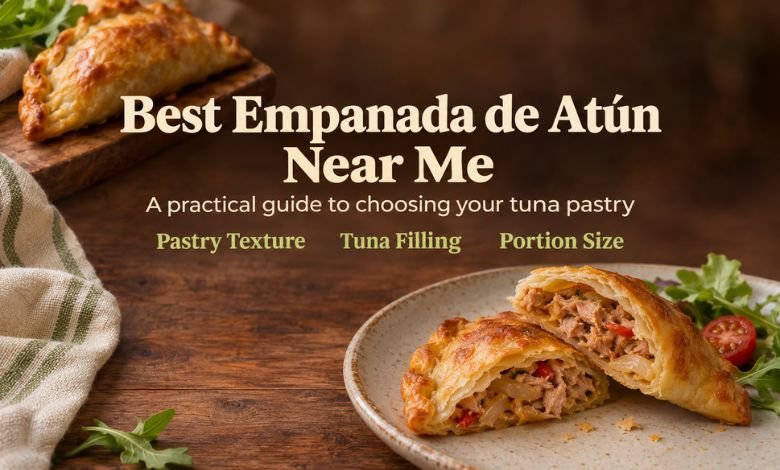
You order a tuna empanada, take a bite and get mostly pastry. Another bite reaches the filling, but it is dry and barely tastes of anything. It is a disappointing result for something that looked so good behind the bakery glass.
That is why searching for the Best Empanada de Atún Near Me takes a little more care than picking the closest shop. A good one needs enough filling, well-cooked pastry and seasoning that lets the tuna come through.
You might want a quick snack, a simple lunch or a few pastries to share at home. Whatever the occasion, knowing what to check makes choosing easier. From reading menus to asking about the latest batch, a few small details can help you find a local place worth returning to.
What Exactly Is Empanada de Atún?
Empanada de atún is a savoury pastry filled with tuna. Some come as small folded pockets that you can hold in one hand. Others are made as larger pies, then cut into squares or slices.
The filling depends on the recipe. Alongside tuna, you may find cooked onion, peppers, tomato, olives or boiled egg. One bakery might make a soft, tomato-rich filling, while another keeps it simpler, with more fish and fewer additions.
That variety is part of the appeal. However, it also means that the name alone cannot tell you exactly what you will get. Read the menu description, especially if you dislike an ingredient.
Where to Start Your Local Search
Spanish bakeries, neighbourhood cafés and empanada shops are sensible places to check. Some restaurants offer tuna empanadas as starters, while food shops may sell larger versions for sharing.
Search using a few different names. Try “tuna empanada near me”, “empanada de atun” or “tuna pie” with your town added. Different businesses describe their food differently, and a narrow search can miss a useful result.
Once you find somewhere promising, look for a current menu. A photograph uploaded years ago doesn’t confirm what is available today. If tuna is the only flavour you want, a quick call before leaving can save a wasted journey.
The Pastry Should Earn Its Place
Good pastry brings more than a tidy shape. It should have a pleasant flavour and a texture that suits the filling. Depending on the style, that might mean a gentle crunch, delicate flakes or a firmer, bread-like crust.
Pay attention to the base as well as the top. A golden surface can hide an unpleasantly wet bottom. At the other extreme, pastry that is too hard can make every bite feel like work.
The folded edge may naturally be thicker than the centre, but it should still be enjoyable. If you find yourself leaving a large pile of crust behind, the balance probably does not suit you.
A Tuna Filling You Can Actually Taste
The filling is what makes a tuna empanada earn a repeat order. You should taste the tuna, even with vegetables, olives, or spices.
Moisture matters. Too little leaves the filling dry and loose; too much can soften the pastry before you finish eating. A good filling feels comfortable inside the crust, without falling apart or leaking across the plate.
Extra ingredients should make sense together. Sweet cooked onions can soften a salty filling, while olives give a stronger bite. Neither approach is automatically better. Choose what you enjoy rather than assuming a longer ingredient list means better food.
Baked or Fried: Which Should You Choose?
If you have a clear preference, check the cooking method before ordering. Baked and fried empanadas can offer very different eating experiences, even with similar fillings.
A baked version may suit you if you enjoy a firm crust or flaky layers. A fried empanada may appeal more when you want a crisp shell. The dough recipe matters too, so the cooking method is only part of the picture.
For a first visit, try one before ordering several. You will quickly learn whether you like the pastry, how rich it feels and whether the filling suits your taste. That small first order is often more useful than scrolling through another page of photographs.
How to Read Reviews Without Getting Lost
A café can have excellent reviews because people love its coffee and cakes. That tells you very little about the tuna empanada sitting at the end of the counter.
Search reviews for the actual dish. Comments about filling, freshness and portion size are more useful than a simple “great place”. Look for repeated details across different customers rather than letting one glowing review decide everything.
Photographs help when they show a cut-open pastry. You can judge how much filling is inside and get a rough sense of size. Still, treat photos as clues. Lighting, camera angles and personal taste can all affect how appealing something looks.
A Few Questions Make Ordering Easier
You do not need to turn lunch into an interview. Usually, two or three questions are enough: What is in the filling? Is it served warm? How large is a portion?
If you want something recently baked, ask when the current batch was made or when the next one will be ready. This gives you a clearer answer than trying to judge freshness through the display glass.
Mention dietary needs before ordering. A tuna filling contains fish, and the pastry or recipe may also include wheat, egg or milk. For an allergy, ask the business directly about ingredients and preparation. A short menu description may leave out details you need.
Getting Good Value for Your Lunch
Price is easier to judge once you know the size. A small individual empanada and a thick slice of tuna pie might sit close together on a menu while offering very different portions.
Think about what you need. One small pastry might be enough with a coffee, but lunch could call for another portion or a side. Ask before ordering rather than discovering afterwards that you have bought a snack.
For delivery, check the full order total. Fees can change the value of a small purchase quite sharply. If the shop is close enough, collection also lets you see the food and ask about anything unclear.
What to Serve Alongside It
A tuna empanada does not need an elaborate side dish. A tomato salad, sliced cucumber or a handful of dressed leaves can make a pleasant lunch without much extra work.
Taste the empanada before reaching for sauce. Tomato, olives and seasoning may already give the filling plenty of flavour. If you still want a dip, add a little first.
For sharing, a larger empanada can be convenient. Ask whether the bakery will slice it for you, particularly if you are taking it to work or serving it somewhere without proper plates and knives.
Conclusion
Finding the Best Empanada de Atún Near Me comes down to a few practical checks: the pastry style, the amount of filling, the portion size, and what recent customers say about that dish.
Start with one portion from a promising local shop. If the pastry tastes good, the tuna stays moist, and the last bite is as enjoyable as the first, you may have found your regular lunch spot.
Frequently Asked Questions
What does empanada de atún mean?
It means tuna empanada. The name identifies the main filling, but the shape, pastry and other ingredients depend on the recipe.
Where should I look for tuna empanadas nearby?
Start with Spanish bakeries, cafés, restaurants and empanada specialists. Check their current menus and confirm the tuna flavour before travelling.
Are tuna empanadas spicy?
Some are, but many are mild. Ask whether the filling contains chilli or hot sauce. Mentioning peppers alone doesn’t tell you how spicy it will be.
Can I eat a tuna empanada cold?
Some versions are sold to eat chilled or at room temperature; others are intended to be enjoyed warm. Follow the seller’s storage and serving instructions.
Should I order one empanada or several?
Check the portion size first. Individual pastries vary, and a slice from a larger pie may be more substantial. Tell the seller whether you want a snack or a full lunch