There is a familiar moment during revision when a teacher asks a question and the same three hands go up. A few students know the answer, several are unsure, and someone at the back has stopped following altogether. Getting everyone involved takes more than asking another question.
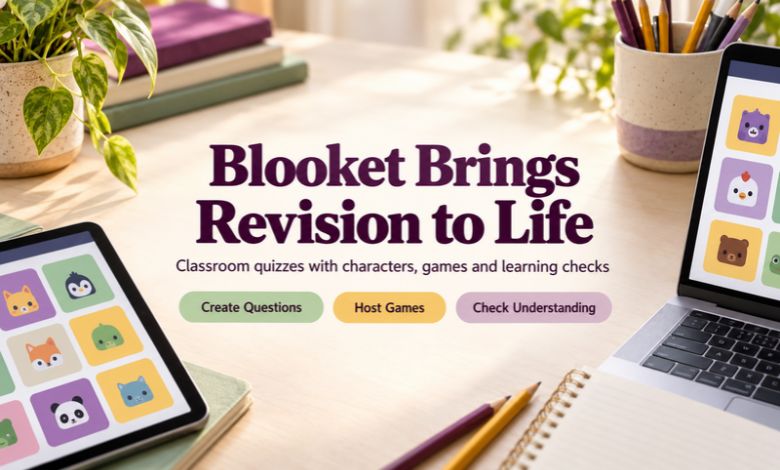
Blooket gives teachers a different starting point. It puts quiz questions inside games, allowing students to practise lesson content while working through challenges on their devices. The colourful characters help attract attention, but what happens around the game matters just as much.
A useful session needs suitable questions, clear instructions and a few minutes to talk about mistakes. Without those, students may remember who won while forgetting what they were supposed to learn.
What Is Blooket?
Blooket is an online platform that combines educational quizzes with games. Teachers choose or create a question set, select a game format and invite students to participate.
The questions can cover subjects such as maths, science, languages or history. A set might ask students to identify fractions, match words with definitions or recognise the causes of a historical event.
Students answer questions as they play. Because the game adds another layer to the activity, familiar material can feel more appealing than it does on a printed worksheet. That makes the platform useful for practice, although it still needs to sit within a properly planned lesson.
How a Classroom Game Works
The teacher prepares the questions and hosts the session. Students join using a game code, then follow the instructions for the selected mode.
Before starting, explain the rules in plain language. Students need to know both how to play and what they are practising. Otherwise, the first few minutes can disappear into questions about buttons, rewards and controls.
For a first attempt, keep the question set short and the content familiar. Learning a new game while tackling a difficult topic can be frustrating. Once the class understands the format, it becomes easier to introduce more demanding questions.
Why the Characters and Games Matter
Blooket’s small character avatars are called Blooks. Choosing a character gives students a simple way to make the experience their own, while the different game formats provide variety.
That playful element can make it easier to get a revision activity started. A student who is reluctant to complete another page of questions may be more willing to answer the same material within a game.
Still, interest is only the beginning. Watch what students do when a question appears. Are they reading carefully, discussing an idea or tapping quickly to get back to playing? Those small observations help a teacher judge whether the activity is serving its purpose.
Start with the Topic, Then Choose the Game
It is tempting to begin by picking the most exciting game mode. A better starting point is deciding what the class needs to practise.
“Revise science” is too broad to guide a useful question set. “Distinguish between contact and non-contact forces” gives the activity a clear direction.
Blooket includes formats such as Gold Quest, Cafe, Tower Defense and Monster Brawl. Explore the rules before using an unfamiliar mode with students. A format that suits one class may require too much explanation for another, particularly when lesson time is limited.
What Makes a Good Blooket Question?
A useful question makes students think about the subject. It should not become difficult simply because the wording is confusing.
For example, a question asking students to name gravity checks recall. Asking which force pulls a dropped pencil towards the floor connects that knowledge to an everyday situation.
The incorrect answers deserve attention too. Believable wrong answers can reveal a misunderstanding. If students regularly choose friction when asked about a non-contact force, the teacher has something specific to address.
Avoid packing several ideas into one question. Students should be able to understand what is being asked before they begin deciding on an answer.
Using Ready-Made Question Sets
Shared question sets can be helpful when preparation time is short. They may also suggest examples or ways of asking questions that a teacher had not considered.
However, read the complete set before bringing it into a lesson. Check the answers, spelling, difficulty and connection to what students have actually studied.
A quiz labelled for the correct age group may still use unfamiliar vocabulary or cover a different curriculum. Adjusting a few questions can make the set much more useful.
Also check whether the questions test understanding or mainly reward recognition. Both have a place, but they tell you different things about the class.
Looking Beyond the Final Score
A game result is easy to notice. Understanding takes a little more investigation.
A student might select the correct answer but struggle to explain it afterwards. Another might understand the idea yet misread a question or become distracted by the game.
Use follow-up questions to find out more. Ask why an answer is correct, invite students to correct a common mistake or give them a similar example without answer options.
These checks do not need to be lengthy. Even a short discussion can show which ideas are secure and which need another explanation before the lesson moves on.
Keeping Competition Comfortable
Some students enjoy seeing where they stand. Others become discouraged when they fall behind, especially if classmates make comments about the results.
Set expectations before the session begins. Explain that mistakes are part of practice and that respectful behaviour matters throughout the activity.
Be specific when recognising progress. A student who can now explain a difficult answer has achieved something worth noticing, even if they did not finish near the top.
If competition begins to dominate, pause and bring attention back to the questions. The teacher’s response helps establish what the class should value.
Is the Free Version Enough?
Blooket offers free access alongside paid subscription options. Whether a teacher needs additional features depends on how they intend to use the platform.
For occasional revision, start by exploring what is available without paying. Try it with a lesson and see which tools are useful in practice.
Before subscribing, check the current plan details directly. Features, prices and limits can change, and an upgrade makes most sense when it provides something you already know you need.
Making Blooket Fit into a Lesson
A short game can work near the start of a lesson to revisit earlier learning. It can also come after an explanation, giving students a chance to practise before attempting independent work.
Leave time afterwards to review difficult questions. Ask students what confused them and whether they changed their minds about an answer.
Practical arrangements matter too. Check device access and the internet connection beforehand. Have an alternative ready so that a technical problem does not stop the lesson.
Conclusion
Blooket gives teachers another way to bring students into revision, particularly when familiar material needs more practice. The games can help create interest, but the questions give the activity its educational value.
Keep sessions focused, check shared content carefully and make room for discussion afterwards. A successful game leaves students able to explain something more clearly than they could before they started.
Frequently Asked Questions
1. What is Blooket used for?
Blooket is used for quiz-based learning activities. Teachers can use it to revisit topics, practise vocabulary, check factual knowledge and identify questions that students find difficult.
2. How do students join a game?
Students enter the joining code supplied by the teacher or host. They then follow the on-screen instructions to enter the session and take part.
3. Can I write my own Blooket questions?
Yes. Creating your own set allows you to match questions to your lesson, choose suitable vocabulary and include examples your students already recognise.
4. Can Blooket help with revision?
It can provide an engaging way to practise material students have already studied. Its usefulness depends on the questions and whether mistakes receive attention afterwards.
5. Should Blooket results be used as final grades?
Game results need careful interpretation. Combine them with students’ explanations, written work and other evidence before making a judgement about their understanding.