A fridge full of vegetables can look promising on shopping day. A few days later, you might be wondering what to do with half a cabbage, soft carrots and a bag of spinach you forgot to open. The problem often starts before cooking, when ingredients go into the basket without a clear purpose.
A Vegg List offers a simple way to bring those purchases together. In this guide, the term means a vegetable checklist built around your meals, tastes and everyday routine. It can include fresh produce, frozen favourites and cupboard staples.
You do not need an expensive shopping basket or a different vegetable for every meal. A few familiar ingredients, chosen carefully, can give you plenty of options. The aim is to buy vegetables you enjoy and know how to use.
What Is a Vegg List?
A Vegg List is a written collection of vegetables you want to buy or keep available. You can write it in a notebook, save it on your phone or add it to your usual shopping list.
Its value comes from the details. “Vegetables” is easy to write but gives you little direction in the shop. “Carrots for soup, broccoli for pasta and cucumber for sandwiches” connects each purchase with something you plan to eat.
Your list should change with your week. Busy evenings may call for frozen peas and quick-cooking spinach. A quieter weekend might give you time to roast squash or make a large vegetable curry.
Everyday Vegetables Worth Knowing
There is no single vegetable selection that suits every kitchen. However, grouping ingredients by how you use them makes choosing easier.
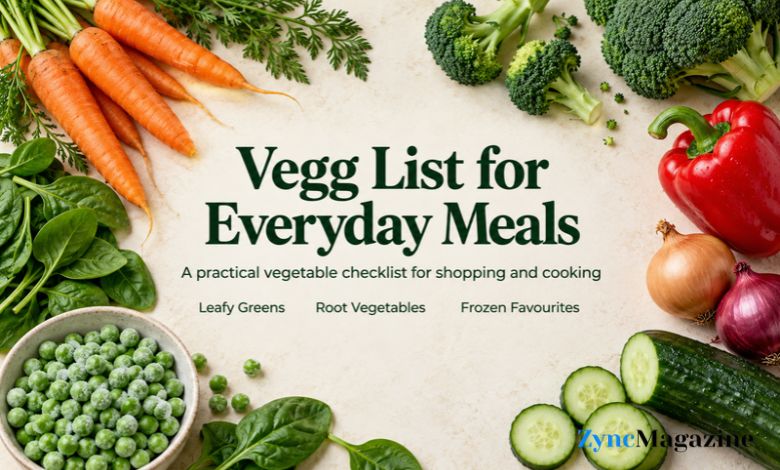
Leafy Greens
Spinach, cabbage, kale and lettuce offer different flavours and textures. Spinach can be stirred into pasta, eggs or curry. Cabbage works in stir-fries, soups and crunchy salads, while lettuce is useful for sandwiches and wraps.
Start with one or two greens you already like. Buying several large bags at once can leave you struggling to use them before their quality drops.
Root Vegetables
Carrots, beetroot, parsnips and turnips are useful for roasting, soups and stews. Carrots are especially flexible because you can grate them into salads, slice them into stir-fries or cook them alongside a main meal.
Think about preparation time before choosing. A whole beetroot takes more work than a carrot, so it helps to have a specific dish in mind.
Broccoli and Cauliflower
Broccoli and cauliflower can become much more than plain side dishes. Broccoli works well with noodles, garlic and pasta. Cauliflower can be roasted with spices, added to curry or blended into soup.
Both are also available frozen. This gives you the option to take out a smaller amount when a whole fresh head would be more than you need.
Other Cooking Favourites
Peppers, courgettes, aubergines and mushrooms bring variety to everyday cooking. Peppers suit fajitas and traybakes, courgettes cook quickly in a frying pan, and aubergines work well in curries and roasted dishes.
Onions, garlic and tomatoes are useful foundations for sauces, soups and stews. Keeping these available can make it easier to turn other vegetables into a complete dish.
How to Build a Vegg List Around Your Meals
Begin by choosing three or four meals you expect to cook. You do not need to plan every breakfast, lunch and dinner. A rough outline is enough to guide your shopping.
For example, a vegetable pasta, a stir-fry and a traybake could share several ingredients. Peppers might appear in all three, while broccoli could work in both the pasta and stir-fry. This ingredient overlap helps you use what you buy.
Check your fridge, freezer and cupboards before adding anything. You may already have frozen peas, an unopened tin of tomatoes or enough carrots for another meal.
Then write quantities beside the vegetables. One cucumber and two peppers are more useful instructions than a vague reminder to buy salad ingredients.
A Simple Weekly Vegg List
For a small household, a starting list might include onions, carrots, one broccoli head, two peppers, a cucumber, a small bag of spinach and frozen peas. Adjust the amounts to match how many people you cook for.
Those ingredients could support several meals. Onions and carrots can form the base of soup. Peppers and broccoli can go into a stir-fry. Spinach can be added to pasta, while cucumber works in sandwiches or a side salad.
This is a starting point rather than a fixed shopping rule. If nobody enjoys broccoli, replace it with cabbage or cauliflower. A useful list reflects your household’s tastes.
Fresh, Frozen and Tinned Vegetables
A practical vegetable list can include fresh, frozen and tinned options. Each has a place in an everyday kitchen.
Fresh produce is useful when texture matters, such as cucumber in a salad or peppers served in crunchy strips. Frozen vegetables are convenient when you want to use a portion and return the rest to the freezer.
Tinned tomatoes can become a sauce or soup base. Tinned sweetcorn is easy to add to fillings, rice dishes and salads. Check the label if you want to compare added salt or other ingredients.
Choosing a mixture gives you flexibility when plans change and you cannot cook everything you expected.
Shopping Well on a Budget
The cheapest vegetables are not always the ones with the lowest shelf price. A large bag offers little value if half of it goes unused.
Compare prices alongside the amount you expect to eat. Loose vegetables can help when you only need one or two items. Larger packs may make sense when you have several meals planned around them.
Look at seasonal produce and shop offers, but keep your meal plan in mind. A discounted aubergine is only useful if you are likely to cook it.
Flexible recipes help, too. Soup, fried rice and stir-fries can accommodate different vegetables, allowing you to choose from what is available and affordable.
Make Vegetables Easier to Enjoy
Cooking method can change how you feel about an ingredient. Someone who dislikes soft boiled carrots may prefer them roasted or grated into a salad.
Try changing one thing at a time. Roast cauliflower with cumin, fry cabbage with garlic, or add peas to rice with herbs. You can explore flavour without learning an entirely new recipe.
Texture matters as well. Cut vegetables into pieces suited to the dish and check them as they cook. Broccoli in a quick stir-fry needs a different approach from carrots simmering in soup.
Serve new vegetables alongside familiar foods. A small portion next to a favourite meal can feel more approachable than a plate built entirely around unfamiliar ingredients.
Use What You Buy
Keep your list connected to what is happening in the kitchen. If spinach needs using, move the spinach pasta earlier in the week. If dinner plans change, check which ingredients can fit into tomorrow’s meal.
A small “use first” note on the fridge can help you remember opened packs and vegetables that are losing their freshness.
Before shopping again, look for ingredients you can combine. A carrot, half a pepper and some cabbage may be enough for a useful stir-fry, even if they no longer look like a complete shopping selection.
Conclusion
A good Vegg List makes everyday cooking easier by connecting vegetables with meals you actually want to eat. Start with familiar favourites, choose realistic quantities and keep a few convenient options available for busy days.
Your list does not need to be long. It needs to work in your kitchen. With a little planning and a willingness to adjust, a modest selection of vegetables can bring plenty of flavour and variety to the week.
Frequently Asked Questions
1. What does Vegg List mean in this guide?
It means a vegetable checklist used to organise shopping and meal planning. You can adapt it to your tastes, budget and cooking routine.
2. Which vegetables are useful for beginners?
Carrots, onions, peppers, spinach, broccoli and frozen peas are useful starting points. They work in many familiar meals and offer different ways to practise cooking.
3. Can I include frozen vegetables?
Yes. Frozen peas, spinach, broccoli and mixed vegetables can make your list more flexible, especially when you only want to cook a small portion.
4. How many vegetables should I buy each week?
Base the amount on your household size and planned meals. Start with manageable quantities, then adjust your next list according to what you used.
5. How can I avoid wasting vegetables?
Check existing supplies before shopping, give each purchase a purpose and review what needs using during the week. Flexible meals can help you finish smaller leftover amounts.