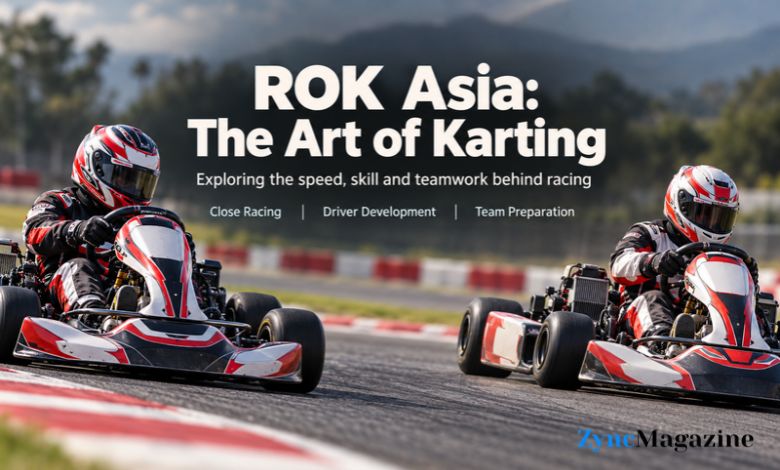
A kart race can change in a single corner. One driver brakes a little too late, another spots a gap, and a position that looked secure suddenly disappears. That is part of the attraction of ROK Asia: the action is immediate, and small decisions can have a visible effect on the result.
Also known as ROK Cup Asia, the championship belongs to the wider international ROK Cup community. It gives regional karting a shared stage, bringing drivers and teams together around competition powered by Vortex ROK engines.
For someone watching for the first time, the appeal is easy to understand. There is speed, noise and close racing. Look a little longer, though, and another story emerges: careful preparation, growing confidence and the patient work needed to turn a promising lap into a strong performance.
What Is ROK Asia?
ROK Asia is a regional karting championship within the broader ROK Cup racing network. The official programme includes Asia among its international competition regions, linking local and regional racing with a wider karting community.
Its appeal comes partly from that regional setting. Drivers have opportunities to face different opponents and learn how their approach holds up beyond familiar surroundings.
A home circuit can become comfortable after repeated practice. An unfamiliar track asks different questions. Finding the braking points, understanding the corners and building confidence all become part of the challenge.
The Idea Behind ROK Cup Racing
The wider ROK Cup project began in 2003. Developed around Vortex engines, it grew into an international programme with a one-make racing approach. In the general ROK framework, engines and tyres are controlled components, while chassis choice remains open within the relevant regulations.
For newcomers, “one-make” can sound as though every kart must be identical. The idea is more specific: competitors work within a defined technical framework.
There is still plenty for drivers and teams to understand. Kart preparation, setup and driving technique remain important. Sharing an engine framework does not remove the need to get those details right.
Why Every Corner Matters
A good lap is a series of connected decisions. Where a driver brakes affects how the kart enters a corner. That entry then influences how early the driver can accelerate away.
Imagine two competitors approaching a bend together. One brakes later and moves ahead briefly, but runs wide. The other takes a cleaner line and leaves the corner with more speed. By the next straight, the advantage may have changed hands again.
This is why racecraft matters so much. Overtaking involves more than seeing a gap. A driver also needs to judge whether the move can be completed without losing time or creating trouble at the next corner.
Fast Laps Are Only Part of the Story
A quick practice lap can attract attention, but racing asks for more. Drivers need to repeat their performance while dealing with traffic, pressure and changing situations.
There is a difference between driving alone and following another kart closely. The usual line may be blocked, and an opponent can force a decision earlier than expected.
Consistency helps a driver manage those moments. Someone who understands their braking points and kart behaviour has a stronger basis for adapting.
That makes progress interesting to watch. A competitor may improve without producing the fastest lap, simply by making fewer mistakes and handling difficult situations more calmly.
The Work That Happens Before the Start
Spectators usually notice the racing first. Teams spend much of their time dealing with the work that makes racing possible.
Equipment needs checking, adjustments need assessing, and the driver needs a clear understanding of the next session. A small problem discovered early is easier to address than one that appears after the start.
Communication is part of that preparation. A driver who can describe what the kart does through a particular corner gives the mechanic useful information.
“I lose confidence when I turn in” starts a more helpful conversation than “the kart feels wrong”. The clearer the feedback, the easier it becomes to investigate the cause.
What Different Circuits Teach Drivers
Racing at different venues encourages flexibility. A method that feels natural at one track may need changing at another.
Some layouts place greater emphasis on maintaining momentum. Others include corners where braking accuracy becomes especially noticeable. Linked bends can reward a driver who sacrifices a little speed early to find a better position later.
Learning a circuit therefore involves more than memorising its direction. Drivers need to understand how one section affects the next.
For fans following ROK Asia, this adds another layer to the competition. A new venue can reveal strengths that were less obvious at the previous meeting.
Teamwork Behind an Individual Sport
Only one person drives the kart, but that person rarely works alone. Mechanics, coaches and family members can all contribute to a race weekend.
The useful support is often practical and quiet. It might mean keeping preparations organised, helping a driver review a session or giving them space to settle after a disappointing result.
Drivers have responsibilities within that relationship too. Listening carefully, giving honest feedback and recognising mistakes help the team make progress.
A productive discussion after a difficult session can be more valuable than searching for someone to blame. Understanding what happened gives everyone a clearer task for the next outing.
How to Watch a Race More Closely
You do not need an engineering background to enjoy karting. Start by choosing two drivers who are running close together and watch where the gap changes.
One may gain ground under braking. The other may recover it on the corner exit. After a few laps, the reason behind an overtaking attempt becomes easier to see.
It is also worth watching beyond the leader. A contest further down the field can involve just as much judgement and determination.
Follow a driver across several sessions, if possible. Their story may include a difficult start, a useful adjustment and a better final performance. Those changes give a race meeting its character.
Where ROK Asia Fits in the Wider Picture
The regional championship sits within a community that also includes the ROK Cup Superfinal. The international event brings together drivers from different countries; official information for its 2026 edition placed it at South Garda Karting in Lonato, Italy.
That connection gives regional racing a broader context. Drivers can measure their development while learning about opportunities elsewhere in the programme.
However, international participation depends on the relevant entry and qualification arrangements. A regional championship entry alone should not be taken as a guaranteed place at another event.
The value of regional competition also stands on its own: stronger skills, useful experience and meaningful battles against capable opponents.
What to Know Before Getting Involved
For a prospective driver or family, the first step is understanding the commitment. Ask which class is appropriate, what experience is expected and what equipment or support the entry includes.
A clear budget matters too. Depending on the arrangement, costs may include testing, transport, accommodation, maintenance and tyres alongside the race entry.
Speak with the organiser and an experienced team before making plans. Request specific information rather than relying on a general estimate.
For spectators, check current event announcements before travelling. Dates, venues and access arrangements should always match the meeting you intend to attend.
Conclusion
ROK Asia offers more than the excitement of karts racing towards the same corner. It gives fans a chance to watch skill develop through preparation, pressure and competition.
The memorable moments are not limited to winning. A carefully judged pass, a cleaner run through a difficult section or a confident recovery can tell an equally interesting story.
Once you begin noticing those details, karting becomes much richer to follow. Every lap offers something to watch, and every race gives drivers another chance to improve.
Frequently Asked Questions
1. What is ROK Asia?
ROK Asia, also known as ROK Cup Asia, is a regional karting championship connected to the international ROK Cup network.
2. Which engines are associated with ROK Asia?
The championship is associated with Vortex ROK engines. The required specification depends on the class and applicable event regulations.
3. Can a complete beginner enter ROK Asia?
Entry suitability depends on experience and event requirements. New drivers should discuss their readiness with the organiser or a qualified coach.
4. Does ROK Asia guarantee international racing opportunities?
No. Places, awards and entries for international events depend on the specific qualification and registration arrangements.
5. Where can I check race dates and results?
Use official ROK Cup Asia announcements and the wider ROK Cup network. Check that the information relates to the correct season.