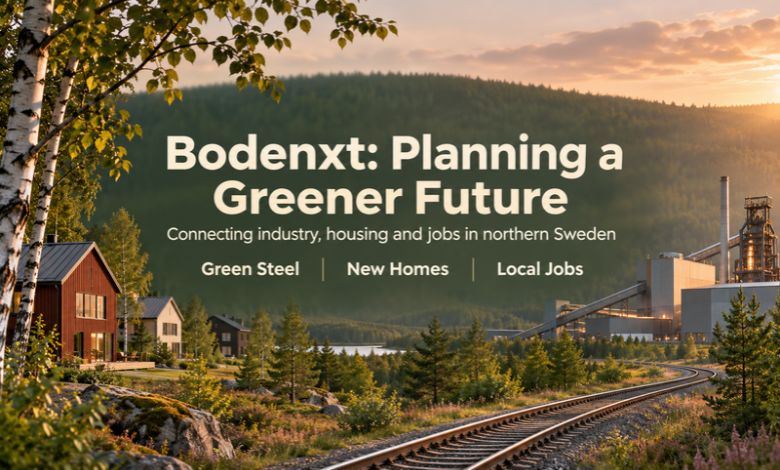
A new industrial project can change a town long before its first products reach customers. Housing demand rises, businesses explore fresh opportunities, and local leaders face difficult questions about transport, jobs and public services. In northern Sweden, Bodenxt brings these connected challenges into one shared plan.
Managed by Boden Municipality, the platform supports a major transformation driven by green industrial investment and a growing defence sector. Its work reaches beyond factory buildings to consider the people who will live, work and build their futures in the area.
At the centre of this story is an ambitious question: how can Boden manage rapid economic change while remaining a welcoming and practical place to live? The answer depends on much more than steel production.
What Is Bodenxt?
Bodenxt is Boden Municipality’s platform for coordinating its wider societal transformation. It connects work on housing, infrastructure, skills and business development as the area prepares for significant change.
Large investments create needs that cross several departments and organisations. An industrial company may recruit workers, but those workers also need homes, reliable transport and access to everyday services.
The platform helps bring these issues together. Instead of viewing a factory, a housing development and a training programme as separate projects, the approach recognises how closely they depend on one another.
The municipality describes the expected pace as roughly 20 years of development within a few years. This expresses the scale of the planning challenge rather than a guaranteed timetable for every project.
The Four Main Themes Behind Bodenxt
Bodenxt has been organised around four broad themes: living and housing, infrastructure, skills supply, and business development.
Living and housing focuses on the conditions people need to settle in Boden. Infrastructure concerns the physical systems that support growth. Skills supply addresses workforce needs, while business development considers opportunities for companies.
Each theme influences the others. New homes can help employers attract staff, while training can give existing residents access to emerging jobs. Better transport can support businesses and make daily journeys easier.
This connected approach is important because progress in one area can be held back by delays elsewhere. A new workplace becomes more useful when the surrounding community is ready to support it.
Stegra’s Role in Boden’s Industrial Future
One of the strongest drivers of Boden’s transformation is Stegra, previously known as H2 Green Steel. The company is developing an integrated facility for green hydrogen, iron and steel production.
Its planned process uses renewable electricity and hydrogen to reduce dependence on fossil fuels. Stegra states that this approach aims to reduce CO₂ emissions by up to 95% compared with traditional steelmaking.
That percentage describes the intended performance of the steel production process. It does not mean that construction, transport or every other part of the development has no environmental impact.
For Boden, the importance of Stegra extends beyond its technology. A major industrial employer can influence recruitment, housing demand, local purchasing and the services needed across the community.
Understanding the Production and Job Targets
Stegra’s stated ambition is to produce five million tonnes of green steel annually by 2030. This figure should be understood as a future target rather than an achieved production level.
Employment forecasts also need clear wording. Boden Municipality estimates that Stegra’s investment could generate around 3,000 direct and indirect jobs by 2029.
Separately, municipal information describes approximately 2,000 employees at the facility by 2030. These figures measure different things and should not be added together.
Direct jobs relate to employment within the operation. Indirect jobs can develop through suppliers and supporting businesses. Keeping this distinction clear gives readers a more accurate picture of the project’s expected economic reach.
Why Boden Industrial Park Matters
Boden Industrial Park covers approximately 550 hectares, offering space for land-intensive industrial development. Stegra’s own site occupies around 270 hectares within the wider area.
The distinction matters because the industrial park’s potential reaches beyond one company. Its development also raises possibilities for other businesses and activities connected with the green transition.
The municipality highlights suitable conditions for greenhouse cultivation and local food production. Some emerging ideas involve using resources such as surplus industrial heat more effectively.
However, opportunities should not be confused with completed operations. A promising concept still needs investment, customers and a workable business plan. The park’s long-term value will depend partly on which ideas become lasting commercial activities.
Housing Is a Major Part of the Challenge
Industrial growth creates an immediate question: where will people live?
Workers arriving for construction projects may need temporary accommodation. Employees planning to settle for several years need permanent homes that suit their budgets and family circumstances.
These are different needs. Temporary accommodation can reduce short-term pressure, but it cannot replace a balanced supply of homes for established residents and newcomers.
Housing also involves more than the number of properties available. A small rental flat may suit one person, while a family may prioritise space, schools and nearby services.
For Bodenxt, coordinating housing means considering location, affordability and timing alongside the expected pace of recruitment.
Infrastructure That Connects Industry and Community
The railway connection serving Boden Industrial Park has been completed, linking the area with the wider rail network. It provides an important route for industrial goods.
Reliable freight connections matter because factories need materials to arrive and finished products to reach customers. Transport planning therefore forms a practical foundation for industrial development.
However, infrastructure extends beyond freight. Roads, utilities and everyday travel arrangements also affect how comfortably a growing community functions.
A successful development needs these systems to work together. Workers must reach their jobs, businesses need dependable services, and residents should be able to move around without unnecessary difficulty.
The challenge is to build capacity that remains useful as the town’s needs change.
Skills Supply and Opportunities for Residents
New workplaces do not automatically produce a ready workforce. Employers need people with suitable knowledge, while residents need clear routes into available roles.
Skills supply can involve education, practical training, recruitment and cooperation between employers and learning providers. Support for people moving to the area can also help recruitment lead to long-term settlement.
For existing residents, access matters. People should be able to understand what kinds of jobs may emerge and what preparation those roles require.
Different opportunities will involve different qualifications and experience. Clear information can help jobseekers make realistic decisions about training or career changes.
This is where industrial growth can become personally meaningful: when a large investment creates an achievable next step for someone living nearby.
Local Businesses and Defence Expansion
Boden’s changing economy could create opportunities for businesses offering construction, maintenance, transport, food and other services.
However, being close to a major project does not guarantee a contract. Companies still need to understand purchasing requirements, prepare suitable offers and show they can deliver.
Alongside industrial investment, the Swedish Armed Forces’ expansion is another recognised driver of local development. It adds to demand for workers, housing and supporting services.
Industry and defence have different requirements, but both influence the municipality’s planning. Their combined effects make coordination especially important.
For local companies, the practical opportunity lies in understanding these changing needs early enough to respond.
What Will Make Bodenxt Successful?
Bodenxt’s success will depend on more than the size of announced investments. The everyday results will matter just as much.
Can people find suitable homes? Can employers recruit the staff they need? Are local businesses able to participate? Do transport and public services keep pace?
Clear communication will also play a part. Residents need to know which developments are complete, which remain under construction and which figures are forecasts.
Major transformation rarely moves evenly across every area. Keeping plans connected, explaining changes and responding to practical problems will help determine how widely the benefits are shared.
Conclusion
Bodenxt reflects a simple reality: industrial transformation affects an entire community. New technology needs workers and transport, while people need homes, services and opportunities to build a stable life.
Boden’s plans are ambitious, but their lasting value will emerge through practical results. By connecting housing, skills, infrastructure and business development, Bodenxt provides a framework for managing the town’s next chapter.
Frequently Asked Questions
1. What is Bodenxt?
Bodenxt is Boden Municipality’s platform for coordinating societal transformation linked to industrial investment, defence growth and the needs of a changing community.
2. Is Bodenxt owned by Stegra?
Bodenxt is a municipal platform. Stegra is a separate industrial company whose investment is a major driver of the development Bodenxt helps coordinate.
3. What are Bodenxt’s four main themes?
The four broad themes are living and housing, infrastructure, skills supply, and business development. Together, they connect economic growth with everyday community needs.
4. How many jobs could Stegra create?
The municipality estimates around 3,000 direct and indirect jobs by 2029. A separate forecast describes approximately 2,000 employees at the facility by 2030.
5. What is Stegra’s annual steel production target?
Stegra’s stated target is five million tonnes of green steel annually by 2030. This is a planned future level, rather than a statement of current output.