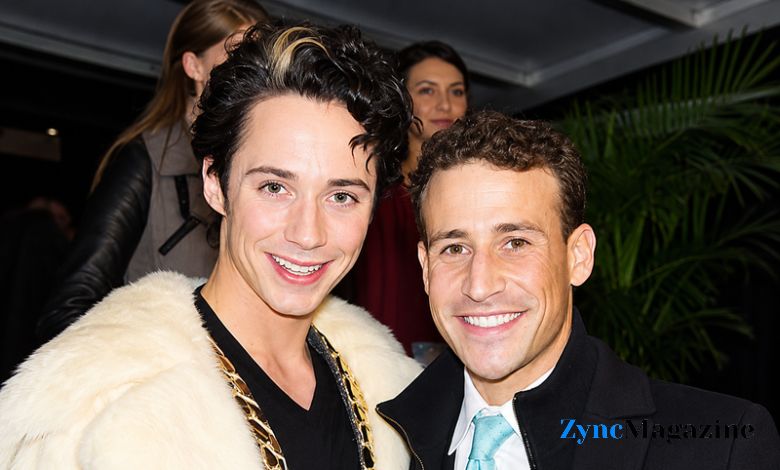
When Victor Voronov married American figure skater Johnny Weir, his name began appearing in stories read by people far beyond his professional circle. Their wedding took place in New York in December 2011. For many readers, that announcement was their first introduction to the Georgetown law graduate who had become Weir’s husband.
The years that followed brought more attention, especially when the marriage ran into difficulties. Much of what was written about Voronov concerned the relationship. His education and a shared project with Emory University received less attention, although both help explain his background. Looking at these parts together gives a fuller picture of someone often introduced through a single connection.
Quick Bio
| Field | Details |
|---|---|
| Full Name | Victor Voronov |
| Also Known As | Victor Weir-Voronov |
| Professional Background | Described as a lawyer in contemporary reporting |
| Known For | His marriage to figure skater Johnny Weir |
| Undergraduate University | Emory University |
| Undergraduate Subject | Political Science |
| Undergraduate Graduation | 2005 |
| Law School | Georgetown University Law Center |
| Legal Qualification | Law degree |
| Law School Graduation | 2008 |
| Former Spouse | Johnny Weir |
| Marriage Date | December 30, 2011 |
| Wedding Venue | New York City Courthouse |
| Divorce Year | 2015 |
A Background in Political Science and Law
Voronov completed his undergraduate education at Emory University in 2005. His degree was in political science, a subject concerned with government, public institutions, and political ideas. He then continued his education at Georgetown University Law Center, earning his law degree in 2008.
His time at these universities came before the wedding that made his name familiar to a wider audience. By the time he and Weir married, several years had passed since he finished law school. His legal education was already part of his background when public interest in his personal life grew.
There is a limit to how much these details reveal. University names and graduation dates establish where and when he studied. They do not provide a complete account of his student life, personal ambitions, or later professional results. Those parts of his story are less fully documented.
His Professional Background
News coverage during the marriage described Voronov as a lawyer. A report published in January 2014 identified him as a New York attorney who was moving from corporate law into entertainment law. That description offers a useful view of his career direction at the time.
Earlier wedding coverage also mentioned that he was preparing for the New Jersey bar. These details place legal work and training within his biography, even though they were often included as brief background in stories mainly about Weir.
Neither report should be treated as a current employment record. His exact present role, employer, and professional activities are not established by those older accounts. The most reliable approach is to describe the career information with its date, rather than assume that a position mentioned during the marriage remains unchanged.
The December 2011 Courthouse Wedding
Voronov and Weir married on December 30, 2011, at the New York City Courthouse. It was a civil ceremony attended by their parents. The small family gathering became a public news story when the marriage was announced around the New Year.
The couple also discussed holding a larger celebration later. That distinction explains why early accounts referred both to a completed marriage and to future wedding plans. The courthouse event had already made their union official.
Their wedding introduced Voronov to an audience that knew Weir through skating. Readers who followed the athlete’s performances were now learning about his partner’s education and background. A personal milestone therefore became the main point through which Voronov entered wider public awareness.
Starting Married Life Together
Early announcements described plans for a home in New Jersey and a honeymoon in Punta Cana, Dominican Republic. These were ordinary parts of beginning married life, but their connection to a famous athlete made them subjects of entertainment coverage.
The couple also adopted the shared surname Weir-Voronov. Johnny continued using his established name professionally, while Victor appeared in some coverage under the combined surname. Anyone reading older articles may therefore encounter both Victor Voronov and Victor Weir-Voronov.
Those early details matter because later accounts often begin with the breakup. The wedding announcements record a different stage: two people making a commitment, including their families, and planning a household. A balanced biography leaves room for that beginning alongside the events that came afterward.
A Project That Reached Beyond Celebrity News
In December 2013, Emory University announced that the couple would place their papers in its LGBT history collection. The collection was housed at the university’s Manuscript, Archives, and Rare Book Library, commonly called MARBL at the time.
The planned materials covered their relationship and public lives, along with Weir’s skating career. Photographs, correspondence, scrapbooks, artwork, and items received from fans were among the types of material described.
For Voronov, the project created another connection with the university where he had completed his undergraduate studies. It also placed aspects of his public life within a historical collection.
An archive serves a different purpose from a celebrity headline. A news story usually concentrates on a particular announcement or disagreement. Personal papers can preserve a longer record, allowing researchers to examine how people represented themselves and their relationships. That makes the Emory project a meaningful chapter in Voronov’s biography.
Separation, Reconciliation Reports, and Divorce
The marriage became the subject of renewed attention in March 2014, when Weir publicly announced their separation. Voronov also addressed the breakup publicly. Coverage that had once focused on a wedding now centered on the relationship’s difficulties.
The following months did not form a simple, uninterrupted path toward divorce. Reports of a reconciliation appeared in May 2014, showing that the couple’s position had changed after the initial announcement.
Their marriage ultimately ended in 2015, according to biographical records. This is why accounts may mention both 2014 and 2015 when discussing the relationship’s end. The first marks the widely reported separation; the second is recorded as the divorce year.
Keeping those events separate avoids a common misunderstanding. An announcement that a couple has split does not itself mean the legal marriage has ended.
The Limits of His Public Biography
Voronov’s story is easier to trace during the marriage than afterward. The available material provides identifiable milestones: university graduation, legal training, the wedding, the archive announcement, and the separation. It offers much less detail about his recent daily life.
That leaves some questions unanswered. A current employer, a complete work history, and a dependable estimate of his finances cannot be established from relationship coverage alone. Repeating a precise net worth figure without financial evidence would add certainty that the record does not support.
Public attention can make a person seem thoroughly documented when only a few years of their life have received close coverage. That is a useful distinction when reading about Voronov.
Conclusion
Victor Voronov has an educational and professional background that deserves space alongside the story of his marriage. His studies at Emory and Georgetown were completed before the wedding brought him widespread attention. His involvement in Emory’s archive project adds another documented part of his public life.
The marriage to Johnny Weir remains his best-known connection, from the courthouse ceremony in 2011 to their later separation and divorce. A fair profile follows those events while recognizing that they do not tell every part of his story.
Frequently Asked Questions
1. Who is Victor Voronov?
Victor Voronov is a Georgetown law graduate described in contemporary reporting as a lawyer. He became publicly known through his marriage to figure skater Johnny Weir.
2. What is his educational background?
He earned a political science degree from Emory University in 2005 and completed his law degree at Georgetown University in 2008.
3. When and where did he marry Johnny Weir?
They married in a civil ceremony at the New York City Courthouse on December 30, 2011, with their parents attending.
4. Did they separate in 2014 or 2015?
Their separation was publicly announced in March 2014. Reports of reconciliation followed, while their divorce is listed in biographical records as occurring in 2015.
5. How was he involved with Emory’s history collection?
He and Weir agreed to place personal papers in Emory’s LGBT collection, preserving material connected to their relationship and public experiences.