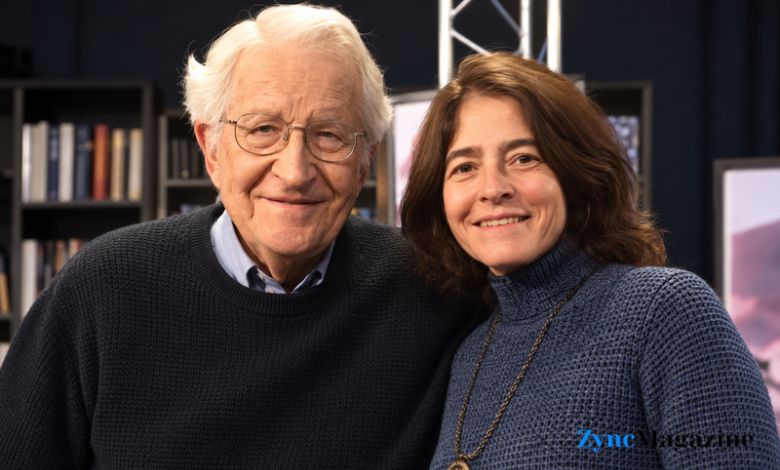
Valeria Wasserman is a Brazilian translator whose name has become familiar to readers following the life of Noam Chomsky. Although she is widely recognised as his wife, her professional record includes academic translation work published years before their marriage. Those credits offer a useful starting point for understanding her background beyond her connection to a famous public figure.
Her public responsibilities changed after Chomsky’s stroke in June 2023. She helped organise his care and answered questions about his condition. Later, she also spoke about the couple’s past association with Jeffrey Epstein. Her story therefore brings together professional language work, marriage, caregiving and the pressures of speaking publicly about difficult personal matters.
Quick Bio
| Field | Details |
|---|---|
| Full Name | Valeria Wasserman |
| Also Known As | Valeria Wasserman Chomsky |
| Nationality | Brazilian |
| Profession | Translator |
| Known For | Academic translation work and marriage to Noam Chomsky |
| Husband | Noam Chomsky |
| Marriage Year | 2014 |
| Professional Field | Academic and cultural translation |
| Translation Languages | Portuguese and English |
| Publication Credits | Estudos Avançados |
| University Connection | Translation credits in publications associated with the University of São Paulo |
| Subjects Translated | Politics, environmental issues and sustainability |
| Credited Translation Collaborator | Cary Wasserman |
| Public Role | Sharing updates about Chomsky’s health and issuing public statements |
Who Is Valeria Wasserman?
Valeria Wasserman is a Brazilian professional translator who married Noam Chomsky in 2014. News coverage sometimes identifies her as Valeria Chomsky or Valeria Wasserman Chomsky. These names refer to the same person, although the shorter version remains common in searches and biographical articles.
Her public record is much narrower than her husband’s. Chomsky has spent decades publishing books, giving interviews and speaking about language and politics. Wasserman’s documented work is more often found in translation credits. Looking at those publications helps give her professional life a place in a biography that might otherwise focus entirely on her marriage.
Her Work as an Academic Translator
Wasserman’s name appears in English translations published by Estudos Avançados, an academic journal associated with the University of São Paulo’s Institute of Advanced Studies. A 2005 article examining political changes in Venezuela credits both Cary Wasserman and Valéria Wasserman as translators. A published interview with Brazilian politician Fernando Gabeira carries the same joint credit.
These publications show her involvement in making Portuguese-language material available to English-speaking readers. They also establish that her translation work predates her marriage to Chomsky. While these credits do not provide a complete employment history, they offer direct evidence of work carried out under her name.
Academic translation involves careful decisions about meaning. A sentence discussing political institutions, for example, must remain clear without losing the author’s argument. Readers usually notice the ideas rather than the translator, but the quality of that translation shapes how well those ideas travel.
The Subjects Covered by Her Translation Work
Her published credits extend beyond politics. Wasserman and Cary Wasserman are also credited with translating “The Environmental Impact of Mining in the State of São Paulo”, published in 2010. Another article from that year, “Indicators of Sustainability”, lists them as its translators.
Together, these examples show work across environmental and social subjects. Such writing can include technical terms, local policies and arguments that depend on a particular national setting. Translating it requires attention to both the original wording and the reader’s understanding. This part of Wasserman’s career deserves recognition on its own terms, even though it receives less attention than her personal life.
Marriage to Noam Chomsky
Wasserman and Chomsky married in 2014, several years after the death of his first wife, Carol Chomsky, in 2008. Their relationship introduced a new chapter in his personal life after a long first marriage.
During a 2015 interview, Chomsky spoke warmly about Wasserman and said they were approaching their first wedding anniversary. He also mentioned travelling to Brazil to meet her family. His comments offered a rare personal moment in an interview otherwise concerned with public affairs.
The interview provides a first-hand account of his happiness in the relationship. It does not, however, reveal every detail of their courtship. A careful biography can acknowledge that personal warmth without turning a brief public comment into an imagined account of their private lives.
Their Connection to Brazil
Brazil became an established part of the couple’s shared life. They have had a residence there since 2015. Wasserman also accompanied Chomsky when he visited Luiz Inácio Lula da Silva in prison in 2018, an appearance connected with Chomsky’s longstanding interest in Brazilian politics.
Their Brazilian home later became important during Chomsky’s recovery. This connection was therefore both personal and practical: Brazil was Wasserman’s home country and a place where the couple had already built part of their life together.
Her Role After Chomsky’s Stroke
Chomsky suffered a major stroke in June 2023. Reporting published the following year described difficulties with speech and movement. Wasserman arranged his transfer from the United States to São Paulo once he was able to travel, using an ambulance aircraft accompanied by nurses.
This period brought responsibilities beyond answering public questions. Organising treatment across countries involved medical arrangements and decisions about where recovery could continue. Her comments to journalists gave readers information about those arrangements while the main attention remained on Chomsky’s condition.
Correcting False Reports in June 2024
On 18 June 2024, false reports that Chomsky had died spread online. Wasserman directly rejected them in an email to the Associated Press. Several publications had already circulated premature tributes or death announcements.
The hospital separately confirmed that he had been discharged to continue treatment at home. Wasserman’s response helped correct a claim that had travelled widely before being checked.
Her February 2026 Statement About Jeffrey Epstein
In a statement dated 7 February 2026, Wasserman addressed the couple’s past contacts with Jeffrey Epstein. She apologised for their failure to examine his background properly and expressed solidarity with his victims. She also described her responsibilities for Chomsky’s medical care following his stroke.
Her statement presented the couple’s explanation of the relationship. Separately, the Associated Press reported that newly released documents showed more extensive ties than had previously been reported. A balanced account needs to distinguish her explanation from the wider evidence and reporting.
What Remains Private
A detailed public record of Wasserman’s childhood, family background and full career history is harder to establish. That leaves gaps in her biography, but those gaps should remain visible rather than being filled with assumptions.
The clearest account centres on published translation credits, her marriage and statements made directly or reported by established news organisations. Precise claims about personal wealth, qualifications or private relationships require their own evidence. Repetition across biography websites does not make a claim reliable.
Conclusion
Valeria Wasserman’s public story includes both an independent record of translation work and a marriage that brought international attention. Her academic credits show a professional contribution that began before she became Chomsky’s wife.
Later events placed her in a more visible position as a caregiver and public representative. Understanding these different parts of her life produces a fuller portrait while leaving room for the personal details she has not made public.
Frequently Asked Questions
1. Who is Valeria Wasserman?
Valeria Wasserman is a Brazilian translator best known publicly as the wife of linguist and political commentator Noam Chomsky.
2. When did Valeria Wasserman marry Noam Chomsky?
They married in 2014. Chomsky discussed their approaching first anniversary during an interview in March 2015.
3. What translation work has she done?
Her credits include academic articles about Venezuelan politics, mining in São Paulo and sustainability indicators published in Estudos Avançados.
4. Did she respond to false reports of Chomsky’s death?
Yes. She told the Associated Press that reports circulating on 18 June 2024 were false.
5. What did she say about Jeffrey Epstein in 2026?
She apologised for the couple’s poor judgement over their association with Epstein and expressed solidarity with his victims.