A good PE lesson gives every pupil something worthwhile to work towards. For one child, that might mean catching a ball confidently. For another, it could mean finding space and choosing a better pass. Their achievements may look different, but both show learning.
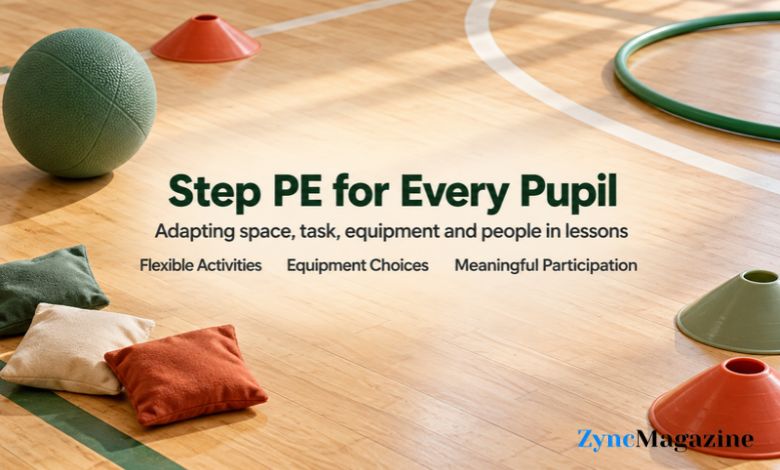
Step PE helps teachers respond to these differences through small, practical adjustments. It uses the STEP framework, which stands for Space, Task, Equipment and People.
Changing a throwing distance, offering a different ball or organising smaller teams can give pupils a more useful opportunity to practise. The aim is to help each learner take part and experience a suitable challenge. Teachers can use STEP during planning and return to it whenever an activity needs adjusting.
What Is Step PE
Step PE refers to using the STEP framework within physical education. It gives teachers and coaches four areas to consider when adapting games, skill practices and movement activities.
Space concerns where an activity happens. Task covers what pupils do. Equipment includes the resources they use, while people refers to participants, group arrangements and roles.
Teachers do not need to change every element. If pupils struggle to pass accurately because they are too far apart, bringing them closer may be enough.
The framework also helps teachers introduce greater difficulty. A pupil who completes a task comfortably may be ready for a smaller target, more movement or an additional decision.
Why Flexible PE Lessons Matter
Pupils bring different experiences to PE. Some regularly play organised sport, while others have had fewer opportunities to develop basic movement skills.
Their confidence can vary between activities too. Someone who enjoys running may feel uncertain during gymnastics. A confident football player may need support when learning a dance sequence.
These differences make flexible teaching useful. Inclusive physical education involves looking closely at how pupils experience an activity and whether they have meaningful opportunities to learn.
A child might spend an entire game on the court without receiving a pass. They are present, but their chances to practise are limited. That is a reason to review how the activity works.
Space and the Playing Environment
Space includes the size, shape and layout of an activity area. Teachers can adjust distances between partners, move targets or introduce clearly marked zones.
During throwing practice, several starting lines could provide different levels of challenge. Pupils can begin at a manageable distance and move further away as their control develops.
Space changes need careful judgement. A larger playing area might create more room to receive a pass, but it can also demand longer throws and more running.
A smaller area may shorten distances while increasing pressure from nearby opponents. Its effect depends on the activity and what pupils are learning.
Clear boundaries matter as well. Pupils should understand where to move, where to wait and which areas belong to their group.
Task and the Learning Challenge
The task is what pupils are asked to do. It includes the action, rules, scoring conditions and any decisions involved.
Sometimes, pupils struggle because they face too many instructions at once. They may be trying to control a ball while remembering movement restrictions and several scoring rules.
Begin with the main learning goal. If the focus is accurate passing, allow pupils to practise sending and receiving before introducing defenders or more demanding conditions.
Demonstrate the action and explain a useful teaching point. Give pupils time to try it before adding another instruction.
Task changes can provide support or progression. Catching after a bounce might offer a starting point, while receiving a pass on the move could create a fresh challenge.
Equipment and Finding the Right Fit
Equipment choices can affect how pupils manage an activity. Size, weight, texture and speed are all worth considering.
For a catching lesson, teachers could offer a selection of suitable balls. Watching pupils use them may reveal which options allow more effective practice.
Bigger equipment is not automatically easier. A large ball may be easier to track but difficult for small hands to grip. A lighter ball may move differently depending on the conditions.
Ask pupils what helps them. A simple conversation about comfort and control can guide a better choice.
Present resources as ordinary learning options. Labels such as “the easy ball” may make pupils reluctant to choose equipment that would help them develop their skills.
People and Group Organisation
The people element concerns who takes part, how groups are formed and what roles participants perform. These decisions influence the opportunities pupils receive.
Pairs can support repeated practice. Small teams may help pupils explore movement and passing decisions while making it easier for the teacher to observe individual contributions.
Choose partners with the activity in mind. A helpful pairing during throwing practice may need reviewing when the lesson moves into a competitive game.
Keep groupings flexible. Pupils have different strengths, and their needs can change as they gain experience.
Observing and giving feedback can contribute to learning, but these roles need a clear purpose. Check that the same pupils are not repeatedly watching while others take part physically.
A Practical Step PE Lesson Example
Imagine a lesson focused on accurate underarm throwing. Pupils work in pairs, taking turns to throw a beanbag towards a hoop on the floor.
One pupil repeatedly throws short. The teacher moves the starting point closer so the pupil can practise the action over a manageable distance.
Another pupil lands almost every attempt inside the hoop. Their next challenge could involve moving further away or aiming at a smaller target.
A different pair uses an overarm action because they misunderstood the demonstration. They need the movement explained again before changing the distance or equipment.
These are possible teaching decisions. Their usefulness depends on whether pupils understand the task and practise the intended skill more effectively afterwards.
Planning Step PE Without Adding Complexity
Start with a clear learning goal. Then consider what might prevent pupils from working towards it.
Some may need a clearer demonstration. Others might benefit from a shorter distance, a different resource or another group arrangement.
Prepare a few practical options, such as additional markers or suitable equipment nearby. This makes adjustments easier during the lesson.
It is not always necessary to create separate activities. Pupils can often share a learning goal while practising through different task conditions.
When introducing a change, explain it clearly and allow time to settle into the activity. Too many changes at once can make instructions difficult to follow.
Checking Whether an Adaptation Helps
Look for evidence of better learning opportunities. Pupils might show clearer understanding, more controlled movement or greater independence when making decisions.
Scores provide some information, but they do not tell the whole story. An unsuccessful attempt may still show improved technique or a thoughtful choice.
Ask specific questions. “What helped you control that throw?” can reveal more than asking whether an activity felt easy.
Where practical, change one element first and observe the result. This helps teachers decide whether to keep the adjustment or try something else.
Review successful adaptations too. Support that helped earlier may need changing as pupils become more confident and skilled.
Common Mistakes to Avoid
One mistake is removing challenge whenever a pupil struggles. Learning an unfamiliar skill takes practice, and pupils may need feedback rather than an easier activity.
Another is adding rules without a clear reason. Every adjustment should help pupils access the learning or develop the intended skill.
Avoid making assumptions based only on age, diagnosis or sporting reputation. Watch the individual and listen to their experience.
Finally, look beyond how busy a lesson appears. The important question is whether pupils receive useful opportunities to practise and improve.
Conclusion
Step PE offers a practical way to adapt physical education through Space, Task, Equipment and People. It helps teachers connect everyday decisions with pupils’ opportunities to learn.
The strongest adjustments begin with a clear purpose. A closer target, a different partner or a simpler rule can help a learner participate more effectively.
Keep observing, listening and reviewing. Thoughtful changes can make PE more accessible while preserving the challenge that helps pupils develop.
Frequently Asked Questions
1. What does STEP stand for in PE
STEP stands for Space, Task, Equipment and People. Teachers can adjust these elements to change how pupils experience physical activities.
2. Is Step PE only for pupils with additional needs
No. STEP can support pupils who find an activity difficult and provide greater challenge for those ready to progress.
3. Do teachers need expensive equipment to use STEP
Many adjustments involve changing distances, rules or group sizes. Teachers can often begin with resources already available.
4. Should every pupil complete the same activity
Pupils can work towards a shared learning goal through different distances, equipment or task conditions. Each version should provide relevant practice.
5. Can teachers use STEP during a lesson
Yes. Teachers can introduce adjustments after observing pupils. Changes should be explained clearly and reviewed to check whether they help.