A teacup can hold more than tea. It can bring back a family kitchen, a familiar voice, or a home that no longer exists. That connection between simple objects and human experience offers a useful way into the work of Robert Russell, the Los Angeles artist whose paintings explore memory, loss, and ritual.
His subjects may look quiet, but they raise difficult questions. What survives when people leave their homes? How can a beautiful object carry a painful history? And why do ordinary belongings sometimes feel impossible to replace?
The name also belongs to several other public figures. Here, the main focus is the contemporary painter, with a guide to the actor, screenwriter, and surveyor who share his name.
Quick Bio
| Field | Details |
|---|---|
| Full Name | Robert Russell |
| Birth Year | 1971 |
| Birthplace | Kansas City, Missouri, United States |
| Nationality | American |
| Profession | Contemporary painter |
| Based In | Los Angeles, California |
| Undergraduate Education | Bachelor of Fine Arts, Rhode Island School of Design |
| Postgraduate Education | Master of Fine Arts, California Institute of the Arts |
| Art Medium | Oil painting on canvas |
| Known For | Large paintings of teacups, porcelain figures, and ritual objects |
| Main Themes | Memory, loss, identity, history, and Jewish traditions |
| Spouse | Lisa Edelstein |
| Notable Series | Teacups, Falling Teacups, and Stateless Objects |
| 2026 Exhibition | A Palace in Time, alongside Lisa Edelstein at the Skirball Cultural Center |
Who Is Robert Russell?
Robert Russell is an American painter born in Kansas City, Missouri, in 1971. He lives and works in Los Angeles. He earned his Bachelor of Fine Arts at the Rhode Island School of Design and his Master of Fine Arts at the California Institute of the Arts, also known as CalArts.
His official biography describes a practice built around familiar things, including books, porcelain, cups, and candles. Through painting, he explores how these objects gain meaning through use, care, and remembrance. The subject is often something that could sit unnoticed on a shelf until a personal connection makes it matter.
The Teacup Paintings That Reward a Closer Look
Russell’s teacup paintings turn small household items into large images. His 2021 exhibition at Anat Ebgi presented porcelain cups against dark backgrounds, with floral patterns and bright reflections drawing attention to their surfaces. Their size changes how viewers encounter an otherwise familiar object.
The source images are part of the story. Russell has used photographs found in eBay listings and online estate sales. These pictures usually serve a practical purpose: showing a buyer what is for sale. His paintings give those brief, useful images a different kind of attention.
From a distance, a cup may look highly realistic. Move closer, and its edges and decoration become separate brushstrokes and changes in colour. The gallery’s description highlights this shift between a recognisable object and an image that begins to break apart. Looking becomes an active part of the experience.
Falling Teacups and the Feeling of Fragility
In Falling Teacups, presented at Miles McEnery Gallery in 2024, Russell placed cups against sky-blue backgrounds. The objects appear suspended as they fall. The scene feels light and calm, yet the thought of delicate porcelain hitting the ground creates tension.
The gallery also connects the series to his experience of growing up Jewish in America and to questions about fitting into wider society. Through that context, the falling cup gains another possible meaning: a familiar form caught in a moment of change, with its future still uncertain.
The Difficult History Behind His Porcelain Paintings
Russell’s 2023 exhibition, Porzellan Manufaktur Allach, addressed the history behind porcelain figurines made through forced labour under the Nazi regime. These works brought a much darker background to objects that might first appear decorative or harmless.
Working from auction photographs, he painted the figurines at a much larger scale. The gallery explained the project as an act of reclaiming these objects as a Jewish artist and confronting the violence connected to their production. Their appearance and their history become difficult to separate.
One way to read the series is as a challenge to looking only at surfaces. A pleasing shape does not explain who made an object or under what conditions. The paintings encourage viewers to keep those questions present, even when the image itself appears still and beautiful.
Stateless Objects and the Meaning of Belonging
His 2025 exhibition, Stateless Objects, focused on Jewish ritual objects connected to communities across North Africa, the Middle East, and Central Asia. Subjects included ceremonial cups and other items linked to religious and domestic life.
The gallery placed these works within histories of displacement, violence, and forced migration. Objects once used in homes and communities had become separated from those settings. Painting them brought attention to both their survival and the human lives missing from view.
The exhibition raises a question that reaches beyond art: what does it mean to preserve something when its original setting has disappeared? Keeping an object protects its physical form. Understanding its role in a family or community helps protect another part of its history.
Robert Russell and Lisa Edelstein
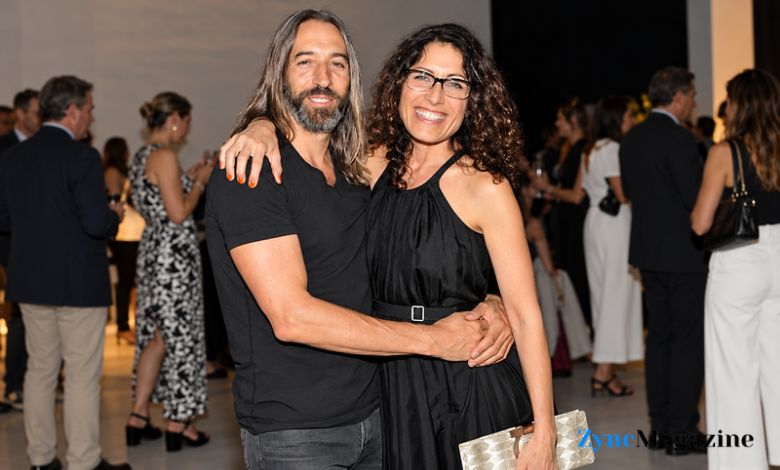
Russell is married to Lisa Edelstein, whose creative work includes acting and painting. Their shared interest in Jewish life and family memory came together in A Palace in Time at the Skirball Cultural Center, which ran from May 20 to September 6, 2026.
The exhibition paired Russell’s paintings of ritual objects with Edelstein’s scenes drawn from family photographs. His work included Kiddush cups and memorial candles, while hers recalled gatherings and everyday life in suburban New Jersey during the 1970s.
Seen together, their approaches offered two ways of exploring memory: through belongings and through people. The museum connected both to celebration, grief, family traditions, and the small rituals that shape a day. That shared subject gave the exhibition a clear link beyond their marriage.
Other Notable People Named Robert Russell
The English actor Robert Russell, who lived from 1936 to 2008, was a separate person. He played John Stearne in Witchfinder General and appeared in television programmes including Doctor Who, The Avengers, and Blake’s 7. His imposing presence often led to roles as tough or threatening characters.
Robert W. Russell was a screenwriter associated with The More the Merrier. The Academy’s records list Robert Russell among the nominees for both Original Motion Picture Story and Screenplay for that film at the 1944 Oscars. These were two nominations connected to the same production.
Another Robert Russell, who lived from 1808 to 1900, was a surveyor, architect, and artist in Australia. State Library Victoria records his arrival in Melbourne in 1836 as surveyor to the settlement. His drawings and watercolours help document the city’s early appearance.
Conclusion
Robert Russell’s paintings offer a reason to pause over things we might otherwise overlook. Cups, candles, and porcelain figures become starting points for thinking about care, history, and remembrance. For someone new to his work, the most useful question may be a simple one: what can an ordinary object tell us about the people connected to it?
Frequently Asked Questions
1. What is Robert Russell known for?
The contemporary artist is known for paintings of teacups, porcelain figures, books, and ritual objects. His work explores memory, loss, and survival through familiar subjects.
2. Where was Robert Russell the artist born?
He was born in Kansas City, Missouri, in 1971. His gallery biography identifies Los Angeles as the city where he lives and works.
3. Who is Robert Russell’s wife?
The painter is married to Lisa Edelstein. Their work was brought together in the Skirball Cultural Center exhibition A Palace in Time in 2026.
4. Where does he find images for his teacup paintings?
He has used photographs from online estate sales and eBay listings, turning images made to sell household objects into subjects for large paintings.
5. Is the painter the same Robert Russell who appeared in Doctor Who?
No. The Doctor Who performer was the English actor Robert Russell, born in 1936. The Los Angeles painter was born in 1971.