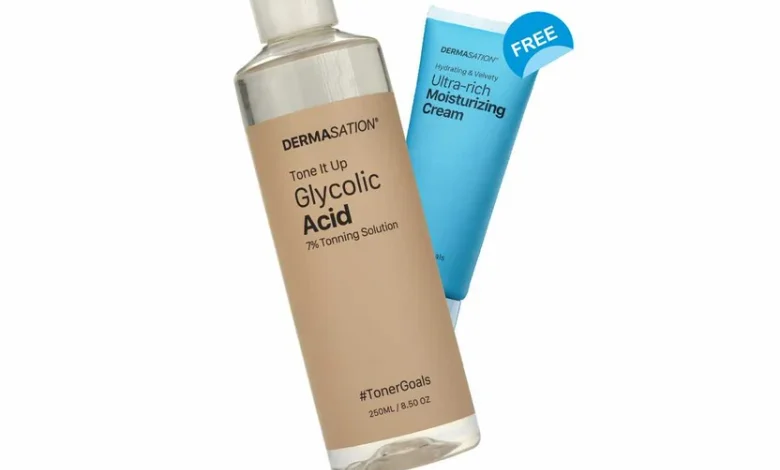
You finally started exfoliating. The first week, your skin looked smoother and brighter. Then the dry patches showed up. Now your nose is flaking, your cheeks feel tight, and your skin stings when you wash it.
It’s tempting to blame the exfoliant. But in most cases, the real problem is what comes after it. Exfoliating acids like glycolic acid work best when they’re paired with the right moisturizer, and skipping that step is one of the most common reasons routines go wrong.
What Exfoliation Actually Does to Your Skin
Your skin’s outer layer is made of old, dead cells. When they build up, skin looks dull and feels rough.
Glycolic acid loosens those dead cells so they shed more easily. That’s why your skin looks fresher and smoother after using it. But removing that top layer also takes away some of your skin’s natural protection, at least for a while.
Underneath, your skin barrier is working hard to hold on to water. If nothing helps it, water escapes faster than usual. That’s when dryness, flaking and stinging begin.
Signs Your Skin Needs More Moisture After Exfoliating
- Tight skin, especially right after washing
- Flaky patches around the nose, chin or mouth
- Stinging when you apply products that never bothered you before
- Redness that doesn’t settle
- Skin that looks shiny but feels dry
Any of these means your skin barrier needs support.
Why Moisturizer Matters So Much
A moisturizer does two jobs after exfoliation:
1. It replaces lost moisture, so skin feels soft and comfortable again.
2. It protects the barrier, so water stays in and irritation stays out.
Without it, you’re exfoliating away the old layer but giving the new one nothing to protect it.
“But My Skin Is Oily. Do I Still Need Moisturizer?”
Yes. This is one of the biggest skincare myths.
Oily skin produces oil, but it can still lack water. When oily skin is exfoliated and left without moisturizer, it often becomes dehydrated. And dehydrated skin tends to produce even more oil to make up for it.
The answer isn’t skipping moisturizer. It’s choosing the right texture. A lightweight, oil free moisturizer for all skin types hydrates without leaving a greasy layer or clogging pores, which makes it a good match for oily, combination and normal skin alike.
What to Look For in a Moisturizer
After exfoliating, your skin needs a moisturizer that’s gentle and supportive. Look for:
| Ingredient or feature | Why it helps |
| Ceramides | Help rebuild the skin barrier and lock in moisture |
| Hyaluronic acid | Draws water into the skin so it looks plump and smooth |
| Oil-free texture | Hydrates without heaviness or shine |
| Non-comedogenic | Won’t clog pores |
| Fragrance-free or low-fragrance | Less likely to sting freshly exfoliated skin |
Avoid heavy, perfumed creams or anything with more strong actives right after exfoliating. Some brands build these features in on purpose. Dermasation, a skincare brand in Pakistan, makes its moisturizers with ceramides and hyaluronic acid in lightweight, oil-free textures made for hot, humid weather.
How to Pair Glycolic Acid With Moisturizer
Here’s a simple evening routine:
1. Wash your face with a gentle cleanser.
2. Pat your skin completely dry.
3. Apply your glycolic acid toner with a cotton pad.
4. Wait 3–5 minutes so it can work.
5. Apply a moisturizer to your whole face and neck.
On nights you don’t exfoliate, still cleanse and moisturize. In the morning, use moisturizer followed by sunscreen.
How often to exfoliate
| Time | How often |
| Weeks 1–2 | 2 evenings a week |
| Weeks 3–4 | 3 evenings a week |
| After that | Up to 3–4 evenings a week |
Rest nights matter just as much as exfoliating nights. They give your skin time to recover.
Don’t Forget Sunscreen
Freshly exfoliated skin is more sensitive to the sun. Without protection, it burns more easily and dark spots can get darker.
Apply moisturizer first, let it settle, then finish with a broad-spectrum sunscreen every morning.
Already Flaking? How to Calm It Down
If your skin is already dry and irritated:
- Stop exfoliating for 5–7 days
- Wash with lukewarm water, never hot
- Moisturize twice a day, morning and night
- Skip scrubs, retinol and other strong actives for now
- Once your skin feels comfortable, bring exfoliation back at 2 evenings a week
Most skin calms down within a week with this approach.
What Results Can You Expect?
| Time | What you’ll notice |
| Week 1 | Softer skin with less tightness |
| Week 2 | Brighter skin without flaking |
| Weeks 3–4 | Smoother texture and a more even look |
| Weeks 6–8 | Healthy, glowing, comfortable skin |
The Bottom Line
Exfoliation and moisturizing are a team. Glycolic acid clears away the dull layer, and moisturizer protects the fresh skin underneath.
If your skin is peeling, tight or stinging, don’t give up on exfoliating. Slow down, add a good moisturizer after every use, and wear sunscreen in the morning. That one simple step is often the difference between irritated skin and glowing skin.