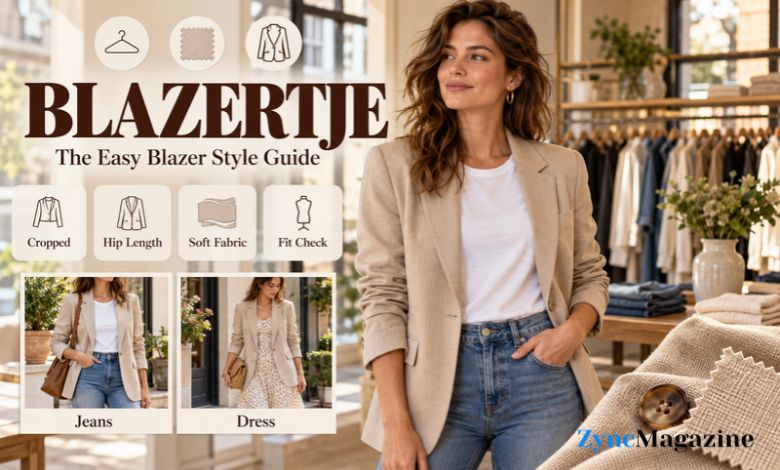
A blazertje can make a simple outfit look polished without feeling too formal. The Dutch word means “little blazer,” but it doesn’t always describe a small jacket. It might be cropped and fitted, soft and lightweight, or traditionally tailored. What matters most is how the blazer looks and feels when you wear it.
That makes it a useful layer for days when a T-shirt feels too plain but a full suit feels like too much. Put one over jeans for lunch, wear it with smart trousers for work, or add it to a dress for an evening out. The same jacket can suit several plans if its fit and fabric work with the rest of your wardrobe.
What Does Blazertje Mean?
Blazertje is the Dutch diminutive form of blazer. The Dutch spelling reference lists it as a form of the word for the clothing item, with blazertjes as its plural.
The name alone does not tell you the jacket’s exact cut. A shop might use it for a short blazer, while someone else might simply be referring to a blazer in a casual way. If you see blazertje in a product listing, look at the measurements and photos before assuming it will be cropped, fitted or lightweight.
Why Is a Blazer So Easy to Wear?
A blazer adds shape to an outfit. Its collar and front opening create clear lines, even when everything underneath is relaxed. That is why jeans and a plain top can look a little more put together as soon as you add one.
It also gives you room to adjust the mood of an outfit. Wear it open with trainers for a casual day. Button it over a simple top and change into smarter shoes when the occasion calls for it. You do not need a new set of clothes for each look; you can start with pieces you already wear.
The key is choosing a blazer that fits your life. If you rarely wear formal clothes, a stiff jacket may spend most of its time in the wardrobe. A softer style could be easier to reach for. If you need something for meetings or events, a more structured cut may serve you better.
Choose a Length That Works With Your Clothes
Blazer length changes the look of an outfit more than you might expect. A cropped blazertje ends near the waist and leaves more of your trousers, skirt or dress visible. It can work well with high-waisted jeans or wide-leg trousers because the shorter jacket gives the outfit a clear shape.
A hip-length blazer is a flexible starting point. It often sits comfortably over a T-shirt, shirt or light jumper. It also gives you a familiar outline if you are buying your first blazer and want to wear it in several settings.
A longer blazer offers more coverage and can look relaxed when worn open. Try it over straight-leg jeans or a simple dress. Before choosing a length, put the blazer on with an outfit you already own. Seeing the whole look is more helpful than judging the jacket on its own.
Pay Attention to Fit, Not Just Size
A blazer can be your usual clothing size and still feel wrong. The shoulders may sit too far out, the sleeves may pull when you move, or the front may strain when you button it. Those details affect whether you will enjoy wearing it.
Try moving your arms forward and sitting down while wearing it. If you plan to layer it over a jumper, try that too. A close-fitting style needs enough room for comfortable movement. An oversized blazer should have extra space by design, but it should not feel as though it slips off your shoulders.
Check where the sleeves end as well. If they cover most of your hands, they may get in the way. If everything else fits, sleeve length is sometimes easier to alter than the shoulders, but it is worth considering that extra cost before you buy.
Pick a Fabric for the Weather and Occasion
Fabric affects how a blazertje hangs, how warm it feels and how much care it needs. Lightweight cotton or linen blends can feel comfortable in warmer weather, although linen tends to crease. A heavier wool blend may be better for cooler days. Some fabrics contain a little stretch, which can make a fitted jacket more comfortable.
Look at the lining too. A fully lined blazer may slide easily over long sleeves and hold its shape. An unlined one may feel lighter. Neither choice is automatically better; think about where and when you expect to wear it.
The care label deserves a quick look before you pay. If a jacket needs professional cleaning, ask yourself whether that suits your routine. A blazer you can care for easily is more likely to become part of your regular wardrobe.
Start With a Colour You Will Actually Wear
Black, navy, grey and beige can be easy to pair with other clothes, but the best colour depends on what is already in your wardrobe. If most of your trousers are black, you may find a grey or cream blazer more useful than another black layer. If you often wear blue denim, navy, brown or a soft neutral could give you several outfit options.
A bright colour or print can be fun, especially when the rest of your outfit is simple. Before buying one, picture at least three things you would wear with it. You do not need strict rules about matching. You just need enough combinations to make the purchase worthwhile.
Simple Ways to Style a Blazertje
For an everyday outfit, start with jeans, a plain T-shirt and comfortable shoes. Add a relaxed blazer and leave it open. If the jacket has a bold colour or pattern, let the rest of the outfit stay simple.
For work, try a blazer with straight trousers and a shirt or fine knit. A fitted jacket gives a sharper look, while a softer cut keeps the outfit more relaxed. Choose shoes that suit your day, whether that means flats, loafers or boots.
A dress offers another easy pairing. A cropped blazer keeps more of the dress visible, while a longer one adds coverage. If the dress has a busy print, a plain jacket can bring the look together. For an evening out, you could wear the same blazer over a simple top and change your accessories.
You can also wear a blazer with shorts or a skirt when the weather suits it. The aim is to make the pieces feel comfortable together. There is no need to follow a fixed formula if a different combination works better for you.
Questions to Ask Before Buying
Before choosing a blazertje, think about when you would wear it. Is it for everyday outfits, work, special occasions or all three? Then check the fit with the clothes you would put underneath it. A jacket that looks good over a thin top may feel tight over a jumper.
Look closely at the stitching, buttons and pockets. Check whether the fabric feels comfortable against your skin and whether the jacket sits as you want it to when open and closed. If you are shopping online, use the garment measurements rather than relying only on the size name.
Finally, consider whether the blazer needs any changes. A small adjustment may be worthwhile for a jacket you expect to wear often. If it needs changes in several places, another style may be a better choice.
Conclusion
A blazertje is a simple way to add shape and polish to an outfit. The Dutch name does not promise one particular style, so let the jacket itself guide your choice. Find a length you like, a fabric that suits your routine and a fit that feels good when you move. When it works with clothes you already own, you will have far more ways to wear it.
(FAQs)
Is a blazertje always a cropped blazer?
No. Blazertje means “little blazer” in Dutch, but the word alone does not set a required length. Check the actual garment description and measurements.
Can I wear a blazertje with jeans?
Yes. Jeans and a T-shirt are an easy starting point. Add a blazer that feels comfortable, then choose shoes to make the outfit more casual or more dressed up.
Is a blazertje suitable for work?
It can be. For a workplace with a smart dress code, choose a blazer with a neat fit and pair it with trousers, a skirt or a simple dress. Your workplace’s dress rules should guide the final choice.
Which colour should I buy first?
Choose a colour that works with several clothes you already own. Black, navy, grey and beige are common options, but your most useful choice may be a different colour.
How should a blazertje fit?
It should let you move your arms comfortably and sit without pulling. Check the shoulders, sleeve length and front closure. If you want to wear layers underneath, try it on with those layers.