Some meals catch your attention because they look impressive. Others win you over with warm potatoes, good cheese and a sauce you want to taste again before the first mouthful is finished. Queso humacha belongs comfortably in the second group.
If you have been searching for the Best Queso Humacha Near Me, learning a little about the dish will help you choose where to eat. This traditional Bolivian favourite brings together cheese, broad beans, potatoes and corn, with yellow chilli and herbs adding flavour. Closely linked with La Paz, it is a hearty meal that gives familiar ingredients a character of their own.
Finding it locally may take a few extra questions, but that search can be part of discovering a cuisine you have not explored before.
What Exactly Is Queso Humacha?
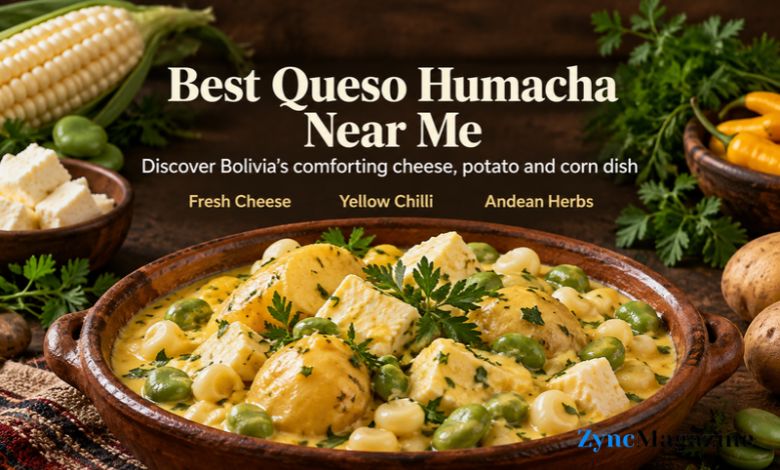
Queso humacha is a cheese-based Bolivian dish served with vegetables and a warm sauce. Cheese is central to the meal, but the potatoes, corn and broad beans matter just as much. Together, they make it substantial enough to enjoy as a main course.
La Paz’s municipal tourism service lists milk, yellow chilli, onion, garlic and aromatic herbs among its ingredients, alongside cheese and vegetables. Its version also includes egg. The dish is associated with Holy Week, although it can be enjoyed throughout the year.
That background helps explain its comforting nature. It is a meal built around straightforward ingredients, with enough flavour and texture to keep each mouthful interesting.
Why the Ingredients Work So Well Together
The cheese brings richness, while the potatoes give the sauce something to settle into. Broad beans add another texture, and corn offers a welcome change between mouthfuls of the softer ingredients.
Ají amarillo, the yellow chilli used in the preparation, contributes colour and flavour. Huacataya, an aromatic herb, is another important ingredient in published Bolivian recipes. Milk helps bring the cheese mixture together. These elements appear in the Universidad Salesiana de Bolivia’s Holy Week recipe collection.
When trying the dish, notice how everything tastes together. A spoonful of sauce alone gives you one impression; the same sauce with potato, cheese and beans gives you another. Much of the pleasure comes from that combination.
Where to Start Your Local Search
Begin with restaurants that clearly identify their cooking as Bolivian. A broad search for Latin American food can produce plenty of places, but it does not tell you whether they prepare queso humacha.
Try the dish’s name followed by your town or city. You can also search for “Bolivian restaurant” with your neighbourhood and then check individual menus.
Once you find a promising place, look for the exact dish rather than assuming it will be available. A restaurant may serve several Bolivian favourites while leaving this one off its regular menu.
If an online menu is unclear, call. A short conversation can answer more than several minutes of scrolling through old photographs.
How to Read Reviews Without Getting Distracted
It is tempting to choose the restaurant with the highest rating and stop there. The trouble is that those reviews may be about completely different meals.
Look for comments that mention queso humacha itself. Details about the cheese, vegetables, sauce and serving temperature are more helpful than a general “great food”.
Photographs can also help you understand what to expect. Check whether they show the actual dish and whether they are recent. A picture tells you something about presentation and portion size, though it cannot tell you how the meal tastes.
Read a few reviews together. One person’s ideal plate may be richer, milder or more generously sauced than yours.
What Makes a Serving Worth Ordering Again?
Start with the potatoes. They should be pleasant to eat, with a tender centre that works well with the sauce. Then notice the beans and corn. Each ingredient should contribute something rather than disappearing into the cheese mixture.
For the sauce, think about balance. Is the cheese flavour enjoyable? Does the seasoning let you taste the other ingredients? Do you want another mouthful?
These are personal tasting checks, not a strict test of authenticity. Family recipes and restaurant preparations can differ. You may prefer one version because of its texture and another because of its herbs or chilli.
A generous serving is welcome, but the amount on the plate matters less if the flavours do not work together.
A Few Questions to Ask Before You Visit
First, confirm that the restaurant is serving the dish that day. This is especially useful if you are making a special journey.
Ask whether it comes as a complete main meal and what is included. Check the current price directly, too, because an older menu photo may no longer be accurate.
If you are sensitive to chilli, ask how the kitchen prepares its sauce. Find out whether the heat can be adjusted or whether the mixture is already made.
You do not need to turn ordering into an interview. Two or three clear questions are usually enough to decide whether a place suits your plans.
Vegetarian Diners Should Check the Recipe
Queso humacha has a strong connection with meatless cooking, but individual preparations vary. Red Uno publishes a version using vegetable stock, while another Bolivian recipe includes meat seasoning. Checking the stock and cooking ingredients is therefore worthwhile if you follow a vegetarian diet.
Cheese and milk are usual ingredients, so the traditional preparation contains dairy. Some versions also contain egg.
Explain your requirements clearly and let the kitchen confirm what it can offer. That is more useful than relying on the dish’s name or a photograph to tell you everything.
Give Your First Serving a Little Time
When the meal arrives, try it before adding extra seasoning or chilli. This gives you a chance to understand the kitchen’s version.
Taste a little sauce, then combine it with the vegetables. Try the corn separately and with the cheese. There is no special method to follow; taking a few different bites simply helps you notice what you enjoy.
If you like it, ask the staff about the preparation. You might learn which cheese they use or why their version tastes different from another you have tried.
Those small conversations can make discovering an unfamiliar dish more enjoyable.
Conclusion
The search for the Best Queso Humacha Near Me becomes easier when you know what you are looking for. Start with Bolivian restaurants, check the menu and ask about availability before travelling.
Then let the meal speak for itself. Tender vegetables, enjoyable cheese and a well-seasoned sauce are good reasons to return. You do not need an elaborate dining experience to appreciate queso humacha—just a thoughtfully prepared plate and enough time to enjoy it.
Frequently Asked Questions
1. What are the main ingredients in queso humacha?
Common ingredients include cheese, milk, potatoes, broad beans, corn, yellow chilli and herbs. Onion and garlic are also used, while some preparations include egg.
2. Is queso humacha very spicy?
The heat depends on the recipe and the amount of chilli used. Ask the restaurant about its preparation if you prefer a milder meal.
3. Is queso humacha a dip or a main dish?
It is generally a substantial dish served with vegetables. A traditional culinary-school recipe serves the cheese mixture over potatoes and corn, with boiled egg on top.
4. What if I cannot find queso humacha on a local menu?
Contact Bolivian restaurants directly. Ask whether they prepare it, whether advance notice is needed and when it will next be available.
5. Can queso humacha be made at home?
Yes. Follow a reliable Bolivian recipe and check the ingredients before you begin. Substitutions may be useful, but changing the cheese, chilli or herbs will affect the finished flavour.