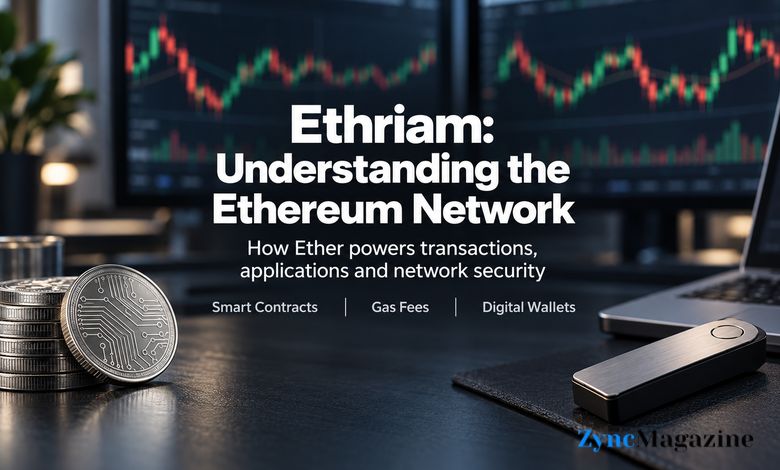
Cryptocurrency can feel confusing before you even reach the technical details. Names are similar, unfamiliar words appear everywhere, and explanations often assume you already understand the basics. If you searched for Ethriam, you may simply be trying to find out what Ethereum is and why people use it.
The first distinction is straightforward. Ethereum is a blockchain network. Ether, known by its symbol ETH, is the cryptocurrency used within that network. The two belong together, but they are different things: one provides the system, while the other pays for activity and helps support its security.
There is more to Ethereum than buying and selling a digital asset. Its network also supports applications, payments and programs that carry out instructions. Understanding those uses gives a fuller picture of the technology behind the name.
What Does Ethriam Mean?
If your search for Ethriam was intended to find the established blockchain platform, the name you need is Ethereum. Using the correct spelling makes it easier to recognise relevant information and distinguish the network from unrelated products.
That distinction matters when money or account access is involved. A website, application or token with a similar name should be checked on its own merits. Its name alone cannot prove that it belongs to Ethereum or has any official support.
It helps to keep three words in mind as you read: Ethereum describes the network, Ether describes its native cryptocurrency, and ETH is the symbol used for that cryptocurrency.
What Ethereum Actually Does
Think about the records kept by an ordinary online service. Usually, the company operating that service manages its database and decides how updates are handled. Ethereum takes a different approach by sharing its blockchain record across a network of computers.
These computers follow agreed rules to check transactions and maintain a consistent record. Updates are grouped into blocks, which link to earlier blocks and form a chain.
Ethereum also gives developers a way to run programs on that shared system. This allows applications to manage digital assets and carry out actions according to rules written in code. A payment can be one such action, but the platform can support more complicated instructions too.
For a beginner, this is the useful starting point: Ethereum combines a shared record with the ability to run applications that use it.
Why Ethereum and ETH Are Different
It is common to hear someone say they have “bought Ethereum”. In everyday conversation, they usually mean they have bought Ether. The wording is understandable, although it can hide the difference between the asset and the platform.
ETH has practical roles within Ethereum. People use it to pay transaction fees, transfer value between accounts and participate in staking. It is therefore part of how the network operates, as well as an asset people trade.
Other tokens can exist on Ethereum too. Each belongs to a separate project and may have a different purpose. Sharing a blockchain does not make these assets identical, and it does not tell you whether a particular project is well managed.
Smart Contracts Without the Technical Language
The phrase smart contract sounds more complicated than the basic idea. It means a computer program stored on the blockchain that carries out instructions when called and when the required conditions are met.
Consider a program designed to hold funds until a specified date. If someone requests a withdrawal too early, the program refuses it. Once the date arrives, a valid request can be processed according to its rules.
This can reduce the need for someone to approve each step manually. However, the program follows the instructions in its code. It cannot replace unclear rules with common sense or guess what a user intended.
That is why the details behind an approval matter. Before interacting with a contract, a user needs to understand what the transaction permits, rather than relying only on the description beside a button.
Where People Use Ethereum
Ethereum and its connected networks support applications for trading assets, borrowing, lending, gaming, publishing and organising communities. Some applications help distribute payments, while others provide readable names for blockchain addresses.
You may see financial applications grouped under DeFi, short for decentralised finance. Digital collectibles and creative platforms form other parts of the wider ecosystem.
The range of uses can make the subject feel broad, so begin with one practical question: what is this application supposed to do? A clear answer should explain the service without requiring a long list of fashionable terms.
The next questions are equally useful. What does it cost? What access does it request? Who is responsible for the parts that users depend on? Those details help turn a general claim into something you can assess.
Why Transactions Have Gas Fees
Sending an asset or using an application requires work from the network. Gas measures the computing effort involved, and the transaction fee pays for that work.
The fee is paid in ETH. Its size depends on the resources required and the price of those resources at the time. A simple transfer and an action involving several contract operations can therefore have different costs.
One detail often surprises beginners: an included transaction can consume gas even when its execution fails. The network has still performed work while attempting to process it. Checking the fee estimate before approval helps avoid confusion about what you are paying for.
How Staking Fits Into Ethereum
Ethereum uses proof of stake to help its participants agree on the blockchain’s record. Validators put ETH at stake and run software that checks blocks and takes part in proposing new ones.
Correct participation can earn rewards. Penalties also apply, and certain forms of misconduct can cause part of a validator’s stake to be destroyed through a process called slashing.
Activating an individual validator requires at least 32 ETH. Pooled services offer ways to participate with smaller amounts, but they add their own software, operators and arrangements. Staking therefore deserves a closer look than a reward percentage alone can provide.
Wallets, Recovery Phrases and Account Access
An Ethereum wallet helps you interact with blockchain accounts. It can show balances, prepare transfers and request your approval for transactions. The blockchain holds the asset records; the wallet provides a way to use them.
Many wallets provide a recovery phrase for restoring access. Someone who obtains that phrase may gain control of the accounts it protects, which makes keeping it private essential.
A careful approach also includes checking the website before connecting a wallet. Imitation pages and fake applications can look convincing. Requests to reveal a recovery phrase or claim an unexpected reward deserve particular attention. Ethereum’s support guidance identifies these as common routes used in scams.
What About Layer 2 Networks?
While researching Ethriam or Ethereum, you will probably encounter layer 2 networks. These help process activity beyond Ethereum’s main chain while maintaining a connection to it.
Rollups are a common example. They group transactions and submit information back to Ethereum, helping reduce costs and support more activity.
Different networks have different designs and security assumptions. Before using an application, check which network it operates on and how that affects the transaction. A lower fee is useful, but understanding where your assets are and what system you are using matters too.
Conclusion
A search for Ethriam becomes easier to navigate once the names are clear. Ethereum is the blockchain platform, Ether is its native cryptocurrency, and smart contracts allow applications to carry out programmed actions.
You can understand these ideas without buying anything. Start with the purpose of the network, then learn how fees, wallets and staking fit together. That foundation makes unfamiliar claims easier to question and gives you a clearer view of what a service actually offers.
Frequently Asked Questions
1. What is Ethriam?
If you mean the blockchain network discussed here, its correct name is Ethereum. Any separate product using Ethriam needs independent checking.
2. Is ETH the same as Ethereum?
ETH is the symbol for Ether, Ethereum’s native cryptocurrency. Ethereum itself is the network where transactions and applications operate.
3. Why do I need ETH to use Ethereum?
ETH pays transaction fees on Ethereum. The amount required depends on the action and the network conditions when it is processed.
4. Can I learn about Ethereum without a wallet?
Yes. Reading about blockchain records, smart contracts, fees and applications does not require a wallet or a cryptocurrency purchase.
5. Is every Ethereum application trustworthy?
No. Using Ethereum does not establish an application’s quality or safety. Its purpose, operating arrangements and requested permissions still need checking.