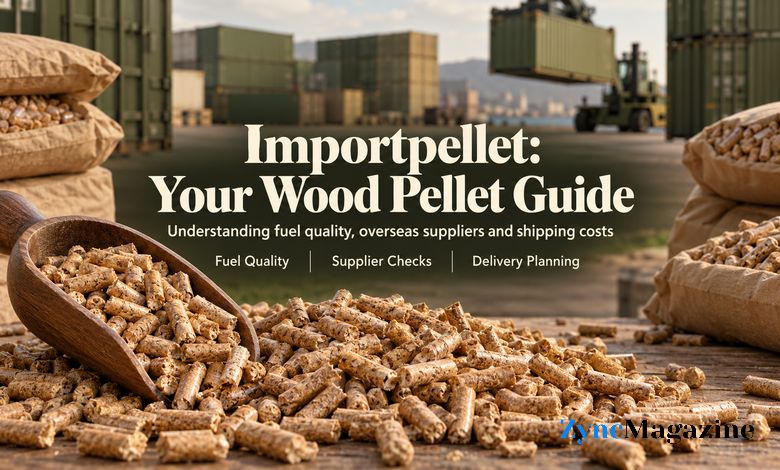
Buying wood pellets from overseas can open up more supply options, but a low price does not always mean a good deal. Fuel quality, transport charges and the condition of the shipment all affect what you receive for your money.
A batch may look suitable in photographs yet arrive with damaged bags or too much loose dust. Another may meet its advertised specification but fail to match the requirements of your heating equipment.
In this guide, importpellet refers to sourcing and importing wood pellets for heating and energy production. It is a descriptive term, rather than a quality standard.
Understanding the process helps buyers compare suppliers, calculate costs and prepare for delivery. The aim is to purchase suitable fuel that reaches its destination in usable condition.
What Does Importpellet Mean?
Importpellet combines the idea of importing goods with buying pellet fuel. Here, it describes purchasing wood pellets from a supplier in another country and arranging their delivery into the market where they will be used or sold.
The supplier might be a manufacturer that produces the fuel or a trader that buys pellets from other businesses. Knowing which type of company you are dealing with helps you understand who controls production and handles quality concerns.
For the buyer, importing involves more than placing an order. It also requires clear specifications, transport arrangements, suitable paperwork and somewhere appropriate to store the fuel.
What Are Wood Pellets?
Wood pellets are small cylinders made by compressing prepared wood material. Common raw materials include sawdust and wood shavings from wood processing.
Their consistent shape makes them suitable for feeding systems in compatible pellet stoves, boilers and industrial equipment. However, products can differ in size, composition and performance.
Some pellets are intended for household heating, while others are supplied for larger commercial or industrial installations. Buyers should check the intended use before discussing price or order volume.
Equipment compatibility comes first. The fuel requirements in your appliance manual should guide the specification you request from a supplier.
Why Buyers Consider Overseas Suppliers
Businesses may look abroad when local availability is limited or when they need quantities that nearby suppliers cannot provide.
An overseas producer may also offer different packaging, longer supply agreements or delivery schedules that better suit a buyer’s operation. For distributors, these details can matter as much as the price.
Another reason is to develop a second source of supply. Depending on one company can leave a business with fewer options when that supplier experiences delays.
Still, international purchasing adds more stages to the journey. Buyers should compare the complete overseas offer with a local alternative before deciding that importing provides better value.
Check Pellet Quality Before Ordering
Two batches of pellets can look similar while having different technical properties. Ask for a written specification rather than relying on photographs or broad descriptions such as “premium fuel”.
Moisture content is one important detail. Buyers should know the stated limit and how the supplier checks that the product meets it.
Ash content also matters because it describes the residue left after burning. The acceptable level depends on the equipment and its fuel requirements.
Mechanical durability measures how well pellets resist breaking during handling. Fines are the small particles and dust mixed with the fuel. Ask about both, especially when the shipment will pass through several handling stages.
Pellet dimensions and calorific value should also appear in the specification. Together, these details provide a clearer basis for comparing offers.
Understand Certification Claims
Certification can support a purchasing decision, but buyers need to understand exactly what is being claimed.
ENplus is a recognised wood pellet quality scheme with requirements covering technical properties and relevant supply activities. Its quality classes have different limits, so the exact class matters.
Ask for the supplier’s certification details and check that they match the business and product being offered. A logo in a brochure is a claim that needs verification.
If a trader supplies pellets from another producer, clarify how the certification applies to that arrangement. Keep the supporting documents with your purchase records.
Also remember that a technical quality certificate does not answer every question about environmental impact or raw material sourcing.
How to Assess an Overseas Supplier
Start with the basics: the registered business name, operating address, contact details and the identity of the company receiving payment.
Ask whether the seller manufactures pellets or sources them elsewhere. Request information about normal lead times, available quantities and batch records.
The quality of communication can tell you a great deal. A dependable supplier should explain its specifications, delivery terms and complaint procedure clearly.
For a first importpellet order, a manageable trial quantity may be useful where practical. It allows you to assess the service before committing to a larger supply arrangement.
A sample can help, but agree on how the delivered shipment will be checked. Approval of a small sample should not replace a clear specification for the full order.
Calculate the Full Delivered Cost
The factory price is only the starting point. To compare suppliers fairly, work out the cost of getting usable pellets to your premises.
Include freight, insurance, handling, storage and onward delivery, along with any applicable import charges. Confirm which expenses are already included in the quotation.
For example, pellets priced at £215 per tonne with £90 in additional costs reach £305 per tonne. An offer of £240 with £55 in additional costs reaches £295.
These figures are examples, rather than current market prices. They show why the cheaper product quotation may lead to the more expensive purchase.
Consider the effect of damaged fuel and delays as well. Extra storage charges or unusable stock can reduce the saving you expected.
Make Shipping Responsibilities Clear
Before paying, establish who arranges transport, who handles unloading and where the seller’s delivery responsibility ends.
Put those details in writing. A statement such as “shipping included” is too broad unless it explains the destination and the services covered.
Choose packaging that suits your order and receiving facilities. Small bags, larger bags and bulk shipments require different equipment and handling arrangements.
Check that your site can accept the delivery format. A shipment is difficult to manage if the necessary unloading equipment or storage space is unavailable.
Have a freight forwarder or customs specialist confirm the paperwork needed for your route before dispatch. Requirements should be checked for the actual shipment.
Inspect Deliveries and Plan Storage
Prepare an inspection process before the goods arrive. Staff should know what to check, what to photograph and how quickly any problem must be reported.
Look for torn packaging, signs of water exposure and visible damage. Follow the sampling or testing procedure agreed with the supplier.
Dry storage is essential for protecting the fuel after delivery. Keep bags away from water and reduce unnecessary handling that can break pellets into smaller particles.
Bulk storage requires particular care. Wood pellets can release carbon monoxide, which may accumulate in enclosed spaces. Hoppers and enclosed stores need appropriate safety controls, with entry restricted to trained and authorised personnel.
Ask your supplier and equipment provider for instructions suited to your installation.
Consider the Evidence Behind Environmental Claims
Wood pellets are often promoted as renewable fuel. That description alone does not establish the environmental performance of a particular shipment.
A fuller assessment considers wood sourcing, forest management, processing energy and transport. Burning biomass releases carbon dioxide, so the wider supply chain matters.
Ask where the raw material comes from and what records support its origin. If the seller makes a sustainability claim, request a clear explanation of the evidence behind it.
Specific information is more useful than general phrases such as “completely green”. It helps buyers make informed choices and answer customers’ questions accurately.
Conclusion
A successful importpellet purchase depends on suitable fuel, a verifiable supplier and a clear understanding of the total cost.
Begin with your equipment’s requirements, then compare complete offers. Agree on quality checks, shipping responsibilities and complaint procedures before placing the order.
With proper preparation, buyers can judge whether importing wood pellets offers practical value for their business and avoid making a decision based on price alone.
(FAQs)
What is importpellet?
In this article, importpellet describes sourcing and importing wood pellets from overseas suppliers for heating or energy use. The term itself does not guarantee quality or certification.
Are imported wood pellets cheaper?
They can be, but this depends on the complete delivery cost. Compare freight, handling, storage and other charges alongside the product price and fuel specification.
What quality details should buyers check?
Check the equipment manufacturer’s requirements first. Important properties include moisture, ash, dimensions, mechanical durability, fines and calorific value. Request written specifications and suitable supporting evidence.
Can pellet quality be judged from colour?
Colour alone cannot confirm quality. Appearance may reveal visible damage, but technical properties need written specifications and, where appropriate, testing.
How should imported pellets be stored?
Protect pellets from moisture and follow the supplier’s handling instructions. Enclosed bulk storage also requires specific safety measures because dangerous gases can accumulate.