The file exists. Someone shared it last week. Yet finding it means opening folders, checking messages and asking a colleague to send it again. It is a small problem that can interrupt an entire morning.
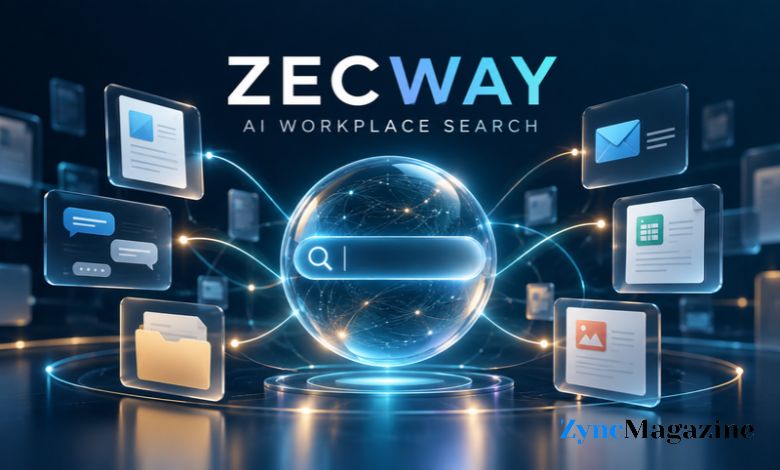
Zecway is an AI workplace platform built around this familiar situation. It aims to help employees find company information through one place, using questions written in everyday language.
Its public website presents three main parts: workplace search, an AI assistant and workflow agents. Together, these outline a move from finding information to using it for everyday tasks. However, Zecway remains an early-access product, so understanding its current offering matters as much as understanding its plans.
What Is Zecway?
Zecway describes itself as a central search point for company knowledge. Its company profile names tools such as Google Drive, Slack, Notion and email as sources it aims to bring together. The same profile lists Bangalore, India, as its headquarters and 2026 as its founding year.
The idea is easy to understand. An employee may remember a discussion without remembering where it happened. Perhaps the final decision was in a message, while the supporting figures were stored in a document.
A useful workplace search tool should help connect those pieces. The goal is to make information easier to recover without requiring everyone to remember the exact file name, folder or conversation.
Why Finding Information Becomes Difficult
Workplace information rarely stays in one neat location. A project might begin in an email, develop through chat and finish with a document saved in a shared folder.
That creates a gap between knowing something exists and being able to find it. Searching becomes harder when several files have similar names or when an older version appears before the latest one.
Consider a new employee preparing for a client meeting. They might need the agreed price, the project timeline and a record of earlier promises. Each answer could sit somewhere different.
The practical appeal of connected workplace search is bringing those questions into a more manageable process. Success would mean reaching the right information with fewer interruptions and less guesswork.
How Zecway’s Search Approach Works
According to Zecway’s company profile, employees can ask questions in plain language and receive answers with references to source documents. It also says results respect existing access permissions. These are company descriptions rather than findings from an independent product test.
A useful search question might be: “What did we agree about the delivery date?” That expresses what the employee needs, even if they cannot remember the document title.
The quality of the answer matters more than how impressive it sounds. Does it identify the correct project? Does it distinguish a proposed date from an approved one? Can the employee check the evidence?
These are sensible ways to judge any search system that offers direct answers.
The Difference Between Search and an AI Assistant
Finding a document is one task. Turning its contents into useful work is another.
Zecway’s website describes an AI assistant for drafts and summaries based on company information. Its public example involves preparing a reply using internal security documents.
Imagine a customer asking a question that requires details from several approved documents. A helpful draft could gather those details into a clear response, giving the employee a starting point.
The employee would still need to check the wording. A draft might explain a policy correctly while missing an exception relevant to that customer.
For this reason, a useful trial should examine more than writing quality. It should check whether the response answers the actual question and uses the right material.
What Workflow Agents Could Add
Zecway also presents workflow agents for scheduled tasks and research. Its website shows an example in which a person approves an action before information is posted to Slack.
A sensible way to explore this type of feature is to begin with a clearly defined task. “Prepare a weekly update from these project records” is easier to assess than “manage our projects”.
Clear instructions make the result easier to review. They also help a team decide what information belongs in the output and who should approve it.
Before repeating a task automatically, it helps to complete it successfully several times with human review. That reveals missing context, unclear instructions and exceptions that a simple demonstration may overlook.
Why Access Permissions Matter
A shared search interface raises an obvious question: who gets to see what?
Zecway says permissions are enforced at the database level before information reaches the AI. This is its stated design approach, rather than an independent security assessment.
For a company testing workplace search, practical checks should include different employee roles. A manager, a new starter and a contractor may need very different access.
Existing folder settings also deserve attention. If a document has already been shared too widely, connecting a search tool does not resolve that underlying mistake.
Good access management starts with knowing which information is available to each person and keeping those settings accurate as roles change.
Source Links Make Answers Easier to Check
An answer is more useful when the reader can inspect the material behind it. Zecway highlights source citations in both its website and company profile.
However, a source link is the beginning of a check. It does not settle every question.
For example, a document may be genuine but outdated. A conversation may record an early suggestion rather than a final decision. Two reliable files might even disagree.
When reviewing an answer, employees should look at the source date, the author and the surrounding context. This is especially useful when a response concerns prices, deadlines or commitments.
The strongest result is one that helps the reader understand both the answer and why it applies.
How a Team Could Evaluate Zecway
A practical evaluation should start with everyday questions that employees already struggle to answer.
Choose a small set of examples. These might involve locating an approved document, finding the reason behind a decision or gathering information for a routine reply.
Record how long those tasks take using the current process. Then compare the results during the trial. Check accuracy, source quality and the amount of editing required.
Include unsuccessful searches as well. A system that clearly admits it cannot find an answer may be more useful than one that confidently joins unrelated details.
This approach gives a team evidence about its own work instead of relying only on a polished demonstration.
Early Access and Feature Availability
Zecway’s public materials describe an early-access programme. Its company profile says the assistant is rolling out and describes broader agent workflows as a direction for the platform. Teams should therefore confirm which capabilities are available in their own trial.
That conversation should cover the tools a business uses, the setup required and the tasks it wants to test.
The most useful question is straightforward: can the available product solve a specific information problem for this team?
Conclusion
Zecway addresses a recognisable workplace frustration: information that exists but takes too much effort to find. Its proposed value lies in making that information easier to locate, understand and use.
For interested teams, a focused trial offers the clearest test. Start with real questions, inspect the sources and measure the results. The value will come from helping employees complete ordinary tasks with greater clarity.
(FAQs)
What is Zecway used for?
Zecway is designed to help employees search company information and use it in everyday work. Its public offering centres on search, assistance and workflow agents.
Which workplace tools does Zecway mention?
Its company profile names Google Drive, Slack, Notion and email. Businesses should confirm support for their particular setup during early access.
Can Zecway replace organised company documents?
Teams still need clear, accurate records. Search becomes more useful when documents have sensible names, clear ownership and an obvious current version.
How should employees check an AI answer?
Open the supporting material, check its date and read the relevant context. For important decisions, confirm any unclear or conflicting details with the responsible person.
What is the best first task for a trial?
Choose a frequent, limited task with an answer you can verify. Finding an approved project document is a useful starting point because success is easy to assess.