Some words are easy to understand the moment you see them. Others make you stop for a second and wonder what they are supposed to mean. Tracqueur belongs to the second group.
You may have noticed the word while searching online, reading about technology, or looking at a page written in a French-speaking context. The unusual spelling makes it stand out, especially because it looks similar to familiar words such as “tracker” and “traceur.”
That similarity is also the reason for much of the confusion.
There is no strong evidence that Tracqueur is the universal name of one famous app, device, or technology platform. Instead, the word appears in different online contexts, and those contexts can point to different meanings.
Understanding that difference is important because a simple spelling search can easily lead to the wrong conclusion.
The Simple Meaning of Tracqueur
The easiest starting point is the idea of tracking.
A tracker is something that follows, locates, or records a person, object, movement, or activity. In everyday life, people use tracking in many forms without giving much thought to the word itself.
A delivery company tracks parcels. A driver can track a vehicle. A phone can share its location. A small tag can help someone find lost keys. A fitness watch can record movement.
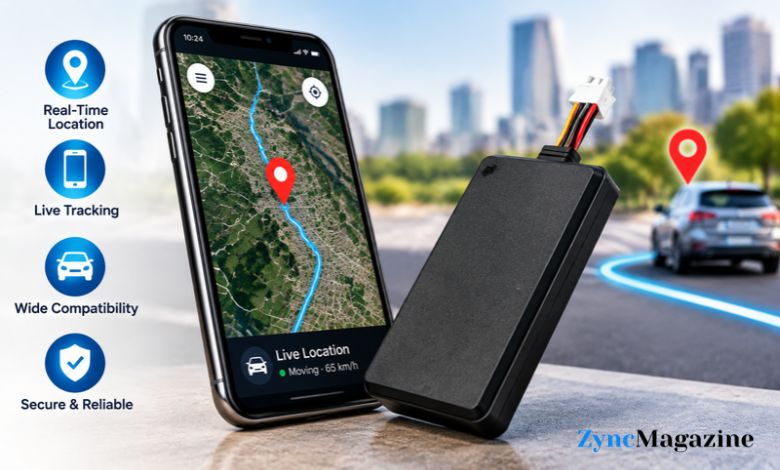
The online spelling Tracqueur is sometimes used in this wider sense. It can therefore appear in articles discussing tracking devices, location technology, digital monitoring, or other systems that collect information about movement or activity.
But there is an important detail that should not be ignored: the spelling itself does not establish a specific product or technical standard.
Tracqueur and the French Word “Traqueur”
One reason the word attracts attention is its connection to French.
The established French word traqueur exists in dictionaries and is derived from traquer. Larousse defines it in a hunting context as a person who drives or pursues game, while the wider use of “tracker” in French can also be translated using traqueur.
The Centre national de ressources textuelles et lexicales, commonly known as CNRTL, also records traqueur as a noun related to traquer, with historical meanings connected to someone who tracks or hunts.
That background helps explain why the word can sound familiar even to people who do not speak French.
The spelling Tracqueur, however, should not automatically be treated as the standard dictionary form. It is more useful to see it as an online variation whose meaning depends on where it appears.
Why Search Results for Tracqueur Can Be So Confusing
Search engines do not understand words in isolation. They look at pages, phrases, links, and related searches.
That creates a strange situation with Tracqueur.
One website may use it when discussing GPS trackers. Another may treat it as a French-related term. A third may discuss something connected with parkour because of the similarity between tracqueur and traceur.
This means that two people can search the exact same word and come away with completely different answers.
That is not necessarily because one person searched incorrectly. It is often because the word itself is being used inconsistently across the web.
For that reason, the sentence around the word is often more important than the word itself.
Is Tracqueur Actually a Tracking Device?
It can be used that way online, but the answer needs some caution.
Several websites currently describe Tracqueur as a broad tracking concept covering things such as GPS devices, Bluetooth trackers, vehicle systems, and digital monitoring.
However, other recent reporting has pointed out that these descriptions do not clearly identify one independently verified company, manufacturer, or technology product called Tracqueur.
That distinction matters.
There is a big difference between saying “the word is used online in connection with tracking” and saying “Tracqueur is an established technology product.”
The first statement can be supported by what is currently appearing online. The second requires evidence of a real product, developer, company, documentation, or other independent verification.
At present, it is safer not to present the word as one specific global technology brand.
What Does a Tracker Normally Do?
To understand the technology side of the discussion, it helps to look at ordinary trackers.
A GPS tracker determines a location using satellite signals. Depending on the device, that information may then be transmitted to another system through a mobile connection or another communication method.
A Bluetooth tracker is usually designed for nearby objects. It can be useful for things such as keys, bags, wallets, or luggage.
A vehicle tracking system can record journeys, locations, and movement over time. Businesses may use such systems to keep track of company vehicles and improve logistics.
There are also digital trackers that have nothing to do with physical location.
Websites and applications can collect information about visits, interactions, and user activity. In that case, “tracking” is about online behaviour rather than finding a physical object.
So even if someone uses Tracqueur as a general tracking term, the underlying technology could be very different from one situation to another.
The Connection With Parkour
There is another interesting source of confusion.
A similar French-derived word, traceur, is associated with parkour. In that setting, it refers to a person who practises the discipline of moving through an environment using techniques such as running, jumping, climbing, and vaulting.
Some online pages use “tracqueur” in this parkour-related context, even though traceur is the more recognisable term for this meaning.
This is worth knowing because a reader searching only for the spelling may see parkour results and technology results next to each other.
The two subjects have very little to do with one another.
One concerns human movement through an environment. The other concerns tracking, monitoring, or following information.
The similar spelling creates the overlap.
Why People Search for Tracqueur
There are several possible reasons someone may type Tracqueur into a search engine.
They may have seen the word in a product description.
They may have encountered it in a French sentence and want to know what it means.
They may be looking for a GPS or location tracker and have picked up the word from another website.
Or they may have seen a parkour article where a similar spelling was used.
The important point is that the search itself does not tell us which meaning the person wants.
This is one reason generic articles about unusual keywords can become misleading when they confidently choose one definition without checking the source of the term.
Tracqueur Is Better Understood Through Context
Imagine seeing the word beside terms like GPS, location, vehicle, battery, or mobile app.
In that case, the writer is probably using Tracqueur in a tracking-related sense.
Now imagine seeing it beside parkour, freerunning, jumps, walls, or training.
That is a strong sign that the subject is actually traceur or a related parkour term.
If the word appears in a French text about hunting or pursuit, the standard word traqueur may be the relevant reference instead.
This small habit of checking context can prevent a lot of unnecessary confusion.
Why You Should Be Careful With Unverified Technology Claims
The internet can make an unfamiliar idea look much more established than it really is.
Once several websites publish articles using the same description, the information may appear trustworthy simply because there is a lot of it.
But repetition is not the same as independent verification.
Recent coverage of Tracqueur has highlighted this exact issue, noting that many pages describe the term as a technology concept without providing a clearly identifiable developer, product documentation, or independent evidence from established technology sources.
That does not mean every article using the word is wrong.
It simply means readers should separate online descriptions from verified facts.
That is especially important when money, privacy, or personal data are involved.
What to Check Before Using Any Tracking Service
Suppose you come across a website presenting Tracqueur as a tracker or technology service.
Do not rely only on the name.
Look for a real company or organisation behind it. Check whether there is an official product page and clear contact information. Find out what type of tracking technology is being used.
It is also worth checking whether the service requires a subscription and whether the hardware or software has any practical limitations.
The privacy policy deserves attention as well.
A tracking service may collect sensitive location or activity information, so users should know what data is gathered and what happens to it after collection.
These checks are useful for any tracker, not just something labelled Tracqueur.
Privacy Is Part of the Conversation
Tracking can be convenient, but convenience comes with responsibility.
Knowing where a vehicle is can be useful for a business. Finding a missing bag can save time. Locating a lost device can be extremely helpful.
At the same time, location information can reveal where a person lives, works, travels, or spends time.
That makes privacy more than a technical detail.
People should understand when tracking is active and who has access to the information. Tracking another person without their knowledge raises much more serious concerns than using a device to locate your own property.
A good tracking solution should provide useful information without making its users feel that their data is being collected without clear boundaries.
The Difference Between a Search Term and a Product
This is probably the most important lesson from the Tracqueur discussion.
A keyword can become popular online without representing a formally recognised product.
A word can also be used by multiple websites in slightly different ways. Once search traffic grows, even more articles may appear, each trying to explain the same unfamiliar phrase.
That can create the impression that a major new technology has appeared when the evidence is much thinner.
For readers, the best response is simple: verify before assuming.
Look for primary sources. Look for an identifiable organisation. Look for real documentation. Look for independent reporting.
Those things are much more useful than the number of websites repeating the same description.
What Tracqueur Really Tells Us
In many ways, the story of Tracqueur is less about one piece of technology and more about how language changes on the internet.
A slightly unusual spelling can become a search keyword. Websites can give it new meanings. Readers can then encounter those meanings without knowing where the original usage came from.
At the same time, genuine French vocabulary can become mixed with English technology language, making the situation even harder to untangle.
That is why there is no need to force a single definition onto the word.
The most sensible interpretation depends on the source and subject.
Conclusion
Tracqueur is an unusual online term with more than one possible interpretation.
In technology-related content, it is often presented as a word connected with tracking, monitoring, and location systems. In French, the established word traqueur has a different and well-documented linguistic background, while the similar word traceur can lead searches toward parkour.
The biggest mistake is assuming that every appearance of Tracqueur refers to one specific product or officially recognised technology.
At the moment, the available evidence does not justify that broad claim. Recent fact-checking has found no clear independent verification of a single established technology product behind the term.
For anyone researching the word, context is the best guide. Check where you found it, look at the surrounding terms, and verify any specific product or service before trusting claims about it.
Sometimes an unusual keyword is not a mystery at all. It is simply a word being used in several different ways.
(FAQs)
What does Tracqueur mean?
Tracqueur is an online term whose meaning depends on context. It is often used in articles about tracking or monitoring, but it is not a universally defined technology term.
Is Tracqueur a real technology product?
There is not enough independent evidence to describe Tracqueur as one established technology product or global brand. Several websites use the term in technology discussions, but recent fact-checking found no clearly verified product or developer behind those claims.
Is Tracqueur a French word?
The established French word traqueur is documented in French dictionaries and is connected with the idea of tracking or pursuing. “Tracqueur” is a different spelling that appears online in various contexts.
Is Tracqueur related to parkour?
It can be, depending on the source. Some websites use tracqueur when discussing parkour, although traceur is the more familiar term for a parkour practitioner.
How can I check whether a Tracqueur claim is genuine?
Look for an identifiable company, an official product page, real documentation, and independent coverage from established sources. Do not assume a claim is verified simply because several websites repeat it.