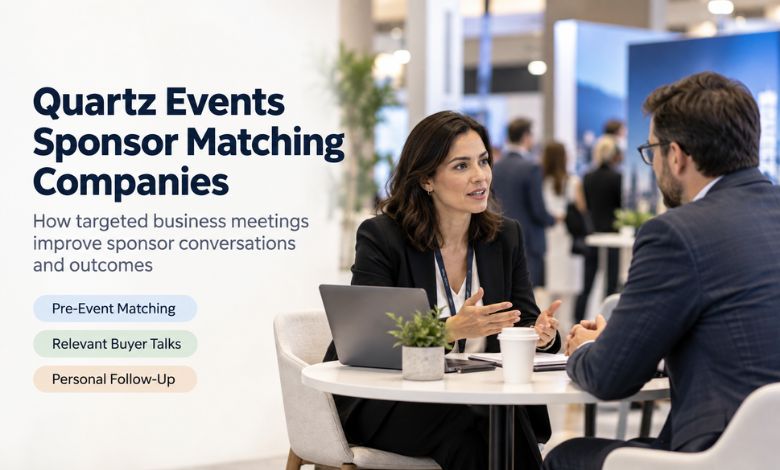
Anyone who has worked at a large business exhibition knows how quickly the day can disappear. A sales team may speak with dozens of visitors, collect a pile of cards, and still return home without meeting the people it hoped to find. The idea behind quartz events sponsor matching companies is to solve that practical problem. Sponsors are given planned opportunities to speak with professionals whose work may connect with the product or service being presented.
It is a more organised approach than waiting beside an exhibition stand. Before the event, information is gathered about the attendees and the sponsors. That information helps the organiser decide which conversations could be worthwhile. The meeting itself is only an introduction, of course. It cannot create a budget or turn an unsuitable product into the right one. What it can do is place two relevant people at the same table and give them enough time to find out whether the discussion should continue.
What the Search Term Actually Means
The wording quartz events sponsor matching companies sounds as though it refers to several companies offering the same matching service. Most people using the term, however, are trying to understand the meeting system connected with Quartz business events. In that system, sponsors are solution providers, while attendees are professionals looking at business challenges, future projects, or possible suppliers.
This difference matters. Ordinary sponsorship may centre on signs, logos, stage mentions, and brand visibility. Those things are still useful, but they do not promise a meaningful conversation. Sponsor matching adds a direct meeting element. The aim is not to introduce every sponsor to every attendee. It is to bring together people who appear to have a sensible business reason to talk.
How a Match Is Put Together
The work begins well before anyone arrives at the venue. An attendee may be asked about job responsibilities, current difficulties, planned purchases, and areas of interest. Someone responsible for warehouse operations might be exploring stock-control software. A marketing director could be reviewing customer-data tools. A finance leader may want a simpler reporting system. Although all three are senior professionals, they need very different suppliers.
Sponsors provide their own details as well. They explain what they sell, the problems they handle, and the types of organisations they normally serve. Company size, industry, location, department, and buying role can all affect whether a meeting makes sense. The event team then uses the available details to prepare a schedule. A strong match is not based on a job title alone; it considers whether the attendee’s situation has a real connection with the sponsor’s offer.
Why Sponsors Prefer Planned Conversations
Reaching a senior manager through normal sales channels is not easy. Emails may go unread, calls may be screened, and online advertising rarely gives a salesperson the chance to ask detailed questions. A scheduled meeting changes the setting. Both people know why they are there, and the sponsor has a limited period in which to understand the attendee’s needs.
That does not mean the sponsor should deliver a long sales speech. The better use of the meeting is to ask what the company is trying to fix, what has already been attempted, and what would count as a successful result. Even if no sale follows, the answers can be valuable. They show how buyers describe their problems and what concerns them about cost, support, security, training, or implementation. This is market insight that is difficult to collect from a logo on an event wall.
What Attending Companies Receive
Sometimes the most useful outcome is a clearer understanding of the project itself. A discussion may show that the expected budget is too low, the planned deadline is unrealistic, or an existing system must be changed first. That knowledge can prevent a poor purchasing decision. Therefore, quartz events sponsor matching companies may create value even when an attendee leaves without choosing a supplier.
A Match Is Not the Same as a Sales Lead
This is where expectations need to remain sensible. An interested attendee is not automatically a qualified buyer. The person may be collecting information for next year, may need approval from other leaders, or may have no confirmed budget. A competitor could also offer a product that fits more closely. Sponsor matching improves the chance of a relevant discussion, but it does not remove the normal uncertainty of B2B sales.
There can be practical problems too. Information supplied during registration may become outdated. A project can be cancelled, a manager can change roles, or a scheduled attendee may miss the meeting. A sponsor should judge the event by the quality of the overall audience and the opportunities created, not by assuming that every appointment will become revenue.
Making a Short Meeting Useful
Preparation often decides whether the conversation feels worthwhile. A sponsor should review the attendee’s role and company, then choose two or three questions that relate to the stated business issue. Starting with a prepared product demonstration before understanding the problem can waste most of the available time. A simple opening question often reveals more than a crowded slide deck.
The right representative should attend as well. A technical buyer may want clear answers from a product specialist, while a senior executive may prefer to discuss cost, risk, and business results. Honest answers are important. If a service cannot meet a particular need, saying so is better than making a promise that later falls apart. A useful meeting may end with a demonstration, another call, or permission to send more details. It does not have to end with a contract.
Follow-Up Is Where Progress Happens
Many promising event conversations are lost because the follow-up is slow or careless. A message sent several days later with no reference to the discussion feels like ordinary marketing. A better note mentions the problem raised by the attendee, answers any open question, and suggests one clear next step. This shows that the sponsor listened.
Follow-up should also match the person’s stage of interest. Someone planning a purchase now may be ready for a demonstration or proposal. Another attendee who is only researching may need a short guide and a later check-in. Treating both people in the same way creates pressure and can damage trust. Personal follow-up gives the original meeting a much better chance of becoming a genuine business relationship.
Measuring the Results Properly
The first measurement is meeting quality. Sponsors can record whether each attendee matched the target customer profile, had a relevant need, and agreed to another step. Demonstrations booked, internal introductions, proposals requested, and qualified opportunities are more useful measures than the total number of contacts collected.
Sales should be followed for several months. Business purchases often move slowly because several people must review the decision. A conversation started at the event may lead to a trial, security review, negotiation, and contract much later. Recording the event as the original source in a customer relationship system makes the final return on investment easier to understand.
Conclusion
The phrase quartz events sponsor matching companies describes an event model built around selected business meetings rather than simple advertising space. Attendee needs and sponsor services are compared before the event so that the people brought together have a reasonable basis for conversation. This can save time for business leaders and give sponsors access to professionals who are difficult to reach through ordinary sales methods.
Still, the match is only the first step. Results depend on accurate information, a relevant service, sensible questions, and thoughtful follow-up. Sponsors that arrive expecting instant contracts may be disappointed. Those that arrive ready to listen, learn, and build relationships are more likely to see the real value of the format.
(FAQs)
What are quartz events sponsor matching companies?
The term generally describes a Quartz event system that arranges meetings between business sponsors and professionals with related needs or purchasing interests.
How are attendees matched with sponsors?
Matches may consider job responsibilities, industry, company needs, planned projects, areas of interest, and the type of customer a sponsor serves.
Does every scheduled meeting produce a sale?
No. The meeting provides a relevant introduction, but budget, timing, internal approval, competition, and product fit still influence the result.
What should a sponsor discuss during the meeting?
The sponsor should first ask about the attendee’s problem, current approach, desired outcome, and decision process before explaining the most relevant part of its service.
How can event success be measured?
Useful measures include qualified conversations, follow-up calls, demonstrations, proposals, internal referrals, sales opportunities, and contracts connected with the event.