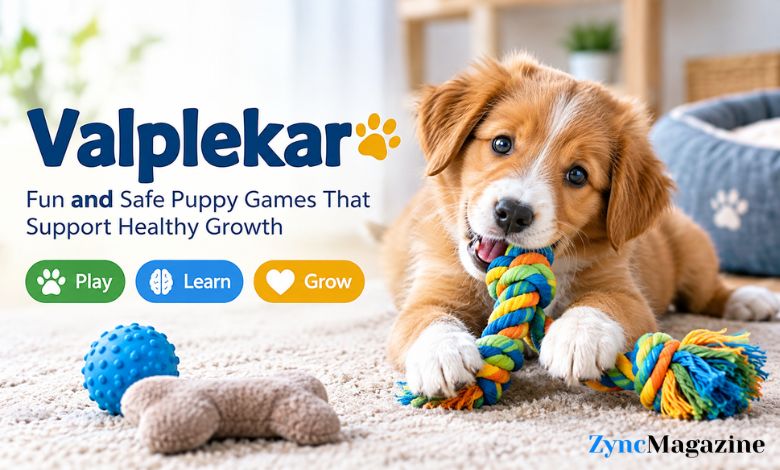
Valplekar is a Swedish word used for games and playful activities designed for puppies. It can include anything from gentle toy games and simple training exercises to hide-and-seek and supervised play with other dogs. These activities may look like ordinary fun, but they play an important role in a puppy’s early development.
A puppy learns through experience. It discovers which objects are safe, how people respond and when it should become calm. A well-chosen game gives the puppy a healthy way to explore these things. It also keeps boredom under control and helps the owner build a positive daily routine.
Play does not need to be expensive or complicated. A soft toy, a safe room and a few pieces of puppy food can create an enjoyable activity. The main goal is to select games that match the puppy’s age, size, health and personality.
Why Play Matters During Puppyhood
Puppyhood is a period of rapid physical and mental growth. Young dogs are naturally curious, but they have not yet learned how to control their energy. If they do not receive enough suitable activity, they may chew household objects, bite hands, bark for attention or become restless.
Regular play gives that energy a useful direction. Following a toy, walking across a safe surface and finding hidden food can improve movement, balance and coordination. These activities allow the puppy to use its muscles without placing too much pressure on its developing body.
Games also provide mental exercise. A puppy that has to locate a treat or work out how to reach a toy is using its senses and decision-making skills. Mental activity can be tiring in a healthy way, which is useful for puppies that remain energetic after a short walk.
Valplekar and the Bond Between Owner and Puppy
One of the greatest benefits of Valplekar is the connection it creates between the dog and its owner. Puppies remember how people make them feel. When an owner plays fairly, respects the puppy’s limits and rewards good behaviour, the puppy begins to feel secure in that person’s company.
This connection supports future training. A dog that enjoys interacting with its owner is more willing to respond to its name, follow basic instructions and return when called. Play can therefore become part of everyday learning without making the puppy feel pressured.
The owner should remain calm throughout the activity. Shouting, frightening movements and sudden punishment may confuse a young dog. If the puppy makes a mistake, the game can simply pause before starting again in an easier way.
Hide-and-Seek for Curiosity and Recall
Hide-and-seek is a simple activity that can be played inside the home. One person can stay with the puppy while the owner hides behind a door or piece of furniture. The owner then calls the puppy in a friendly voice. Once the puppy finds them, it receives praise, gentle affection or a small reward.
The first hiding place should be easy because the puppy needs to understand the game. As it becomes more confident, the owner can choose slightly harder locations. The puppy should never have to climb onto unsafe furniture or enter a dangerous area.
This game encourages the puppy to use its nose, ears and memory. It can also improve recall behaviour because finding the owner brings a positive result. Sessions should remain short so that the puppy does not lose interest.
Soft-Toy Games for Safe Movement
Soft toys are useful for puppies that enjoy chasing, carrying and chewing. The toy must be designed for dogs and should not contain loose decorations or small parts. Owners need to check it regularly because even a strong toy can become damaged by sharp puppy teeth.
A soft toy can be moved slowly across the floor to encourage gentle chasing. It may also be thrown a short distance for the puppy to follow. Some puppies will bring the object back, while others may sit down and chew it. Both responses are normal during early learning.
Owners should avoid pulling a toy roughly from the puppy’s mouth. If a basic tug game is played, the movement should stay gentle and close to the ground. Strong pulling, twisting or lifting the puppy can damage its teeth, neck or developing joints.
Easy Scent Games at Home
Dogs experience much of their environment through smell. Scent-based Valplekar can exercise a puppy’s mind without demanding intense physical movement. One easy option is to place several pieces of the puppy’s normal food across a clean mat and allow the dog to find them.
Food can also be hidden beneath a safe lightweight cup or inside a towel that has been folded loosely. The puppy should be able to complete the task without becoming frustrated. If it cannot find the reward, the owner can move the object or show where the food is hidden.
Treats used during games should form part of the puppy’s daily food allowance. Giving too many extra snacks can lead to unnecessary weight gain or stomach problems. The puppy should also be watched closely to make sure it does not chew or swallow the cup, towel or puzzle equipment.
Turning Basic Training into Play
Training becomes easier when it feels enjoyable. Short exercises can be added to normal play so the puppy learns without facing a long and tiring lesson. Responding to its name, sitting, touching the owner’s hand and coming when called are useful starting points.
For name training, the owner can say the puppy’s name once. When the puppy looks towards them, it receives a reward. Repeating the name many times without a response may teach the puppy that the word can be ignored. A clear signal followed by an immediate reward is more effective.
The owner can also hold out an open hand and reward the puppy for touching it with its nose. This simple game encourages attention and may later help the owner guide the dog without pulling it. Training should end while the puppy is still interested rather than continuing until it becomes distracted.
Playing with Other Puppies
Social play can help a young dog understand canine communication. Puppies use body movement, facial expressions and sound to show when they want to continue or take a break. Playing with a suitable companion may help them develop bite control and respectful behaviour.
However, not every dog is a good play partner. The puppies should be healthy, comfortable and reasonably matched in size and energy. A large, energetic puppy may accidentally hurt a much smaller dog even if it has no intention of doing so.
Owners should look for relaxed bodies, natural pauses and fair changes in roles. If one puppy constantly chases while the other hides or tries to escape, the interaction is no longer balanced. Growling can sometimes be part of normal play, but stiff movement, repeated crying or defensive snapping means the dogs need to be separated calmly.
How to Make Valplekar Safe
Safety begins with the playing environment. The floor should provide enough grip, and the area should be free from electrical cables, sharp edges and small items that could be swallowed. Outdoor play should take place in a secure space where the puppy cannot reach traffic or unfamiliar animals.
Young dogs are still developing, so repeated jumping and sharp turning should be limited. Stairs, high furniture and slippery floors may place unnecessary stress on their joints. Gentle movement is usually enough to satisfy a small puppy.
Every game should be supervised. An object that looks harmless may break apart or become trapped in the puppy’s mouth. Owners should choose toys that suit the dog’s size and remove them when they show signs of damage.
Recognising When a Puppy Is Tired
Puppies need plenty of sleep, but they do not always settle when they become tired. Some become more excited, start biting harder or run quickly through the room. This behaviour can be mistaken for a need for more exercise when the puppy may actually need rest.
Other signs include yawning, losing interest, moving slowly, hiding and struggling to follow simple instructions. Heavy panting during gentle indoor play is another reason to stop and allow the puppy to recover.
The owner can end the activity quietly and guide the puppy towards a comfortable resting place. Fresh water should be available, especially after physical play. Ending at the right time helps the puppy associate games with a calm and positive experience.
Mistakes Owners Should Avoid
Using hands as toys is a common mistake. A small puppy bite may not hurt much, but the behaviour can become a serious problem as the dog grows. When the puppy tries to bite fingers or clothing, the owner should calmly offer an appropriate chew toy instead.
Games should not encourage the puppy to run away from people. Chasing a puppy may teach it that escaping is entertaining. It is better for the owner to move away and encourage the dog to follow.
Owners should also avoid making every activity highly exciting. Puppies need to learn that calm interaction can be rewarding too. A balanced routine can include active toy games, quiet scent work, basic training and restful chewing.
Building a Balanced Daily Play Routine
There is no single play schedule that suits every puppy. Age, breed, health and personality all affect how much activity a dog can manage. Several short sessions spread throughout the day are often more suitable than one long period of exercise.
Different types of Valplekar can be used on different days. A puppy may enjoy a short chasing game in the morning, scent work later and a simple training exercise in the evening. Variety keeps the routine interesting while helping the dog develop different abilities.
Family members should agree on the same basic rules. If one person encourages rough biting while another tries to stop it, the puppy may become confused. Consistent boundaries make learning clearer and create a calmer home environment.
Conclusion
Valplekar is more than a way to entertain a young dog. Safe puppy games support physical movement, mental development, social learning and confidence. They also give owners a natural opportunity to teach useful behaviour and create trust.
The best games are simple, supervised and suited to the individual puppy. Hide-and-seek, soft-toy activities, scent work and short training exercises can all become part of a healthy routine. When owners notice signs of tiredness and avoid rough play, these everyday moments can help a puppy grow into a calmer and more confident adult dog.
(FAQs)
What is Valplekar?
Valplekar is a Swedish term for puppy games or playful activities created for young dogs.
Which games are best for a puppy?
Hide-and-seek, gentle toy chasing, scent games and short training exercises are suitable options for many puppies.
How long should a puppy play at one time?
The length depends on the puppy’s age, health and energy. Keep sessions short and stop when the puppy becomes tired or loses interest.
Can Valplekar help with puppy training?
Yes. Play can teach attention, recall, patience and self-control when good behaviour is rewarded consistently.
Is it safe for puppies to play together?
It can be safe when the puppies are healthy, comfortable and properly supervised. The activity should stop if either puppy becomes frightened or distressed.