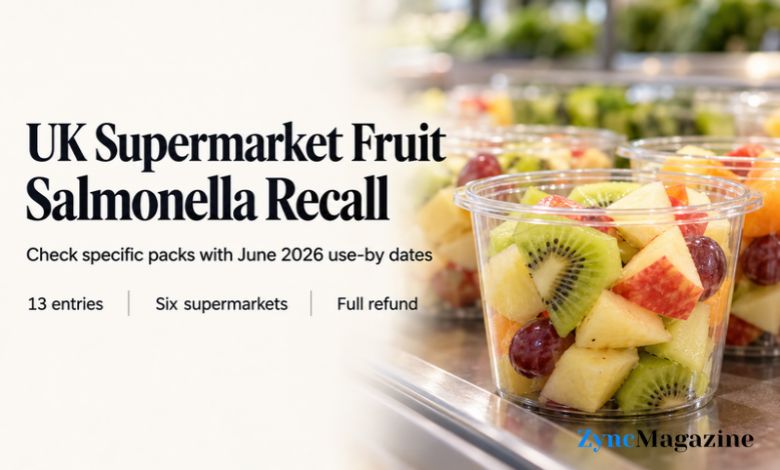
A fruit pot picked up for lunch was among the products shoppers were asked to check in June 2026. Supplier Prepworld recalled certain ready-to-eat fruit packs sold at Asda, Morrisons, M&S, Sainsbury’s, Tesco and Waitrose after tests found Salmonella in the apples and kiwis used in the products. The UK supermarket fruit Salmonella recall concerned specific packs with use-by dates of 23 or 24 June 2026. The Food Standards Agency (FSA) advised anyone with a matching pack not to eat it and to return it to the store for a full refund.
What caused the fruit recall?
The FSA issued its recall notice on 23 June 2026. It named Prepworld as the supplier recalling several prepared fruit products. Some packs contained sliced apple; others mixed apple or kiwi with melon, strawberries, grapes or other fruit. Because the products were sold under different supermarket names, a shopper might have seen a warning about one store without realising that packs at five others appeared in the same notice.
The FSA described the issue as the possible presence of Salmonella in the listed products. Its notice did not say that all fruit pots in those shops were unsafe. It also did not state how many people had become ill. The recall was tied to the product details printed on each pack: its name, weight and use-by date. Those details are more useful than a broad headline when deciding whether a particular purchase was affected.
Which products were affected?
The notice listed 13 product entries across the six supermarkets. At Asda, the affected pack was Pink Lady Apple, Mango, Strawberry & Blueberry, 220g, with use-by dates of 23 and 24 June 2026. At Morrisons, it was Kiwi, Melon & Strawberries, 220g, dated 24 June 2026. The Waitrose product was Pink Lady Apple and Grapes, 115g, with a use-by date of 23 June 2026.
M&S recalled three products. M&S Café Pink Lady Apple, 90g, and M&S (FTG) Pink Lady Apple, 90g, both had a 24 June 2026 use-by date. M&S Pink Lady Apple Slices, 225g, carried the same affected date. The two 90g products were separate entries in the FSA notice, even though their names looked similar. Reading the complete wording on the pack would help a customer identify which one they had bought.
The affected Sainsbury’s packs were Melon, Kiwi & Strawberry, 220g; Orange & Kiwi, 240g; and Pink Lady Apple & Grape, 240g. Each had a use-by date of 23 June 2026. At Tesco, the FSA named Kiwi Fruit Pot, 100g, and Fruit Kebabs, 290g, both dated 23 June 2026. It also listed Melon, Kiwi & Strawberry, 250g, dated 24 June 2026, and Melon, Kiwi & Strawberry, 125g, dated 23 or 24 June 2026.
The two Tesco melon, kiwi and strawberry packs show why size matters. Their names were the same, but their weights and affected dates were different. A customer checking only the fruit combination could miss that distinction. The recall also did not extend to every pack containing apple or kiwi; the FSA identified the exact products in its notice.
What were customers told to do?
The FSA told shoppers not to eat any affected pack. Instead, they were advised to return it to the shop where they bought it for a full refund. Stores selling the products displayed notices explaining the recall. If a customer still had a pack or its packaging, they could compare the label with the official product list.
Appearance was not a useful test. Fruit can look ordinary even when a pack is subject to a recall, so the right checks were the printed name, pack weight, and use-by date. Someone reading the warning today should also check when it was issued. The affected dates were in June 2026; this notice does not mean all fruit pots currently sold by those supermarkets are under recall. For a new food safety concern, the FSA alerts page provides current notices.
What symptoms can Salmonella cause?
Salmonella bacteria can cause food poisoning. In its recall notice, the FSA said symptoms usually include fever, diarrhoea and abdominal cramps. The NHS also lists feeling sick, vomiting, tummy pain and feeling generally unwell among possible symptoms of food poisoning. These symptoms can have several causes, so becoming unwell after eating fruit does not, by itself, establish which food was responsible.
NHS food poisoning guidance says the illness usually improves within a week. Drink enough fluids when someone has diarrhoea or vomiting. Seek advice through NHS 111 if you or your child cannot keep fluids down, has bloody diarrhoea or shows signs of dehydration. If you need medical advice and still have the product label, keep its details so you can explain what you ate and when.
The FSA also advised people experiencing the symptoms described in its notice to stay away from work, school or nursery until they had been free of symptoms for at least 48 hours. That advice helps reduce the chance of passing an infection to others.
Why did six supermarket chains appear in one notice?
Prepworld supplied the affected products, but the packs were sold under different supermarket names. That meant a story about an Asda fruit pack and a story about a Tesco fruit pot could both refer to the same supplier recall. The FSA’s notice brought the entries together and set out the exact dates for each one.
The FSA distinguishes a withdrawal, which takes a product off sale, from a recall, which asks customers who have already bought it to return it. This was a recall, so the advice mattered to people who might already have had an affected pack at home. It applied only to the listed products, not a general warning against buying prepared fruit.
Conclusion
The UK supermarket fruit Salmonella recall covered 13 specific product entries sold at six UK supermarket chains. Their affected use-by dates were 23 and 24 June 2026. After testing apples and kiwis used in the products, the FSA told customers not to eat a matching pack and to return it for a full refund. To check any recall accurately, read the product name, weight, use-by date and date of the notice together.
(FAQs)
Which supermarkets sold the recalled fruit packs?
The FSA notice named Asda, Morrisons, M&S, Sainsbury’s, Tesco and Waitrose.
Were all fruit pots at those stores recalled?
No. The notice applied only to the specified products, pack sizes and use-by dates.
Which use-by dates were affected?
Depending on the product, the affected date was 23 June 2026, 24 June 2026, or both.
What should someone do with an affected pack?
The FSA advised customers not to eat it and to return it to the shop where they bought it for a full refund.
Did the FSA confirm that anyone became ill?
The notice reported the testing result and possible contamination risk. It did not list any illnesses linked to the recalled packs.