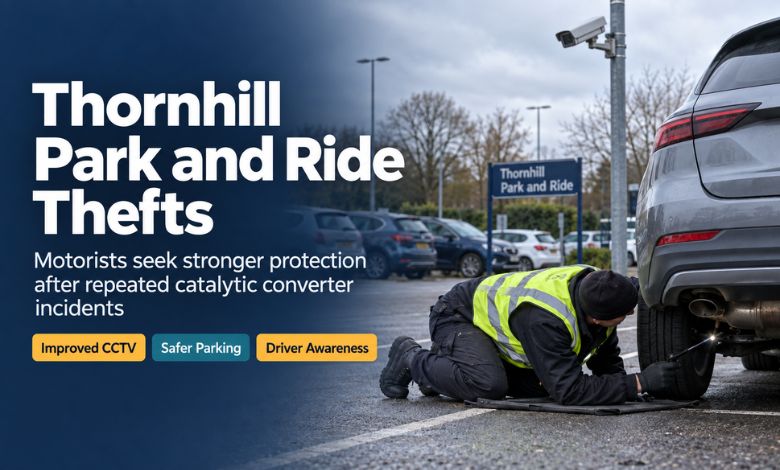
For many people travelling into Oxford, Thornhill Park and Ride is part of an ordinary working day. They park, catch a bus and expect to find their vehicle exactly as they left it. That confidence has been shaken by incidents involving stolen catalytic converters and damage to parked cars.
Concern about Thornhill Park and Ride thefts grew after one regular user said his vehicle had been targeted twice at the site within five years. The incidents left him dealing with repairs and the frustration of losing an important car part while simply travelling to work. His experience does not mean every vehicle at Thornhill is at risk, but it has raised a fair question: are motorists receiving enough protection when they leave their cars there?
A Normal Journey That Ended With an Unwelcome Surprise
A catalytic converter theft is often discovered only when the owner returns to the car and starts the engine. Instead of the usual engine sound, there may be a sudden and powerful roar from beneath the vehicle. In that moment, the driver knows something is seriously wrong, but may not yet understand the scale of the damage.
The stolen part is only one part of the problem. Thieves commonly cut through sections of the exhaust to remove it, leaving the car damaged and possibly unsafe to drive. The owner may need roadside assistance, vehicle recovery and a garage inspection. What began as an ordinary bus journey can end with hours of phone calls, missed work and an unexpected repair bill.
For a person targeted more than once at the same site, the experience can be especially difficult. The second incident may create a feeling that lessons were not learned after the first one. It can also make the motorist question whether returning to that car park is worth the risk.
Why Catalytic Converters Are Attractive to Thieves
A catalytic converter is fitted to a vehicle’s exhaust system. Its job is to reduce harmful gases before they leave the exhaust pipe. Inside the converter are small amounts of valuable metals, and it is this value that attracts criminals.
The part is mounted underneath the car, which means a thief may not need to break a window or force open a door. With the right tools, someone can get beneath a vehicle, cut the converter away and leave in a short time. This can happen even when the car itself is fully locked.
Vehicles with more space between the body and the ground may be easier to reach. Some hybrid models can also attract attention because their converters may suffer less wear during normal use. However, owners of ordinary petrol vehicles should not assume they are completely protected.
The speed of the crime makes it difficult to stop. A person carrying tools in a car park may look suspicious, but people do not always notice what is happening beneath another vehicle. This is why clear camera coverage and regular security checks are so important.
Why Thornhill Park and Ride Thefts Matter
Thornhill is not simply another public car park. It forms part of Oxford’s wider transport system and gives people a practical way to avoid driving into the busy city centre. Commuters, visitors and hospital workers may leave their vehicles there for much of the day.
A park-and-ride service works only when people trust it. Motorists are not expecting a personal guard for every car, but they do expect reasonable steps to discourage theft and respond to incidents. If that trust disappears, some drivers may choose another car park or return to driving closer to central Oxford.
That could create a wider transport problem. Park-and-ride facilities are intended to reduce pressure on city roads and limited central parking. Security concerns may seem separate from transport planning, but the two issues are closely connected. People will not use a service confidently if they believe their cars could be damaged while they are away.
It is also important to remain fair. A small number of incidents cannot prove that Thornhill is unsafe for everyone. Thousands of parking visits may end without any trouble. Even so, a serious theft deserves attention, particularly when the same motorist says he has been targeted twice.
The Real Cost Goes Beyond a Missing Car Part
The first concern is usually the cost of repair. A replacement converter can be expensive, and damage to the exhaust may increase the total. Even an insured driver could have to pay an excess before the claim is accepted.
The practical effect can be just as serious. Many people need their vehicles for work, childcare or family responsibilities. Waiting for repairs may leave them dependent on taxis, buses, friends or a hired car. Some replacement parts can also take time to obtain.
There is an emotional effect as well. Victims may feel angry because their property was damaged in a place they believed was suitable for long-stay parking. They may also feel uncertain about returning, especially if the investigation does not identify the people responsible.
This frustration explains why calls for stronger security measures have followed the incidents. Motorists want to know that theft concerns are being examined and that reasonable improvements will be considered.
Could CCTV and Patrols Improve Security?
CCTV is often the first measure discussed after a car park theft. Cameras can provide useful evidence and may persuade some thieves to stay away. However, simply having cameras on site does not guarantee that every parking space is covered.
Their position and image quality matter. A camera facing the wrong direction may miss activity beside or underneath a vehicle. Poor lighting can also make faces, tools and number plates difficult to identify, especially during the evening.
Visible patrols could support the camera system. A security worker walking through the car park may notice a raised vehicle, unusual cutting sounds or someone spending too much time beneath a car. The presence of staff could also reassure people returning after dark.
Better lighting would make another practical difference. A well-lit parking area gives criminals fewer places to hide and makes it easier for other users to notice unusual behaviour. Clear signs showing how to contact staff or report an incident would also help motorists act quickly.
No single measure will stop every theft. A useful security plan would combine CCTV, lighting, patrols and fast handling of incident reports rather than relying on only one form of protection.
What Car Park Operators Could Do Next
The first step should be to study where and when incidents have happened. If certain areas of the car park have poor camera coverage or fewer people passing through, those locations may require greater attention.
The operator could also check how long CCTV recordings are stored. When a theft is discovered several hours after it takes place, staff need to secure the relevant footage before it is deleted. A simple process for motorists and police to request recordings could prevent valuable evidence from being lost.
Security advice should be displayed at entrances, payment points and bus stops. The language should be calm and useful rather than alarming. Drivers need to know what precautions they can take and whom they should contact if they notice suspicious activity.
Occasional vehicle-security events could offer further support. Police officers or trained professionals could explain catalytic converter marking and approved protective devices. Such events would show that the concerns of motorists are being taken seriously.
Practical Ways Motorists Can Reduce the Risk
Drivers cannot control everything that happens in a public car park, but they can make their vehicles less convenient targets. Choosing a bright and busy space is a sensible start. Parking near pedestrian routes or within clear view of a camera may discourage someone looking for privacy.
A trusted garage can advise whether a catalytic converter guard, cage or protective plate is suitable for the vehicle. These products are designed to make removal slower and more difficult. They should be fitted professionally because the exhaust system becomes very hot during use.
Security marking may also help. Adding a vehicle identification number or an approved forensic mark can make a stolen converter harder to sell. It may also help the police return a recovered part to its owner.
Basic security should not be forgotten. Bags, phones, tools and shopping should be removed or kept out of sight. The windows, doors and boot should be checked before leaving. These steps may not protect the converter itself, but they reduce the chance of other forms of vehicle crime.
What to Do If Your Car Has Been Targeted
Anyone who returns to a damaged car should avoid confronting suspicious people nearby. Personal safety must come first. If a theft is still taking place, the police should be contacted from a safe position.
The owner should photograph the vehicle, its parking space and any objects left on the ground. It is also helpful to record the time the car was parked and the time the damage was discovered. These details may narrow the period that staff need to check on CCTV.
The car park operator should be informed as soon as possible so that recordings can be protected. The driver should obtain a crime reference number for the insurance company and speak to a garage or breakdown provider before trying to move the vehicle.
Conclusion
The concern surrounding Thornhill Park and Ride thefts is not just about replacing a stolen car part. It is about whether motorists can leave their vehicles with confidence while using an important public transport service.
The experience of one driver being targeted twice within five years has given fresh weight to calls for improved protection. It does not prove that every visit to Thornhill is dangerous, but it does show how damaging and disruptive catalytic converter crime can be.
Better camera coverage, stronger lighting, visible patrols and a quicker response to reports could help rebuild confidence. Drivers can also protect themselves by parking carefully, removing valuables and considering approved security equipment. Thornhill remains a useful route into Oxford, but its long-term success depends on motorists feeling that the safety of their vehicles is treated as a genuine priority.
(FAQs)
What are the main Thornhill Park and Ride theft concerns?
The main concern involves catalytic converters being removed from parked vehicles. The theft can also cause serious damage to the exhaust system.
Is every vehicle at Thornhill Park and Ride at risk?
No. Many people use the site without experiencing crime. However, drivers should still take sensible precautions whenever they leave a vehicle in a public car park.
Why do thieves steal catalytic converters?
The parts contain valuable metals that can be sold. Their position underneath a vehicle can also make them easier to remove without entering the car.
Can a catalytic converter be protected?
A garage may be able to fit a guard, cage or protective plate. Security marking and parking in a visible area may provide further protection.
What should a motorist do after discovering vehicle damage?
The motorist should contact the police and car park operator, take clear photographs and obtain a crime reference number. A garage or breakdown service should inspect the vehicle before it is driven.