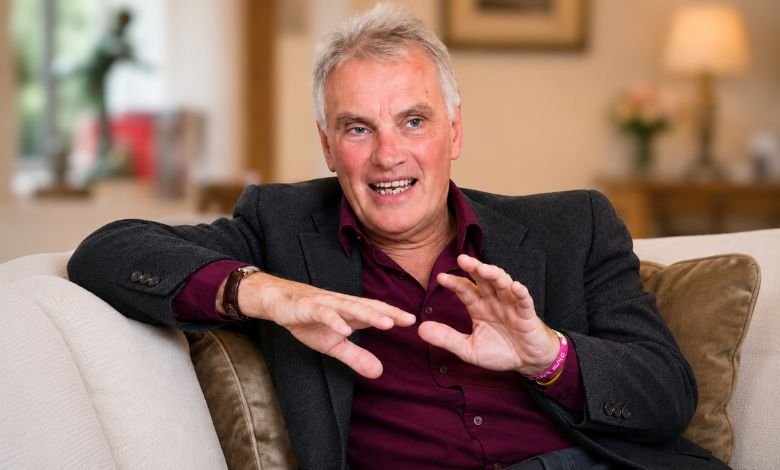
A pizza business, an English vineyard and a rugby club might seem an unlikely combination. For Nigel Wray, all three have been part of a career built around investing in businesses and people. His interests have taken him from property and financial newsletters to well-known brands and young technology companies.
Yet Saracens is the name most closely attached to his public life. Wray supported the club for decades as it became one of Europe’s strongest teams. Then came the salary-cap scandal, which brought heavy penalties and changed how those successful years were viewed.
Plenty remains to explore beyond that controversy. His early business ventures, charitable support and collection of sporting treasures reveal a man whose interests have long stretched beyond the boardroom.
Quick Bio
| Field | Details |
|---|---|
| Full Name | Nigel William Wray |
| Known As | Nigel Wray |
| Year of Birth | 1948 |
| Place of Birth | London, England |
| Nationality | British |
| Profession | Entrepreneur and investor |
| School | Mill Hill School |
| University | University of Bristol |
| Subject Studied | Economics and Economic History |
| Early Banking Career | Singer and Friedlander |
| Notable Business Connections | Domino’s Pizza Group, Franchise Brands, Chapel Down and Implement AI |
| Saracens Involvement | Began backing the rugby club in 1995 |
| Retirement as Saracens Chairman | January 2020 |
| Sporting Memorabilia Collection | The Priory Collection |
Nigel Wray’s Early Life and First Steps in Business
Born in London in 1948, Nigel William Wray attended Mill Hill School before studying Economics and Economic History at the University of Bristol. Sport was already part of his life: he played rugby as a student.
His first job after university was at merchant bank Singer and Friedlander. It was the beginning of a working life in finance, although banking would be only one chapter.
The difficult banking and property market of the early 1970s provided some hard lessons. His career did not follow a smooth path from graduate trainee to successful investor. Business setbacks shaped his early experience.
He later worked with Martyn Thomas on property projects, buying houses that needed renovation and selling them after improvements. Their projects included homes in Hampstead.
The Investment Newsletters That Helped Build His Name
Before rugby supporters knew him as the man backing Saracens, Wray had made his mark in financial publishing.
He turned the Fleet Street Letter into an investment newsletter for private subscribers. He handled the practical work of researching, writing, printing, and marketing it. The Penny Share Guide was another important part of this period.
These publications gave him a way to turn his interest in companies and shares into a business. They also demanded something beyond spotting an opportunity: he had to explain his thinking clearly enough for readers to keep subscribing.
It is an easily overlooked chapter, but it helps explain the range of his experience. Long before his later board appointments, he had dealt with the everyday demands of building a business himself.
From Domino’s Pizza to Franchise Brands
Domino’s Pizza Group became one of Wray’s most recognizable investments. He was a significant shareholder and served as a director, linking his name with a brand that grew into a familiar presence across Britain.
The attraction of franchising is easy to understand. A local business owner operates under an established name, supported by shared systems, products and marketing. Success still depends on the people running each operation.
Wray went on to co-found Franchise Brands in 2008. He serves as a non-executive director, contributing at board level rather than managing the company’s daily work.
His involvement across these businesses shows how a familiar commercial model can lead to opportunities in different markets. The products and services may change, but the relationship between a central brand and local operators remains important.
English Wine and a New Interest in AI
Wray’s business connections also include Chapel Down, the English wine producer. He joined its board in 2004 and serves as a non-executive director.
Wine production is a very different undertaking from running a pizza franchise or publishing an investment newsletter. Its place among his interests shows how widely his business activity has spread.
More recently, there has been a move into artificial intelligence. In September 2025, Implement AI announced a £1.3 million seed funding round led by Wray.
The company develops managed AI agents for business tasks. It said the money would help expand its operations, team and reseller network.
That investment adds a new industry to a career already spanning several decades. It also reminds readers that his business story continued after he stepped down from the Saracens chairmanship.
How Saracens Became Central to Nigel Wray’s Life
Wray began backing Saracens in 1995, just as rugby union entered its professional era. Clubs were facing a major adjustment, with new demands around player pay, facilities and commercial income.
His support became a lasting feature of the club. Across the following decades, Saracens developed into a side capable of winning both Premiership championships and European titles.
For supporters, those years brought memorable finals and the experience of following a team competing at the highest level. Wray’s financial backing was an important part of that development.
The relationship went beyond a brief investment. He became closely identified with Saracens, which meant that its later problems also became a defining part of his reputation.
What Happened in the Salary-Cap Scandal?
In November 2019, an independent disciplinary panel found that Saracens had failed to disclose player payments and exceeded the salary cap in 2016–17, 2017–18 and 2018–19.
The initial punishment was severe: a £5.36 million fine and a 35-point deduction. Financial arrangements examined during the case included co-investments involving Wray and players.
Wray said he had wanted to help players prepare for life beyond rugby. However, the competition’s regulations counted relevant arrangements toward salary.
He later apologized for his approach to compliance. He also accepted responsibility for failing to consult the salary-cap manager before entering agreements and for failing to disclose the transactions properly.
Further salary-cap developments led to Saracens’ relegation at the end of the 2019–20 Premiership season. Relegation followed the original disciplinary decision as the crisis developed.
The consequences reached beyond the club’s league position. Supporters and rival teams questioned how the breaches affected a competition governed by shared spending rules.
Stepping Down and a Change of Ownership
Wray retired as Saracens chairman in January 2020, saying it was time for a fresh start. After so many years in charge, his departure marked a significant change.
In October 2021, the club announced an agreement for a consortium to take control, backed by £32 million in new investment. The transaction was completed in February 2022.
Wray retained a significant minority shareholding when the consortium took control. He had stepped back from leadership while keeping a financial connection with the club.
The Sporting Collection Beyond the Headlines
Away from club ownership, Wray has built the Priory Collection, an extensive private collection of sporting memorabilia.
Its appeal comes from the history attached to individual objects. Items highlighted publicly include Geoff Hurst’s shirt from the 1966 World Cup final and a bat used by Don Bradman.
A shirt or bat can look ordinary until you hear its story. Knowing who used it, and on which occasion, turns it into a link to a moment generations of supporters remember.
Wray has also supported charitable work linked to young people, education and disability sport, including the Saracens Foundation. These interests form another part of his long involvement with sport.
Conclusion
Nigel Wray has spent much of his working life helping to finance businesses, from familiar consumer brands to emerging technology companies. His publishing background and varied investments give his career a scope that rugby headlines alone cannot capture.
Saracens will nevertheless remain central to his story. His backing helped the club grow, while the salary-cap breaches left lasting questions about its most successful period. Understanding his legacy means giving both the achievements and the consequences their proper place.
Frequently Asked Questions
1. Who is Nigel Wray?
Nigel Wray is a British businessman and investor best known for his long association with Saracens Rugby Club and investments across several industries.
2. Which companies is Nigel Wray associated with?
His business connections include Domino’s Pizza Group, Franchise Brands, Chapel Down and Implement AI. His roles have included shareholder, director, and co-founder.
3. When did Nigel Wray start supporting Saracens?
He began backing Saracens in 1995, at the start of rugby union’s professional era.
4. Why did Nigel Wray leave the Saracens chairmanship?
He retired in January 2020, following the salary-cap findings and initial penalties. He said the club needed a fresh start.
5. What is Nigel Wray’s Priory Collection?
It is his private collection of sporting memorabilia, including historic shirts, bats, medals, and other objects connected with notable sporting achievements.