Los Angeles Rams vs Chicago Bears Match Player Stats: Overtime Drama Decided by Three Costly Turnovers

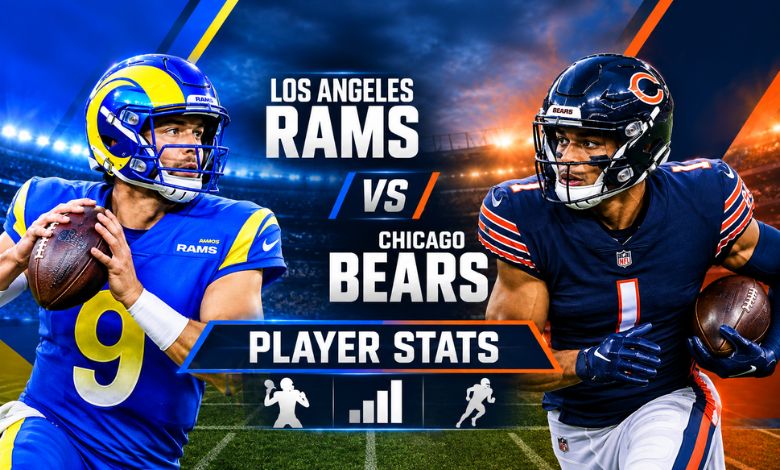
The Los Angeles Rams vs Chicago Bears match player stats reveal the full story behind a close NFC Divisional Round contest at Soldier Field. Los Angeles earned a 20–17 overtime victory over Chicago on 18 January 2026, but the result remained uncertain until the final kick.
Chicago gained more total yards and controlled possession for longer. Its defence also placed Matthew Stafford under regular pressure. However, the Rams protected the football, intercepted Caleb Williams three times and remained composed during the closing stages.
Kyren Williams scored both Los Angeles touchdowns, while Harrison Mevis kicked the winning field goal in overtime. Caleb Williams produced two touchdown passes for Chicago, including an outstanding late play that forced extra time. His three interceptions, however, became the biggest difference between the teams.
Los Angeles Rams vs Chicago Bears Match Summary
The Rams made a confident start and scored on their opening possession. Los Angeles moved 85 yards in 14 plays before Kyren Williams completed the drive with a four-yard touchdown run. The long possession gave the visitors a 7–0 advantage and kept Chicago’s offence on the sideline.
Chicago answered early in the second quarter. Facing fourth-and-goal, Caleb Williams threw a three-yard pass to DJ Moore for a touchdown. The successful fourth-down play brought the Bears level and gave the home crowd new energy.
Cairo Santos later kicked a 48-yard field goal to put Chicago ahead 10–7. Los Angeles responded before the break, with Harrison Mevis converting a 32-yard attempt. The score was tied at 10–10 at halftime.
Neither team scored in the third quarter as both defences took control. The Rams regained the lead during the fourth quarter when Kyren Williams scored from five yards. Chicago then had a chance to answer but failed to score from inside the Los Angeles five-yard line.
The Bears received one final opportunity and used it well. On fourth down, Caleb Williams moved backwards to avoid pressure before throwing to Cole Kmet in the end zone. The 14-yard touchdown tied the game at 17–17 with only 18 seconds remaining.
Los Angeles opened overtime with a three-and-out. Chicago then moved towards midfield, but Kam Curl intercepted an inaccurate pass from Williams. Stafford took advantage of the opportunity and guided the Rams into field-goal range. Mevis completed the comeback with a 42-yard winning kick.
Main Rams vs Bears Player Statistics
| Player | Team | Main Statistics |
|---|---|---|
| Matthew Stafford | Rams | 20 completions, 258 passing yards |
| Caleb Williams | Bears | 257 passing yards, 2 TDs, 3 interceptions |
| Kyren Williams | Rams | 87 rushing yards, 2 TDs |
| D’Andre Swift | Bears | 76 rushing yards |
| Puka Nacua | Rams | 5 catches, 56 receiving yards |
| Colby Parkinson | Rams | 3 catches, 56 receiving yards |
| Colston Loveland | Bears | 4 catches, 56 receiving yards |
| DJ Moore | Bears | 5 catches, 52 yards, 1 TD |
| Cole Kmet | Bears | 3 catches, 31 yards, 1 TD |
| Cobie Durant | Rams | 2 interceptions |
| Kam Curl | Rams | 13 tackles, 1 interception |
| Jaquan Brisker | Bears | 14 tackles, 1 sack |
Matthew Stafford Faces Heavy Pressure
Matthew Stafford completed 20 of 42 passes for 258 yards. He did not throw a touchdown, but he also avoided an interception. His ability to protect the ball was important in a game where one mistake could decide the result.
Chicago’s defence made Stafford uncomfortable for much of the night. The Bears recorded four sacks and forced the Rams to punt eight times. Jaquan Brisker, Montez Sweat, Kyler Gordon and Dominique Robinson each brought Stafford down once.
Stafford struggled to find a consistent rhythm, particularly during the middle part of the contest. The Rams went through several short possessions after scoring on their opening drive. Puka Nacua and Davante Adams were also prevented from producing their usual big receiving totals.
The veteran quarterback still delivered when the Rams needed him most. Following Kam Curl’s overtime interception, Stafford completed three passes for 43 yards. Those completions moved Los Angeles from its own side of the field to the Chicago 24, creating the chance for the winning kick.
Caleb Williams Shows Skill but Makes Costly Errors
Caleb Williams finished with 23 completions from 42 attempts for 257 yards. He threw two touchdown passes and added 40 rushing yards from five carries. His mobility caused problems for the Rams, especially during the fourth quarter.
His first touchdown pass went to DJ Moore from three yards. The second was a far more difficult play. Williams escaped the Los Angeles pass rush by moving deep behind the line before throwing across the field to Cole Kmet. The pass officially produced a 14-yard touchdown, although the ball travelled much farther through the air.
That moment showed Williams’ ability to create a play when the original plan had broken down. It also gave Chicago a chance to complete another late comeback.
The three interceptions damaged his overall performance. Cobie Durant collected two of them, including one on Chicago’s opening possession. Kam Curl made the final interception during overtime. It placed the Rams within one scoring drive of victory.
Williams moved the Bears for long periods, but the turnovers prevented several promising possessions from producing points. His final numbers reflected an evening that included both excellent creativity and damaging mistakes.
Kyren Williams Becomes the Rams’ Main Scoring Threat
The Los Angeles passing game failed to produce a touchdown, placing more responsibility on Kyren Williams. The running back responded with 87 yards and two touchdowns from 21 carries.
Williams did not have a long breakaway run. His biggest gain covered 10 yards, but he continued to collect useful yardage and kept the offence moving. His patient running was valuable against a Chicago defence that regularly won at the line of scrimmage.
He scored from four yards during the first quarter and added a five-yard touchdown during the fourth. Williams also caught four passes for 30 yards, giving him 117 yards from scrimmage.
Blake Corum provided support with 19 yards from six rushing attempts. Puka Nacua carried twice for six yards, while Stafford lost one yard on his only recorded run. Los Angeles finished with 111 rushing yards as a team.
Chicago’s Rushing Attack Gains Yards Without a Touchdown
D’Andre Swift led Chicago’s ground attack with 76 yards from 19 carries. His longest run covered 13 yards, and he gave the Bears a dependable option between passing plays.
Caleb Williams was Chicago’s second-leading rusher. His five attempts produced 40 yards, including a 26-yard scramble during the fourth quarter. That run helped the Bears reach Los Angeles territory when they were trailing by seven points.
Kyle Monangai added 36 yards from 13 carries, while DJ Moore gained eight yards on one rushing attempt. Chicago finished with 160 rushing yards, giving the Bears a 49-yard advantage over the Rams in that area.
The main problem was the absence of a rushing touchdown. Chicago had several attempts close to the goal line but could not break through. Swift was stopped on three consecutive runs near the end zone during a vital fourth-quarter possession. The following incomplete pass resulted in a turnover on downs.
Receiving Contributions From Both Teams
Puka Nacua and Colby Parkinson shared the Los Angeles receiving lead with 56 yards each. Nacua caught five passes, while Parkinson gained his total on three receptions. Parkinson’s 35-yard catch was the longest Rams reception of the night.
Jordan Whittington made two catches for 35 yards, and Kyren Williams collected four receptions for 30 yards. Tyler Higbee provided an important 27-yard catch before halftime. Davante Adams was held to two receptions for 24 yards.
Colston Loveland led Chicago with four catches for 56 yards. DJ Moore followed with five receptions for 52 yards and one score. His 34-yard reception on the opening play immediately moved the Bears deep into Los Angeles territory.
Rome Odunze caught two passes for 44 yards. Kyle Monangai added four receptions for 36 yards, while Cole Kmet finished with 31 yards and the late game-tying touchdown. Chicago shared the ball effectively, but no receiver reached 60 yards.
Cobie Durant Changes the Direction of the Game
Cobie Durant produced one of the strongest defensive performances in the contest. His two interceptions stopped Chicago from building an early advantage and gave the Rams extra possessions.
The first interception came after the Bears had moved into Los Angeles territory on their opening drive. Instead of scoring first, Chicago left the field without points. The Rams then responded with a touchdown drive.
Durant’s second interception arrived during the second half when Caleb Williams attempted a deep pass towards Luther Burden III. Although Los Angeles did not score from the following possession, the takeaway stopped Chicago from developing momentum.
Kam Curl made the most important interception. His overtime takeaway ended Chicago’s chance to win with a field goal and placed the ball back in Stafford’s hands. Curl also finished with 13 total tackles, making him a central part of the Rams’ defensive effort.
Jaquan Brisker Leads Chicago’s Defence
Chicago’s defence performed well enough to win on many nights. The unit held Los Angeles to 340 total yards and only 20 points, including overtime.
Jaquan Brisker recorded 14 tackles, one sack and two defended passes. He regularly moved towards the line of scrimmage and helped Chicago control the Rams’ short passing game.
The Bears sacked Stafford four times, their best postseason total for many years. They also forced eight punts and allowed only two touchdowns. After surrendering a score on the opening drive, Chicago did not allow another touchdown until late in the fourth quarter.
The defence did not create a takeaway, however. That became a major difference because the Rams intercepted three passes and used those extra possessions to gain control.
Special Teams Decide the Contest
Both teams received reliable kicking performances. Cairo Santos made a 48-yard field goal and converted both extra-point attempts for Chicago.
Harrison Mevis remained perfect for Los Angeles. He made a 32-yard field goal before halftime and converted two extra points. His biggest moment came during overtime when he kicked successfully from 42 yards.
Rams punter Ethan Evans was busy throughout the contest. He punted eight times as Chicago repeatedly stopped the Los Angeles offence. Some of his kicks helped the Rams defend long fields, which reduced the damage caused by their short offensive possessions.
Why Chicago Lost Despite Gaining More Yards
The team statistics show that Chicago had several advantages. The Bears gained 417 total yards, while Los Angeles recorded 340. Chicago also rushed for more yards and kept possession for almost seven minutes longer.
The most important figure was the turnover count. The Bears committed three turnovers, while the Rams finished without one. Los Angeles turned the first interception into a touchdown and used the final takeaway to create the winning field goal.
Chicago also failed to finish some of its best drives. The Bears moved inside the Rams’ five-yard line during the fourth quarter but came away without points. That missed opportunity forced Chicago to depend on a late touchdown simply to reach overtime.
Los Angeles did not dominate the game. The Rams simply made fewer damaging mistakes and performed better during the decisive moments.
Conclusion
The Los Angeles Rams vs Chicago Bears match player stats show how a team can win without leading the main yardage categories. Chicago moved the ball effectively, pressured Matthew Stafford and produced a dramatic late touchdown. Its three interceptions, however, proved too costly.
Kyren Williams carried the Rams’ offence with two rushing touchdowns. Cobie Durant intercepted two passes, while Kam Curl made the overtime takeaway that changed the result. Stafford then produced several calm completions before Harrison Mevis ended the contest with his 42-yard field goal.
The 20–17 overtime victory was built on discipline, defensive awareness and strong execution under pressure. Chicago produced several impressive individual performances, but Los Angeles made the plays that mattered most.
(FAQs)
Who won the Los Angeles Rams vs Chicago Bears game?
The Los Angeles Rams defeated the Chicago Bears 20–17 in overtime during the NFC Divisional Round.
How many passing yards did Matthew Stafford record?
Matthew Stafford completed 20 of 42 passes for 258 yards. He did not throw a touchdown or an interception.
What were Caleb Williams’ statistics against the Rams?
Caleb Williams threw for 257 yards and two touchdowns, rushed for 40 yards and was intercepted three times.
Who scored the Rams’ touchdowns?
Kyren Williams scored both Los Angeles touchdowns. He recorded 87 rushing yards and two scores from 21 attempts.
Who kicked the winning field goal?
Harrison Mevis kicked the winning 42-yard field goal during overtime.