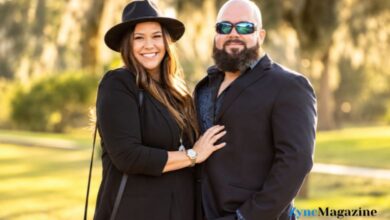
Rebecca Liddicoat is mainly known as the former wife of American football quarterback Robert Griffin III, better known as RG3. Their relationship began during their university years, long before Griffin became one of the biggest young names in the NFL. Rebecca remained beside him as his sporting career grew, public interest increased and their personal life became part of the news.
Unlike many people connected to famous athletes, Rebecca never tried to build a celebrity career. She rarely gave interviews, avoided sharing private details and gradually disappeared from public view after her marriage ended. This quiet approach has made people more curious about her education, family and present life. Although plenty of claims appear online, only a limited amount of information about her has been publicly confirmed.
Who Is Rebecca Liddicoat?
Rebecca Liddicoat is an American university graduate and mother who came to public attention because of her relationship with Robert Griffin III. She was born and raised in Boulder, Colorado, before moving to Texas for her higher education. She later attended Baylor University, where she became involved in student activities and completed her studies.
Rebecca was never a professional sports personality. She was also not known as an actress, model or television celebrity before meeting Griffin. Her public identity developed entirely because she was dating and later married to an athlete receiving national attention.
Even during the most visible years of their relationship, Rebecca appeared uncomfortable with unnecessary publicity. She attended selected events with Griffin, but she did not regularly speak to the press. Her reserved nature helped her maintain some personal space while living close to the demanding world of professional football.
Her Education at Baylor University
Baylor University became an important part of Rebecca’s story. She studied biology and graduated with a Bachelor of Science degree in 2010. During her time at the university, she reportedly served as the president of a student service organisation. This role suggests that she was interested in community involvement as well as her academic work.
Her biology degree is one of the clearest facts about her independent background. However, no reliable public record explains whether she later pursued a career connected to science or healthcare. Several websites have made different claims about her employment, but most do not provide dependable evidence.
It is therefore more accurate to describe Rebecca as a biology graduate rather than attach an unconfirmed profession to her name. Her education also shows that her life had its own direction before she became widely recognised as RG3’s partner.
How Rebecca Liddicoat Met Robert Griffin III
Rebecca met Robert Griffin III at Baylor University in 2009. A mutual friend reportedly introduced them while they were both students. Their first meeting was not a dramatic romantic moment. Rebecca later recalled noticing Griffin’s unusual and colourful socks and thinking that he seemed slightly strange.
Despite that awkward beginning, they soon became comfortable with each other and started dating. Griffin was already a talented university quarterback, but he had not yet reached the level of fame that followed his Heisman Trophy victory and move into professional football.
Their relationship developed while they were still experiencing ordinary student life. Rebecca knew Griffin before the endorsement deals, national interviews and major NFL expectations. She was present during the early stages of his sporting journey and saw how quickly his life changed as his performances attracted wider attention.
Their Engagement Story
Robert Griffin III proposed to Rebecca in October 2010 after a Baylor football victory over Kansas State. He originally planned to propose at a meaningful outdoor location on the university campus, but poor weather forced him to change the arrangement.
Griffin instead prepared the university’s indoor practice facility for the occasion. Their family members were present, candles decorated the setting and one of Griffin’s teammates played the guitar. Griffin reportedly performed a song that he had written before asking Rebecca to marry him.
The proposal reflected the couple’s close connection to Baylor. It took place before Griffin became an NFL star, making it part of a period when their relationship was still largely personal. Their engagement later received more attention as Griffin’s sporting achievements made him a national figure.
Marriage to Robert Griffin III
Rebecca Liddicoat and Robert Griffin III married on 6 July 2013 in Denver, Colorado. The ceremony brought together their relatives, university friends and people connected to Griffin’s football career. At the time, he was one of the NFL’s most discussed young quarterbacks.
Griffin had been selected as the second overall pick in the 2012 NFL Draft. His impressive first season increased media interest in both his professional career and private life. As his wife, Rebecca suddenly found herself connected to interviews, sports reports, sponsorships and public events.
The change from college life to the NFL spotlight was significant. Professional sport involves frequent travel, physical pressure and constant public judgement. Rebecca supported Griffin during this period but continued to avoid becoming a full-time public personality. She was visible as his wife, yet she did not try to create fame for herself.
Motherhood and Family Responsibilities
Rebecca and Griffin welcomed their daughter, Reese Ann Griffin, in May 2015. The birth was publicly announced by Griffin, but Rebecca remained careful about exposing too much of their family life.
Becoming a mother gave Rebecca a responsibility beyond the attention surrounding her husband’s career. Although the public showed interest in their daughter, Rebecca did not use motherhood to remain in celebrity news. Very few reliable details about Reese’s upbringing have been shared.
Her approach appears focused on protecting her child’s privacy. Reese is connected to a famous father, but she is not a public personality. Rebecca’s limited media presence has helped keep much of her daughter’s everyday life away from unnecessary public attention.
Rebecca Liddicoat and RG3’s Separation
Reports of problems in the marriage began appearing in 2016. By August of that year, major sports publications reported that the couple had been living separately for several months and that Griffin was preparing to file for divorce. Their marriage had lasted for around three years.
The separation quickly attracted media coverage because Griffin was a well-known NFL player. Various websites published claims about the reasons behind the breakup, but Rebecca did not provide a detailed public version of events. This makes it difficult to separate confirmed information from gossip.
What is known is that the marriage ended and the former couple had to move forward while sharing responsibility for their daughter. Rebecca’s refusal to discuss the divorce publicly prevented the situation from becoming an ongoing media argument. Her silence may also have helped her protect her family during an emotionally difficult period.
Life After the Divorce
Following the end of her marriage, Rebecca moved further away from public attention. She did not launch a public campaign, appear on reality television or regularly discuss her former husband. Instead, she appears to have concentrated on rebuilding her personal life away from the cameras.
There is limited verified information about Rebecca Liddicoat today. Her current occupation, exact residence and relationship status have not been publicly confirmed. Some online articles claim that she has a particular net worth or receives a certain amount of money, but these figures are often published without reliable financial records.
Private financial agreements should not be treated as public facts without proper evidence. The same applies to stories about her romantic life. Rebecca’s decision not to share such matters means that responsible articles should acknowledge the limits of available information instead of filling the gaps with rumours.
Rebecca Liddicoat’s Personality and Private Nature
Earlier accounts from people who met Rebecca described her as friendly, relaxed and strongly connected to her family. Those descriptions match her later decision to avoid the celebrity lifestyle. She did not appear interested in turning temporary media attention into a permanent career.
Privacy can be difficult for someone who was once married to a famous athlete. Even years after a divorce, online searches can continue to connect that person with an old relationship. Rebecca appears to have accepted that public curiosity exists while refusing to make it the centre of her life.
Her choice also challenges the idea that everyone linked to a celebrity wants fame. Rebecca experienced major public attention but ultimately selected a quieter path. Her absence from the media should not be mistaken for a lack of achievement or purpose. It simply shows that she prefers to keep those parts of her life personal.
Why People Still Search for Rebecca Liddicoat
Interest in Rebecca remains closely linked to Robert Griffin III’s continuing presence in American sports. Fans who follow his career often want to learn about his early relationships and the people who knew him before he entered the NFL.
Rebecca’s story also attracts attention because so little is known about her current life. The absence of regular interviews has created unanswered questions, but it has also protected her from constant public judgement. Her journey offers a clear example of how someone can experience fame without choosing to remain famous.
She may always be introduced as RG3’s former wife, but that description covers only one chapter of her life. She is also a university graduate, a mother and an individual who has shown a strong commitment to personal privacy.
Conclusion
Rebecca Liddicoat became publicly recognised through her marriage to Robert Griffin III, but her life cannot be reduced to that relationship alone. She studied biology at Baylor University, participated in student activities and met Griffin before his rise to national sporting fame.
Their relationship included a memorable university proposal, a 2013 wedding and the birth of their daughter in 2015. The marriage later ended, and Rebecca gradually stepped away from public attention. Since then, she has avoided discussing her finances, relationships and daily life in the media.
Her story is notable because she did not use her connection to an NFL star to pursue celebrity status. Instead, she chose privacy and focused on life beyond the headlines. While public curiosity about Rebecca may continue, her personal boundaries deserve the same respect given to any private individual.
(FAQs)
Who is Rebecca Liddicoat?
Rebecca Liddicoat is an American biology graduate best known as the former wife of Robert Griffin III. She attended Baylor University and married Griffin in 2013.
Where did Rebecca Liddicoat meet Robert Griffin III?
Rebecca met Griffin at Baylor University in 2009 through a mutual friend. They began dating while they were both university students.
When did Rebecca and Robert Griffin III get married?
The couple married on 6 July 2013 in Denver, Colorado. Their wedding was attended by family members, friends and people connected to Baylor University.
Does Rebecca Liddicoat have a daughter?
Yes. Rebecca and Griffin share a daughter named Reese Ann Griffin, who was born in May 2015.
What is Rebecca Liddicoat doing now?
Rebecca’s present career and personal circumstances are not publicly confirmed. She has maintained a private lifestyle and rarely appears in interviews or entertainment reports.