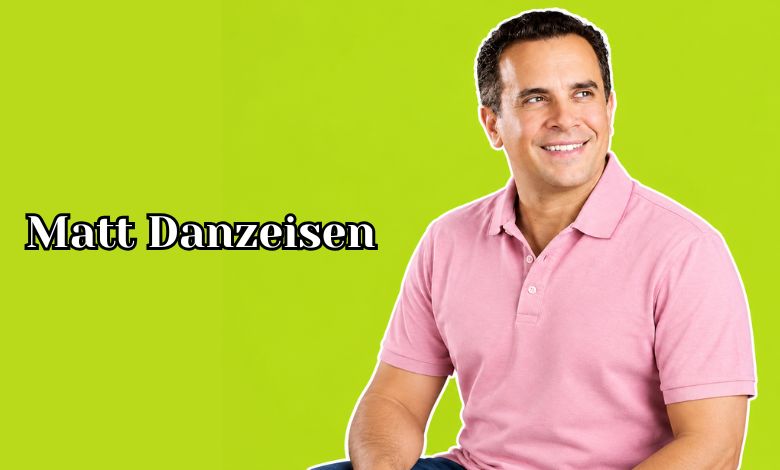
Search for Matt Danzeisen, and one fact usually appears before anything else: he is married to billionaire investor Peter Thiel. That is true, but it tells only part of the story. Danzeisen had already spent years working in finance before his marriage became a subject of public interest.
His career is easier to document than his private life. Corporate filings show that he has worked in investment banking, fixed-income management and private investing. They also connect him with BlackRock, Thiel Capital and Crescendo Equity Partners. These are useful facts because they come from business records rather than biography sites repeating information from one another.
There is much less confirmed information about his early life, personal wealth and everyday family matters. For that reason, this profile does not attach an exact birth date, net-worth figure or other personal claims to Danzeisen when reliable evidence is not available.
Quick Bio
| Field | Details |
|---|---|
| Full Name | Matt Danzeisen |
| Profession | Finance and Investment Professional |
| Known For | Husband of Peter Thiel and his career in private investment |
| Education | Cornell University |
| Qualification | CFA Charterholder |
| Notable Workplaces | BlackRock, Thiel Capital, Banc of America Securities |
| Spouse | Peter Thiel |
| Marriage Year | 2017 |
Who Is Matt Danzeisen?
Matt Danzeisen is a finance and investment professional with experience stretching back to the beginning of the 2000s. His work has taken him through several areas of finance rather than keeping him in one type of job.
Official filings show an early period in investment banking, followed by several years managing fixed-income investments at BlackRock. He later joined investment businesses associated with Peter Thiel and became involved in private-company investments in the United States and Asia.
That background is important because Danzeisen is sometimes presented online almost entirely through his marriage. The public record shows that he had a professional career of his own many years before his 2017 wedding received media attention.
His Education Is Publicly Documented
One part of Danzeisen’s background that can be stated with more confidence is his education.
A Bridgetown filing with the U.S. Securities and Exchange Commission says that he graduated from Cornell University with a degree in finance and a minor in economics. The same filing identifies him as a CFA charterholder.
Those details make sense alongside the work he later pursued. His career has centred on investments, portfolios and private companies rather than on operating a public-facing technology company himself.
Reliable records do not offer the same level of detail about his childhood. Instead of trying to fill that space with an unsupported story, it is more accurate to leave those years private.
Starting Out at Banc of America Securities
Danzeisen’s documented financial career includes a period at Banc of America Securities. SEC filings state that he worked there as an investment banker from 2000 to 2001.
Investment banking is very different from the type of public venture investing often associated with Silicon Valley. The work can involve company finance, transactions, capital raising and financial analysis.
This early position matters because it places Danzeisen in professional finance years before most members of the public knew his name. It was the beginning of a career that later moved into investment management and private equity.
Six Years at BlackRock
After his time in investment banking, Danzeisen joined BlackRock in 2002.
SEC records describe him as a vice president and portfolio manager in BlackRock’s fixed-income division. He remained there until 2008.
Fixed-income management involves investments built around debt, including bonds and related products. The work requires close attention to interest rates, credit quality and financial risk.
Spending roughly six years in that area gave Danzeisen a background in large-scale investment management before his career moved toward private investments. It is one of the clearest examples of why describing him only as Peter Thiel’s husband misses much of his professional history.
Moving Into Thiel Capital
Danzeisen joined Thiel Capital and its predecessor, Clarium Capital Management, in 2008, according to SEC filings.
Later corporate records described him as Head of Private Investments at Thiel Capital, focusing mainly on private companies and funds in the United States and Asia.
Private investment requires a different approach from managing publicly traded securities. Before backing a private company, investors may have to examine its finances, management, market, competitors and future plans without the same amount of public information available for a listed company.
The filings also say that Danzeisen developed and led a strategy involving both debt and equity investments in financial-technology companies. This brings together two important parts of his background: traditional finance and newer technology-led financial services.
His Work With Fintech Businesses
Danzeisen’s involvement in fintech is one of the more specific parts of his investment record.
A 2021 Bridgetown filing listed him as serving on the boards of Trumid and Coru and said that he had previously served on the board of Artivest. The filing described these businesses as operating in areas including electronic bond trading, personal financial management and alternative investments.
Board membership is worth noting because it can involve more than making an investment and walking away. Directors may take part in discussions about a company’s direction, governance and long-term decisions.
It would be difficult to know Danzeisen’s exact day-to-day involvement from public documents alone, so it is better not to exaggerate those roles. What can be said is that his name appears in formal records connected with these businesses.
Crescendo Equity Partners
Danzeisen’s investment career also developed outside the United States.
According to SEC filings, he co-founded Crescendo Equity Partners in 2012 while working at Thiel Capital. Crescendo is described as a private-equity firm based in South Korea, with investments across South Korea and Southeast Asia.
The filings say that Danzeisen served on Crescendo’s investment committee and represented the firm in connection with selected portfolio companies.
This part of his career is useful because it shows that his professional work has not been limited to Silicon Valley. He has also been involved with investment activity in Asian markets, particularly around businesses linked with technology supply chains.
Bridgetown Leadership
Danzeisen has also appeared in public records connected with the Bridgetown investment vehicles.
One SEC filing listed him as chairman of Bridgetown Holdings, while later records noted his chairmanship of Bridgetown 2 during a defined period.
Bridgetown was formed through a collaboration involving Thiel Capital and Pacific Century Group. The investment vehicle later pursued transactions in Asian markets.
Again, the useful point is not to make Danzeisen sound more famous than he is. These records simply show a career that has included portfolio management, private investing and corporate leadership.
Matt Danzeisen and Peter Thiel
Danzeisen became much better known outside finance after reports of his marriage to Peter Thiel.
Axios reported in 2017 that Thiel married his longtime partner Matt Danzeisen during a private event in Vienna. Guests had reportedly expected a celebration for Thiel’s 50th birthday before learning about the wedding.
Peter Thiel was already internationally known through PayPal, Palantir and venture investing. That level of fame naturally brought attention to the person he married.
Danzeisen, however, did not suddenly become a regular celebrity figure. He remained far less visible in the press than Thiel and continued to be known mainly through business records and occasional reporting about the couple.
Why There Are So Many Conflicting Details Online
Anyone researching Matt Danzeisen will quickly notice that biography websites often disagree with one another.
Some give different birth years. Others publish precise wealth estimates or long accounts of his family history without providing strong evidence. These contradictions are a warning sign.
An SEC filing can tell us where someone worked, what corporate position they held and where they studied because those details may be relevant to investors. It does not provide a complete personal biography.
That is why an honest profile of Matt Danzeisen has to accept that some information is simply not publicly established.
What Is Matt Danzeisen’s Net Worth?
There is no reliable public record that gives an exact figure for Matt Danzeisen’s personal net worth.
This is an area where many online articles go too far. They publish a number and then repeat it as if it were official.
Danzeisen has clearly held senior jobs in finance and investment. That fact does not allow anyone outside his private financial affairs to calculate the value of his assets, investments and liabilities.
Peter Thiel’s wealth should not be used as a substitute for Danzeisen’s personal net worth either. Without proper financial disclosure, a specific figure would be speculation.
A Career That Predates the Public Attention
The simplest way to understand Danzeisen is to separate fame from career.
His public recognition increased because of Peter Thiel. His career did not begin because of that recognition.
By the time the couple’s wedding was reported in 2017, Danzeisen had already worked at Banc of America Securities, spent six years at BlackRock, joined Thiel Capital and helped establish Crescendo Equity Partners.
Those facts give his biography more substance than rumours about private wealth or lifestyle.
Conclusion
Matt Danzeisen is easier to understand through his professional record than through the many personal claims published about him online. The documented story is straightforward: he studied finance and economics at Cornell, entered investment banking, spent several years managing fixed-income investments at BlackRock and later moved into private investments through Thiel Capital. He also co-founded Crescendo Equity Partners and held leadership roles connected with Bridgetown.
His marriage to Peter Thiel brought much more public attention to his name in 2017, but it should not replace the career that came before it. At the same time, there is no need to invent details where reliable records stop.
That is probably the most accurate way to write about Danzeisen: focus on the work that can be documented, acknowledge his marriage to Peter Thiel, and leave unsupported claims about his birth date, exact wealth and private family life out of the story.
(FAQs)
Who is Matt Danzeisen?
Matt Danzeisen is a finance professional and investor with documented experience at Banc of America Securities, BlackRock and Thiel Capital. He is also known as Peter Thiel’s husband.
Did Matt Danzeisen work at BlackRock?
Yes. SEC filings state that Danzeisen worked as a vice president and portfolio manager in BlackRock’s fixed-income division from 2002 to 2008.
Where did Matt Danzeisen study?
Corporate filings say that he graduated from Cornell University, studying finance with a minor in economics.
When did Matt Danzeisen marry Peter Thiel?
Their wedding was reported in 2017. Axios reported that Peter Thiel married his longtime partner Matt Danzeisen at an event in Vienna.
Is Matt Danzeisen’s net worth publicly known?
No reliable public disclosure establishes an exact personal net worth for Danzeisen. Specific figures found on biography websites should therefore not be treated as confirmed.