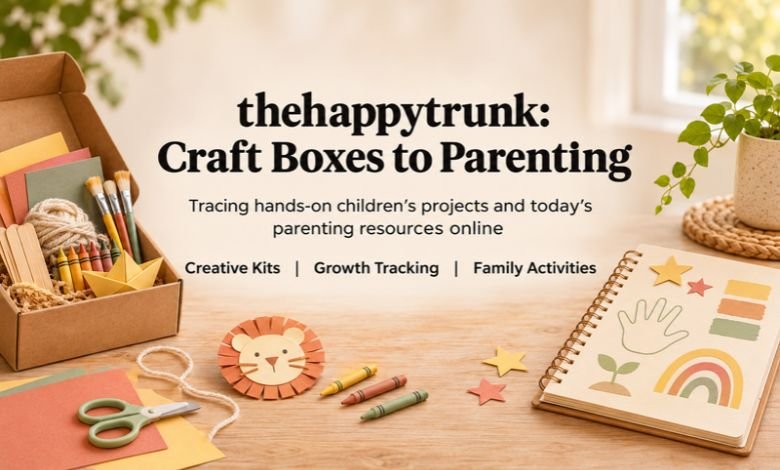
A rainy afternoon can feel very long when a child wants to make something and nobody knows where the glue has gone. That everyday problem helps explain why The Happy Trunk caught parents’ attention. Its original activity boxes brought project ideas, supplies, and instructions together, making it easier for families to sit down and create.
Search for thehappytrunk today, and the picture looks different. Alongside older reviews of children’s craft boxes, you will find a website that talks about developmental milestones, learning activities, and parenting resources. Both belong to the story behind the name. The key is knowing which period a page describes before deciding what the service offers now.
The Original Idea Behind The Happy Trunk
The Happy Trunk became known for monthly activity boxes made for children. Instead of asking parents to find a project, buy the materials, and work out the steps, the box brought those pieces together. Its activities mixed arts and crafts with simple science, giving children a chance to make things and see how they worked.
That approach had an appeal beyond convenience. A finished craft can be fun to display, but the time spent choosing colors, fitting pieces together, or trying a new method can be just as valuable to a child. Some projects go smoothly. Others need a second attempt or a little help from an adult. Either way, there is something satisfying about starting with a collection of materials and ending with something you made yourself.
Activities for Different Ages
Children do not all enjoy the same kind of project, even when the subject is similar. The Happy Trunk addressed this by offering boxes for different age groups. Historical descriptions place the younger boxes at around ages 3 to 7. These tended to use themes and included a mix of art, craft, and science activities.
Boxes for older children, generally described as serving those around ages 7 or 8 to 11, took a somewhat different approach. They included projects that gave children more room to explore an artistic idea or a science concept. The exact age ranges vary across older listings, so they are best understood as a guide to the original products rather than a current rule for choosing a box.
For families, the age split made practical sense. A younger child may want to decorate, assemble, and play with a result right away. An older child may enjoy figuring out why something works or changing the design to test a new idea. A good project gives each child enough to do without making the activity feel like homework.
Why the Ready-to-Make Format Worked
A creative afternoon can require more preparation than it appears to. A parent might have a great idea on Monday but discover on Saturday that one small supply is missing. Ready-to-make kits helped remove that obstacle. With materials and instructions in one place, families could spend more of their time on the activity itself.
The instructions also gave parents a starting point. They could follow the steps closely or let the child take the project in another direction. That flexibility matters. A craft box works best when it starts a conversation or an experiment, rather than turning every step into a test of whether a child has done it “correctly.”
Of course, an all-inclusive box did not mean every child could work alone. Cutting, measuring, and handling small parts might still call for adult help. For many families, working side by side was part of the attraction. The project gave them something specific to do together without requiring an elaborate plan.
The Connection to DIY Happy Kits
People looking into The Happy Trunk may also come across DIY Happy Kits. Older subscription descriptions connect the two names and describe quarterly kits aimed at children aged 10 and up. Those kits contained several craft projects, giving older children a longer set of activities to work through.
This connection can make search results confusing. One page may discuss a monthly box for a young child, while another talks about a quarterly DIY kit for an older child. They are part of the brand’s product history, but neither description should be mistaken for a confirmed offer on the current website.
Older reviews can still be enjoyable and useful. They show what families made, what children liked, and how the boxes were used at home. They are less helpful when the question is whether a particular kit can be bought today. Availability, contents, and prices need to be checked against a current product listing.
What thehappytrunk Website Focuses On Today
The website using the Happy Trunk name now presents a broader parenting and child-development platform. Its pages describe tools for recording milestones, finding learning activities, and keeping track of a child’s progress. It also highlights family challenges, digital rewards, and resources intended to support parents through different stages of childhood.
That is a different experience from opening a box of physical supplies. A digital record might help a parent remember when a child learned a new skill or collect achievements in one place. An activity suggestion might provide a quick idea for something to do after school or over the weekend. The website also describes printable certificates, giving families a way to celebrate moments that matter to them.
These are features the website advertises. Anyone interested in using a particular tool should check how it works after registration and what level of access it requires. A description on a homepage can tell you the idea behind a service, but using it is the best way to see whether it suits your family.
Making Milestones Meaningful
A child’s first drawing of the family, a brave attempt at riding a bike, or a newly learned word may not look like a major event to everyone. To a parent, it can be unforgettable. Milestone tracking offers a place to record moments like these before the details fade.
It can also be helpful to remember that children grow at their own pace. A record is most useful when it helps a family notice and celebrate progress, rather than turning childhood into a race. If a parent has a concern about development, a set of dated notes may help them explain what they have observed to a qualified professional.
The most personal records are often the simplest. A short note about what happened, how the child reacted, and who was there may mean more years later than a perfect chart. Digital tools can help organize those memories, but the memories themselves come from ordinary family life.
Learning Can Start With Small Moments
The old boxes and the current website share an interest in helping families find things to do with children. A child does not always need a complicated lesson to learn. Measuring ingredients, building a paper bridge, drawing a map of the bedroom, or wondering why a toy rolls faster on one surface can all lead to questions worth exploring.
TheHappyTrunk’s current site describes interactive learning activities and suggestions suited to different stages. Parents can judge those ideas by a simple standard: does this activity invite their child to take part? The right choice will vary. One child may love careful step-by-step making; another may prefer an open-ended challenge with several possible results.
It is fine when an activity ends differently from the picture in the instructions. A crooked paper tower can lead to a better question than a perfect one: what would make it stand longer next time? That kind of curiosity was part of the charm of hands-on kits, and it remains useful whether an idea comes from a box, a website, or something a child notices at home.
What to Check Before Signing Up
The current website displays free and paid plan options. Before choosing one, look at the features included, the current price, and the terms for changing or ending a subscription. If milestone records or family profiles are your main reason for joining, check how those features work and what information you would need to provide.
It also helps to read older search results with their dates in mind. A review of a craft box may describe a real family experience, but it does not review the digital website. Likewise, a past box price cannot tell you what a website plan costs today. Keeping those two kinds of information separate makes the decision much easier.
Conclusion
Thehappytrunk first became familiar to many families through creative boxes that made it easier for children to try arts, crafts, and science at home. Today, the website carrying the name talks about milestone records, learning activities, and resources for parents. The name connects the search results, but the products described in them are different.
For families, the best starting point is a clear question: are you looking for the history of the craft boxes, or are you considering the website as it appears today? Once you know that, the older reviews and the current features become easier to understand. The lasting idea behind both is simple: children learn and grow through the things they do, notice, make, and share.
FAQs
1. What is thehappytrunk?
TheHappyTrunk is a name known for children’s arts, crafts, and science activity boxes. The current website focuses on parenting resources, milestone tracking, and learning activities.
2. What ages were the original boxes designed for?
Older descriptions generally divide the boxes into a younger group around ages 3–7 and an older group around ages 7 or 8–11. The age ranges differ slightly between historical listings.
3. What were DIY Happy Kits?
DIY Happy Kits were described as quarterly kits for children 10 and up, containing several craft projects. They appear alongside The Happy Trunk in older subscription information.
4. Can parents still buy the original Happy Trunk boxes?
Older reviews and listings show what the boxes offered in the past. They do not establish current availability. Check for an active product listing and clear ordering details before assuming a box is still sold.
5. What does the current thehappytrunk website offer?
The website advertises milestone tracking, learning activities, family features, and parenting resources. Its exact access and plan details should be checked on the site before signing up.