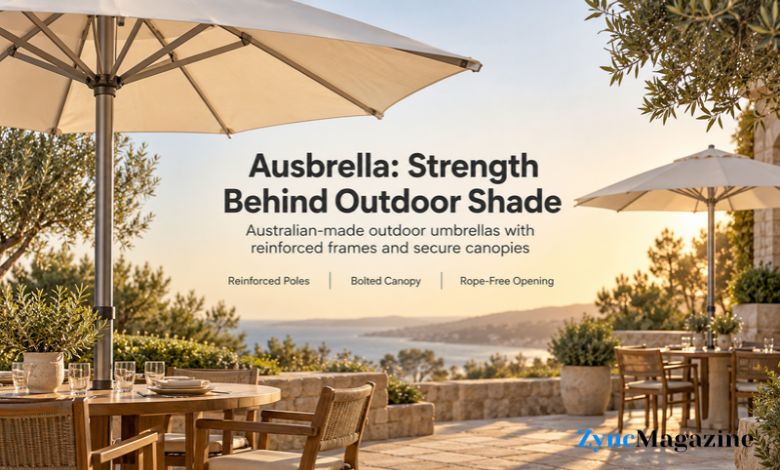
A shaded outdoor table can become a favourite place for morning coffee, family meals or a quiet afternoon. Yet choosing an umbrella involves more than finding a colour that matches the furniture. In an exposed setting, the frame, canopy fittings and ground connection deserve just as much attention.
Ausbrella is an Australian-made outdoor umbrella range from Awnet, a Melbourne manufacturer. The range is intended for settings including resorts, public open spaces and residential outdoor areas, with an emphasis on engineered construction and wind resistance. Its main features include reinforced poles, securely attached fabric and an opening system without ropes or pulleys.
Understanding how these features work—and what the published specifications actually mean—can help buyers decide whether Ausbrella suits their space.
What Is Ausbrella?
Ausbrella is a range of large folding outdoor umbrellas designed to provide shade in demanding environments. Awnet identifies two main models: Storm 135 and Hurricane 160+. Both share the range’s focus on structural strength, while their pole designs and published wind performance differ.
For anyone comparing outdoor shade options, this distinction matters. A product name alone does not explain whether an umbrella suits a sheltered courtyard, an open terrace or a coastal seating area. The model, dimensions and installation arrangement need to match the location.
The Australian Manufacturer Behind the Range
Awnet describes itself as a family-owned Australian business established in 1980. Its background includes market umbrellas, café barriers, signage and shelter products. The company operates from Melbourne and carries out manufacturing work through its own production departments.
That manufacturing background gives buyers a direct point of contact for questions about construction, replacement components and project requirements. Before placing an order, it is useful to discuss the actual setting, rather than choosing entirely from photographs.
Bring measurements, pictures of the ground surface and a clear description of how the area will be used. These details make a product enquiry more useful.
How the Reinforced Pole Design Works
One of Ausbrella’s defining features is its twin-skin aluminium pole. Awnet describes this reinforced construction as a way to combine strength with a manageable structure. Its explanation of the range also distinguishes the Hurricane’s additional pole reinforcement from the Storm design.
The centre pole is only one part of the umbrella, but it is an important part to examine. Buyers should also consider how the arms connect, how the canopy is secured and how the entire assembly attaches to its mounting point.
A useful product comparison therefore looks at the complete structure. A substantial pole provides limited reassurance if the proposed fixing arrangement has not been considered properly.
Bolted Fabric and Rope-Free Opening
Ausbrella uses a bolt-on fabric cover, which Awnet presents as a feature intended to improve security. The range also has an opening mechanism that operates without conventional ropes or pulleys. These are practical details that affect how the umbrella is assembled and handled.
For a café or resort, daily operation deserves attention alongside the specification sheet. Staff need to understand how to open, close and secure the umbrella correctly.
Ask for a demonstration before purchase. Check the space required around the mechanism and whether nearby tables or chairs need moving during operation. A straightforward routine can make outdoor seating easier to manage throughout the day.
Ausbrella Storm 135 Explained
The dedicated Storm 135 product page states a wind rating of 135 km/h. Awnet also describes testing at that speed in the Monash University wind tunnel. Listed construction details include a twin-skin centre pole, eight radial arms, an interlocking frame system and a matching stainless-steel in-ground socket.
There is a small difference across the manufacturer’s pages: the general range page mentions 140 km/h for Storm, while the dedicated Storm 135 page specifies 135 km/h. Buyers should request the current documentation for the exact model and configuration being quoted.
This is a good example of why a model-specific specification is more useful than a broad headline.
Ausbrella Hurricane 160+ Explained
The Hurricane 160+ uses a double twin-skin centre pole. According to Awnet, the model underwent wind-tunnel testing at 161 km/h. The company says the engineering certification and Monash University report are available on request.
Those documents are worth requesting when wind performance is central to the purchase. Ask which canopy size, mounting arrangement and operating conditions the evidence covers.
A published test speed should be read alongside the manufacturer’s instructions for the installed umbrella. Obtain clear guidance on when it should be closed and how it should be managed during severe weather.
Choosing the Right Size and Position
Start with the area that needs shade. Measure the table, occupied chairs and surrounding walking space. For a hospitality venue, include the room staff need to serve customers comfortably.
Awnet’s commercial umbrella buying guide also highlights measuring the intended space and considering the dimensions needed to cover tables and chairs.
Think about when the area is used most. Observe the position of sunlight during breakfast, lunch or late afternoon before deciding where the umbrella should stand.
Also check the space above and around it. Doors, branches, signs and neighbouring structures can affect where an umbrella opens and how comfortably people move beneath it.
Why Installation Deserves Careful Planning
Ausbrella’s listed features include a matching in-ground stainless-steel socket. Awnet also discusses other securing systems across its broader umbrella range, including arrangements for locations where sockets are unsuitable. Availability and suitability should be confirmed for the chosen Ausbrella model.
Ask who will assess the ground, specify the fixing and carry out installation. Establish whether the quotation includes this work.
For public seating or commercial premises, clarify any site permissions before ordering. Having the umbrella dimensions, proposed position and fixing details ready makes those discussions easier.
Canopy Care, Replacement and Warranty
Awnet lists acrylic canvas among its umbrella materials and states that replacement covers are available for its market umbrellas. Buyers should confirm the replacement process and compatible fabric for their particular Ausbrella.
Request written cleaning and maintenance instructions. A sensible inspection routine should include the cover, visible fixings, frame connections and mounting point, following the manufacturer’s guidance.
The Storm and Hurricane product pages advertise a five-year warranty on the frame and acrylic canvas cover. Read the full conditions before purchase, including maintenance requirements, exclusions and the claim procedure.
Conclusion
Ausbrella offers a clearly defined approach to outdoor shade, built around reinforced construction, secured fabric and documented model specifications. Its appeal is easiest to assess when those features are considered alongside the needs of a particular space.
Before buying, establish the required shade area, compare the exact models and obtain installation advice. A carefully chosen umbrella should fit the setting, support everyday use and come with instructions that owners and staff can follow confidently.
Frequently Asked Questions
1. What is Ausbrella?
Ausbrella is an Australian-made range of outdoor umbrellas manufactured by Awnet. The range is marketed for resorts, public open spaces and residential outdoor settings.
2. What is the difference between Storm 135 and Hurricane 160+?
Their reinforced pole designs and published wind figures differ. Storm’s dedicated page specifies 135 km/h, while Awnet reports Hurricane testing at 161 km/h.
3. Does Ausbrella use ropes or pulleys?
Awnet lists an opening system without ropes or pulleys among Ausbrella’s main features. Ask for a demonstration to understand the correct operating procedure.
4. Can an Ausbrella canopy be replaced?
Awnet says its market umbrella covers can be replaced. Confirm the correct cover, fittings and replacement instructions for your specific Ausbrella model before ordering.
5. What should I check before buying Ausbrella?
Confirm the model, canopy dimensions, installation method, engineering documentation and warranty terms. Also request instructions for cleaning, daily operation and closing the umbrella when weather conditions require it.