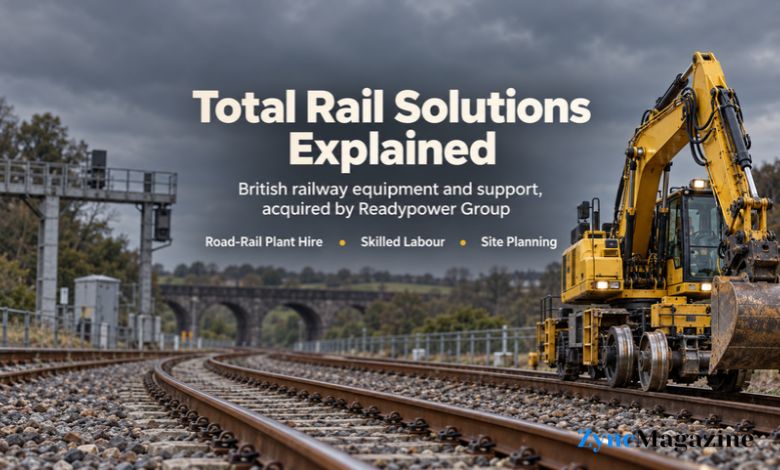
Railway maintenance depends on people and machines that passengers rarely see. Total Rail Solutions, commonly known as TRS, worked in this part of the British rail industry. It supplied specialist machinery, operators and support services to contractors maintaining and improving the railway network.
The company later faced financial pressure, and Readypower Group acquired it on 16 October 2023. This ownership change is essential to understanding its history. Older company profiles describe the services TRS offered independently, while the acquisition explains how the business became part of a larger railway services group.
How Total Rail Solutions Began
Total Rail Solutions started in 2007 as a railway consultancy. During its early years, the business focused on providing knowledge and support within the rail sector. It later expanded into specialist equipment hire and services connected with operating machinery on railway sites.
This development gave the company a more direct role in construction and maintenance work. Contractors needed advice, but they also required machines and experienced people to complete their projects. TRS grew by supplying these practical resources alongside its planning services.
Over time, its work supported Network Rail and contractors involved in railway construction, maintenance and repairs. The business developed around the everyday needs of engineering teams working on Britain’s rail infrastructure.
What Services Did Total Rail Solutions Provide?
The company’s main services included road-rail plant hire, subcontracting and labour provision. Its machinery could be supplied with an operator or hired without one, depending on the customer’s requirements.
Operated hire provided equipment together with someone able to use it. Non-operated hire gave contractors another option when they already had suitable personnel available. This flexibility allowed customers to choose an arrangement that fitted their project and existing workforce.
Labour provision addressed a different requirement. A contractor might have equipment and a schedule in place but still need additional workers. By supplying personnel alongside machinery, TRS could support several parts of a railway job.
Its published service descriptions covered work ranging from a single maintenance shift to longer infrastructure upgrades.
Understanding Road-Rail Plant
Road-rail plant refers to machinery designed or adapted to operate on railway tracks as well as on the ground. This equipment brings the lifting, access and material-handling functions of construction machinery into the railway environment.
For contractors, choosing the right machine involves more than checking whether it is available. Its reach, lifting ability and suitability for the site all affect how useful it will be during a particular job.
TRS invested in a fleet that included road-rail excavators, cranes and access equipment. Its development work with GOS Engineering included Doosan-based machines adapted for railway use.
Changes reported during this partnership included longer excavator arms and hydrostatic drives to the rail wheels on certain machines. These examples show how customer requirements influenced the equipment the company supplied.
Why Planning Was Part of the Service
Supplying a machine is only one stage of preparing for railway work. The equipment must reach the correct location, suit the planned activity and operate within the arrangements established for the site.
Total Rail Solutions offered Plant Operations Scheme services, usually shortened to POS. These included on-track plant planning, delivery and site management.
For a contractor, this connected the equipment booking with the practical arrangements needed to use it. Machinery and operational planning could be considered together, helping teams prepare for the work ahead.
Railway equipment also operates within a specialist acceptance and safety framework. Network Rail’s product acceptance guidance covers road-rail vehicles, attachments and other relevant work equipment. This helps explain why railway plant supply involves responsibilities beyond ordinary machinery rental.
The Types of Railway Work TRS Supported
TRS described its capabilities across overhead line equipment, permanent way and civil engineering work. These categories cover different parts of the railway and require different combinations of machinery and skills.
Overhead line equipment carries electricity above the track. Permanent way refers to the track system itself. Civil engineering includes supporting structures and ground works around the railway.
A supplier serving these areas needs to understand the differences between them. Equipment suited to track work may have a different purpose from machinery used to provide access to overhead electrical infrastructure.
Published company profiles named contractors including Balfour Beatty, AMCOGiffen and Siemens among its working relationships. Its services supported projects associated with Network Rail and London Underground.
Providing Facilities for Railway Teams
The company’s equipment offering also extended to the needs of workers on site. In February 2022, industry reporting described a 12-seat Canter welfare unit introduced by TRS.
The unit combined personnel transport with facilities for teams working along the railway. It included a toilet, handwashing facilities, a small tool storage area and a workstation.
Its rear seating and canteen area provided space for breaks and team briefings. Facilities included a microwave and a sink with hot and cold running water.
These details may seem modest beside excavators and cranes, but they address an everyday concern. Teams need suitable places to receive instructions, wash and take breaks during their shifts. Welfare equipment formed another part of the company’s practical support for railway projects.
The Rutland Partners Investment
A significant ownership change took place on 17 November 2018, when Rutland Partners completed a management buyout from founders Martin Mould and Julie Caldwell.
The management team involved in the transaction was led by Paul Bateman and Luke Hersee. At the time, Rutland outlined plans to support investment in both the fleet and the infrastructure behind the business.
The investment was connected with expectations about the next railway spending cycle. TRS was preparing to serve future demand by developing its equipment and support capacity.
This period shows how closely specialist plant businesses depend on the work expected from their customers. Buying machinery is a long-term commitment, while the jobs that keep it working depend on project schedules and available funding.
Why Readypower Acquired Total Rail Solutions
By October 2023, TRS was experiencing financial difficulties. Readypower’s acquisition announcement identified difficult market conditions, work cancellations and a shrinking pipeline of jobs as pressures on the business.
The announcement linked these problems to the industry approaching the end of Control Period 6, a railway funding period. TRS needed additional investment to support the business.
On 16 October 2023, Readypower Group purchased 100% of its share capital. Readypower said its immediate aim was to provide capital and stability while considering the longer-term future of the company and its employees.
It also announced plans to integrate TRS into the wider group before the following year. The acquisition therefore marked both a change of ownership and a new direction for the business.
Understanding Total Rail Solutions After the Takeover
The acquisition is an important dividing point when reading about TRS. Information published before October 2023 describes the company under its earlier ownership and operating arrangements.
Older descriptions remain useful for understanding its services, equipment and development. However, they should be read as historical accounts rather than assumed to describe an independently owned supplier today.
The clearest account of Total Rail Solutions brings both parts of its story together: its growth as a railway support business and its later acquisition by Readypower.
Conclusion
Total Rail Solutions grew from a consultancy into a specialist supplier of railway machinery, personnel and operational planning. Its work covered the practical resources contractors needed to maintain, repair and improve rail infrastructure.
Its history includes investment in equipment, engineering partnerships and facilities for site teams. The Readypower acquisition in October 2023 became the major turning point, following a period of financial pressure. Together, these developments explain the company’s place in Britain’s railway supply industry.
(FAQs)
What was Total Rail Solutions?
Total Rail Solutions was a British railway services business supplying road-rail plant, labour and operational support for infrastructure construction, maintenance and repair.
When did Total Rail Solutions begin?
The business began in 2007 as a railway consultancy. It later expanded into specialist equipment hire and support services for railway contractors.
Did TRS supply machinery with operators?
Yes. TRS offered both operated and non-operated plant hire, allowing contractors to choose equipment with an operator or use suitable personnel from their own teams.
Who acquired Total Rail Solutions?
Readypower Group acquired Total Rail Solutions on 16 October 2023, purchasing all of the company’s share capital.
Why did Total Rail Solutions need investment?
Readypower reported that difficult market conditions, cancelled work and a reduced pipeline of jobs had placed TRS under financial pressure.