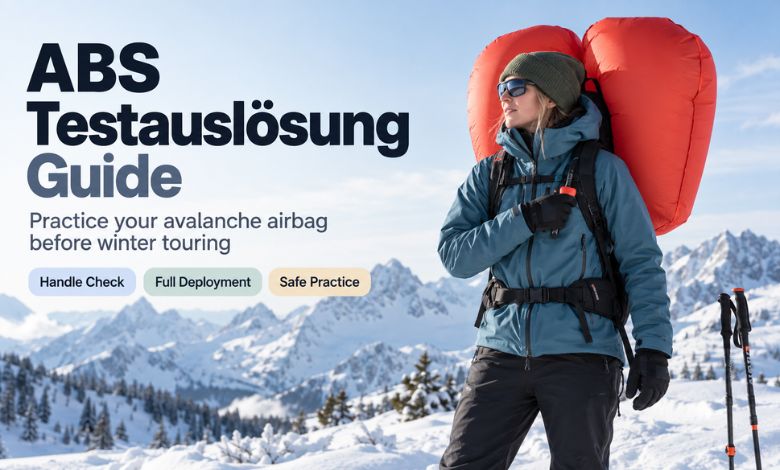
Winter safety equipment often sits unused for several months. When the snow returns, it is easy to check a backpack quickly, attach the cartridge and assume everything is ready. An avalanche airbag, however, deserves more attention. It is emergency equipment that must work at the exact moment it is needed.
An ABS Testauslösung is a planned practice release of an ABS avalanche airbag system. It gives the owner a chance to check the activation process and become comfortable with the release handle. A full test also shows how the airbag opens and whether there are any visible problems.
The exercise is useful for skiers, snowboarders, guides and winter tourers. It is not difficult, but it must be done with care. ABS has produced different airbag systems over the years, and their instructions are not all the same. The product manual should therefore guide every part of the test.
What Is an ABS Testauslösung?
The German word “Testauslösung” can be translated as test release or practice activation. In simple terms, it means pulling the airbag handle in a controlled setting instead of waiting until a real avalanche emergency.
A complete release uses a filled cartridge and inflates the airbag. This checks more than the handle alone. It allows the user to observe the opening of the airbag, listen for unusual air loss and inspect the fabric once it is inflated.
Some ABS models also support practice without a cartridge. This lets the wearer repeat the pulling movement without using a filled cylinder each time. It is helpful for training, but it does not confirm that the airbag itself will inflate.
The difference is important. A handle exercise improves familiarity, while a full deployment checks more of the system. Users should never assume their model allows a cartridge-free release. The manual must confirm it first.
The Real Value of Practising the Release
A release handle may be easy to pull when a backpack is sitting on a table. The situation changes when the pack is being worn over a thick jacket. Add winter gloves, ski poles and sudden movement, and the action can feel very different.
Practice helps the wearer learn the location of the handle without looking for it. It also shows whether the handle is placed too high, too low or too close to another strap. A small adjustment made before a trip could make the handle easier to reach later.
The test also removes some of the surprise connected with deployment. An inflating airbag moves quickly and can make a loud sound. Someone who has already experienced this in a controlled place may be less startled if an emergency occurs.
Most importantly, practice builds a simple habit: reach, grip and pull firmly. The aim is not to create perfect technique. It is to make the movement familiar enough that hesitation is reduced under pressure.
Preparing the Backpack Before the Test
Begin with the correct instruction manual. Check the model name, age of the system and type of activation unit. Do not rely on a video made for a similar-looking backpack because important details may be different.
Take the backpack into a bright area and inspect it carefully. Check the outer fabric, zips, seams, shoulder straps and buckles. Pay close attention to the compartment that holds the airbag. It should be clean and free from objects that could block the opening.
Look at the release handle and its connection. The handle should be fitted correctly and positioned where it can be reached easily. If it is damaged, dirty or difficult to connect, do not try to repair it with household tools.
For a full ABS Testauslösung, confirm that the correct filled cartridge is available. Inspect its condition and check any expiry or service markings. The weight should match the figure shown on the cartridge within the limit set by the manufacturer.
If the cartridge seems damaged or has lost pressure, replace it through an approved service. General gas suppliers should not be used to refill specialist avalanche-airbag cartridges.
Choosing a Safe Place for Deployment
A full airbag needs plenty of space. Testing in a narrow room can cause the fabric to strike a wall, lamp, shelf or sharp piece of furniture. It may also place anyone standing nearby at risk.
Choose a dry, open area with clear space around both sides of the wearer. Keep children, pets and other people away while the system is being prepared and activated.
Make sure the ground is stable and not slippery. The person wearing the backpack should be able to stand comfortably when the airbag opens.
It is sensible to tell anyone nearby that the test may make a sudden noise. This prevents alarm and keeps people from moving towards the wearer at the wrong moment.
How to Carry Out an ABS Testauslösung
Put on the same type of clothing you normally wear during winter travel. This should include your outer jacket and gloves. Realistic clothing makes it easier to judge whether the handle remains accessible.
Wear the backpack properly. Adjust the shoulder straps and fasten the hip belt, chest strap and crotch safety strap according to the manual. The pack should sit firmly without feeling uncomfortable.
Prepare the activation system exactly as instructed. Attach the correct cartridge if a full release is planned. Check any indicator window or status mark to make sure the unit shows that it is ready.
Stand upright with enough space around you. Locate the handle, close your hand around it and pull firmly in the required direction. A weak or uncertain tug may not represent the movement needed during an emergency.
When the airbag opens, remain still and allow it to inflate fully. Notice the sound, the movement and the feeling of the expanded system behind or beside you. This experience is one of the most useful parts of the exercise.
Inspecting the Inflated Airbag
Do not rush to deflate the airbag. First, look at its shape and make sure every section has opened properly. No part of the fabric should remain trapped inside the backpack.
Check for cuts, loose stitching, worn patches or marks caused by poor storage. Listen closely for air escaping. If the airbag loses pressure faster than expected, stop using the system and arrange an expert inspection.
Avoid taking the inflation unit apart. Avalanche airbags contain specialist components, and an incorrect repair could create a hidden fault.
If the deployment looks normal, follow the manual’s instructions for releasing the air. Use the correct deflation valve and press the air out gently. Do not twist the fabric or force it through a small opening.
Repacking and Resetting the System
Repacking is not simply a matter of pushing the airbag back into its pocket. The fabric must be folded in the recommended order so it can open without delay during the next release.
Work slowly and keep the fabric away from zips, buckles and sharp edges. Close the airbag compartment as shown in the manual. Do not place personal items inside this section of the backpack.
The used cartridge will need to be exchanged or professionally refilled. Fit a suitable full cartridge only after completing the correct reset procedure.
Carry out a final check before storing the pack. Confirm that the system has been reset, the airbag is packed correctly and all straps remain in good condition. If any step is unclear, ask an approved dealer for help.
Cartridge-Free Practice Is Not a Full Test
Supported ABS systems may allow the wearer to pull the handle without a cartridge. A successful practice release may produce a clear click and physical feedback through the handle.
This is a convenient way to repeat the movement. It can be done while wearing different gloves or after adjusting the handle position.
Still, it should not be confused with full deployment. Cartridge-free practice cannot show whether the airbag will leave its compartment, inflate evenly or hold air.
It may also be unsafe for systems that were not designed for dry activation. Never try this method until the manual confirms that it is permitted for your particular model.
Mistakes That Can Make the Test Less Useful
Testing without winter gloves is a common mistake. Bare hands give a good grip, but they do not copy the conditions found on a cold mountain. Thick gloves can make the handle harder to feel.
Another mistake is leaving the backpack straps loose. The test should show how the system feels when worn correctly. An open hip belt or crotch strap gives an unrealistic result and may allow the pack to move.
Poor repacking can create trouble later. Take time to fold the airbag properly, even if the first deployment went well.
The most serious oversight is forgetting that the cartridge has been used. An empty cartridge must be replaced before the backpack is taken into avalanche terrain.
An Airbag Is Only One Part of Avalanche Safety
A working airbag can support avalanche safety, but it cannot prevent a slope from releasing. It also cannot guarantee that a person will remain uninjured or avoid burial in every situation.
Winter travellers still need an avalanche transceiver, shovel and probe. Every group member should know how to use these items and should practise companion rescue.
Route planning matters just as much as equipment. Check the avalanche forecast, understand the snow conditions and be willing to change the plan when the risk is too high.
An airbag should never give someone extra confidence to enter unsafe terrain. The best outcome is always to avoid being caught in an avalanche.
Conclusion
An ABS Testauslösung is more than a quick equipment check. It allows the wearer to feel the release action, watch the airbag open and find small problems before the winter season begins.
The exercise should be completed in a clear space with the backpack worn correctly. Every step, from fitting the cartridge to repacking the airbag, must follow the instructions for the exact model.
A well-maintained avalanche airbag adds another layer of protection, but it does not replace training or careful decisions. Safe winter travel still depends on planning, suitable rescue equipment and respect for changing mountain conditions.
(FAQs)
What does ABS Testauslösung mean?
It means a controlled test release of an ABS avalanche airbag. The exercise is used to practise the pulling movement and check the equipment.
When should the airbag be tested?
ABS advises users to complete a training release with a filled cartridge before each winter season. The exact maintenance plan depends on the model and its age.
Can I practise without inflating the airbag?
Certain systems support cartridge-free handle practice. Check the manual first because this method is not suitable for every ABS system.
What should I do with the cartridge after deployment?
A cartridge used in a full test must be professionally refilled or exchanged. The backpack is not ready for emergency use until a full cartridge has been fitted.
Does the test prove that the airbag will always work?
A successful test can confirm that the system operated correctly at that time, but it cannot guarantee future performance. Regular inspections, proper storage and professional servicing remain important.